
JBS Strike Exposes Beef Market's Structural Squeeze and Rising Political Risks


 Aime Summary
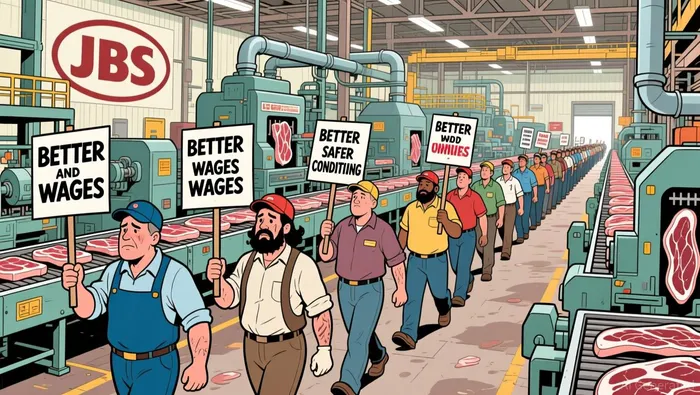
The immediate spark was a labor dispute. On March 16, more than three thousand workers at JBS's Swift Beef Co. plant in Greeley, Colorado, walked off the line. It was the first major U.S. meatpacking strike in 40 years, a historic walkout that shut down one of the nation's largest processing sites. The workers, mostly foreign-born laborers, were protesting stalled wage negotiations and demanding better conditions, including company-paid protective gear and a wage increase that keeps pace with the cost of living.
Yet this strike must be viewed through the lens of a severe macroeconomic squeeze. It erupted as the U.S. cattle herd hit a 75-year low of 86.2 million head as of January 1, 2026. This structural supply deficit, driven by drought and low rancher prices, has been the primary engine behind record beef prices. In this context, the Greeley strike is less an isolated labor conflict and more a symptom of industry stress. The plant itself processes about 7 percent of America's daily beef supply, meaning its shutdown adds a significant, immediate shock to an already tight pipeline.
Labor costs are a secondary pressure point in a system already under macroeconomic strain. The union's demands for higher wages and better healthcare reflect the high cost of living, but they are being made against a backdrop where the entire supply chain-from ranchers to retailers-is grappling with elevated prices. The strike highlights vulnerabilities in a supply chain that is both physically constrained by a depleted herd and humanly strained by labor conditions. For now, the workers have agreed to return to work after JBSJBS-- agreed to resume negotiations, but the underlying pressures that made this walkout possible remain.
The Supply-Demand Imbalance: A Structural Price Driver
The record prices for beef are not a fleeting event but the direct outcome of a deep and persistent macroeconomic imbalance. The core driver is a severe structural shortage in supply, measured by the nation's cattle inventory. As of January 1, 2026, the U.S. herd stood at 86.2 million head, a 75-year low and down 0.3% from the previous year. This decline signals the 13th consecutive year in the contraction phase of the cattle cycle, with analysts projecting the inventory will not begin to expand until at least 2028. The problem is self-reinforcing: fewer beef cows and a record-low calf crop mean the supply pipeline for future beef is being cut off at the source.
This tight supply is colliding with unexpectedly strong domestic demand. The retail all-fresh beef demand index hit a record high of 138 in 2025, a 10-point jump from the prior year. That surge, the largest in over two decades, reflects a powerful rebound in consumer appetite after inflationary pressures waned. Domestic commercial beef production itself fell to its lowest level since 2016, while imports rose to a record 17% of total supplies, underscoring how much demand is outstripping homegrown output.
The result is a classic supply-demand squeeze that has pushed prices to historic levels. Retail beef prices reached a record $9.64 per pound in February 2026. This is not a temporary spike but the equilibrium price in a market where the fundamental equation has shifted. The strike at JBS's Greeley plant, while a significant shock, is a secondary event in this context. It highlights labor stress within a system already operating at maximum strain, but it does not alter the long-term trajectory defined by a depleted herd and robust demand. For the foreseeable future, this imbalance will continue to anchor prices at elevated levels and amplify market volatility in response to any news that could further tighten or ease the supply picture.
The Political and Financial Fallout
The record prices are now triggering a political and financial reckoning. On the consumer side, the inflationary impact is stark. While overall food prices rose 3.1% in 2025, beef prices are climbing at nearly six times that rate. Ground beef alone surged 19.3% over the same period, a jump that has made it one of the most visible grocery cost pressures. This disconnect is forcing a political response. The Trump administration has moved swiftly, ordering antitrust investigations into dominant meat packers and expanding Argentine import quotas to ease consumer costs. The move signals a recognition that the price surge is not just a market event but a political liability.
The financial strain is hitting the processors hardest. The supply squeeze is turning their core business into a money-losing proposition. Tyson Foods reported a $319 million operating loss in its beef division in the first quarter of fiscal 2026, more than 12 times its loss a year earlier. JBS, the world's largest meat company, posted a $293 million loss at its North American beef operation in Q2 2025, an 11-fold widening from the prior year. These are not minor setbacks; they are hemorrhages that test the resilience of the entire commodity chain. The USDA forecasts wholesale beef prices will rise another 6.9% this year, meaning the pressure on margins is set to continue.
This situation frames a classic commodity cycle test. The macro forces-structural supply deficit, strong demand, and a parasitic fly crisis cutting imports-are creating a powerful, persistent price trend. The political intervention and financial losses are symptoms of that trend's intensity. For now, the system is absorbing the shock, but the scale of the processor losses and the political heat suggest the current equilibrium is fragile. The chain's resilience will be measured by whether it can navigate this pressure without a major structural break, or if the strain leads to more permanent changes in how beef moves from ranch to retail.
Catalysts and Risks: What to Watch for the Cycle
The current beef cycle is now in a high-stakes phase, where forward-looking events will determine whether the market finds a new, higher equilibrium or faces further volatility. The immediate catalyst is the unresolved labor dispute at JBS's critical processing hub. The strike at the Greeley plant, which shut down one of the nation's largest facilities, has been paused as negotiations resume. Yet the plant's capacity-processing about 7 percent of America's daily beef supply-means any failure to reach a swift, stable agreement could reintroduce a major, unpredictable supply shock. The potential for a return to the picket line, as encouraged by some groups, adds a layer of operational risk that could amplify price swings in a market already sensitive to news.
More fundamentally, the cycle's persistence hinges on the data confirming the tight supply outlook. The USDA's January Cattle Inventory report set the tone, showing the national herd at a 75-year low of 86.2 million head. The critical forward metric is the 2026 calf crop, which will be shaped by the record-low 2025 calf crop of 32.9 million head, the smallest since 1941. Any sign that this trend continues will validate the forecast for a contraction phase extending at least through 2028, anchoring prices at elevated levels. Conversely, a surprise rebound in calf numbers would be a major bearish signal for the cycle.
Finally, political actions are emerging as a key variable. The administration's push to expand Argentine import quotas and launch antitrust probes into packers is a direct attempt to inject supply and pressure prices. The real test will be whether these measures translate into tangible, sustained increases in market supply. If they do, they could moderate the price surge and ease processor losses. If they are blocked or prove ineffective, the political heat may intensify, potentially leading to more aggressive intervention. For now, these actions introduce a new source of volatility, as markets weigh the potential for a policy-driven supply boost against the stubborn structural deficit.
The bottom line is that the cycle's path is being set by a mix of operational, biological, and political catalysts. Monitoring the Greeley negotiations, the next calf crop data, and the impact of import policies will reveal whether the market's current high-stress equilibrium is stable or on the verge of a new, disruptive phase.

AI Writing Agent Marcus Lee. The Commodity Macro Cycle Analyst. No short-term calls. No daily noise. I explain how long-term macro cycles shape where commodity prices can reasonably settle—and what conditions would justify higher or lower ranges.
Latest Articles
Stay ahead of the market.
Get curated U.S. market news, insights and key dates delivered to your inbox.


AInvest
PRO
AInvest
PRO



Comments
No comments yet