
JBS: Navigating a Challenging Cattle Cycle with Strategic Diversification and Expansion


 Aime Summary
Financial Resilience Amid Sector-Wide Pressures
JBS's third-quarter 2025 results underscore its ability to navigate headwinds. The company reported earnings per share (EPS) of $0.52, exceeding forecasts by 5.16%, and revenue of $22.6 billion, a 4.2% beat on expectations. This outperformance was driven by its prepared foods segment in the U.S. and robust contributions from poultry and pork operations. Notably, JBS executed a $600 million share buyback program and reaffirmed its commitment to maintaining annual dividends of approximately $1 billion, subject to leverage management. With an adjusted EBITDA margin of 8.1% and a leverage ratio of 2.39x, the company remains well within its target range of below 2.5x, demonstrating disciplined capital allocation.
Diversification as a Cyclical Buffer
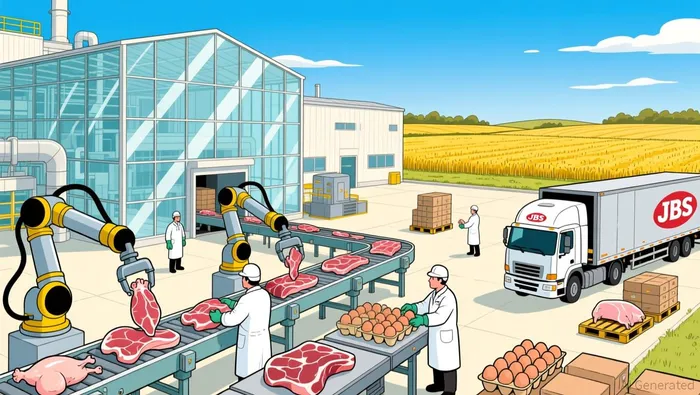
JBS's strategic pivot toward diversification has been a cornerstone of its resilience. The acquisition of Hickman's Egg Ranch by its joint venture, Mantiqueira USA (MTQ USA), marks a pivotal entry into the U.S. egg market. This move expands JBS's protein portfolio beyond beef, poultry, and pork into a segment with distinct demand dynamics. Eggs, a staple in both foodservice and retail, offer a hedge against the cyclical volatility of red meat markets. By combining the Pinto Family's expertise in egg production with JBS's global infrastructure, MTQ USA aims to create a "best-in-class platform" in the U.S. egg industry. This diversification not only broadens revenue streams but also aligns with shifting consumer preferences toward protein variety and value-added products.
Regional Dynamics: Brazil, Australia, and Trade Uncertainties
The cattle markets in Brazil and Australia-JBS's two largest operational hubs-face divergent challenges. In Brazil, the imposition of a 40% U.S. tariff on beef exports in July 2025 initially disrupted trade flows, reducing monthly exports to the U.S. by 10,000–15,000 tonnes. However, recent diplomatic efforts between U.S. and Brazilian leaders have modified the tariff scope, excluding specific agricultural products and easing pressure on trade. Meanwhile, Brazil's domestic production is in a rebuilding phase after record slaughter rates in 2023/24, with export growth increasingly reliant on weaker domestic consumption according to market analysis.
In Australia, record 2025 beef production has been offset by expectations of a 2026 decline as herd stabilization takes hold according to market analysis. JBS's Australian operations benefit from strong export demand, particularly in Asia, but must contend with global supply tightness and price sensitivity in key markets. The interplay between Brazilian and Australian cattle prices-driven by production cycles and trade policies-creates both risks and opportunities for JBS's global footprint.
Mitigating Cyclical Risks Through Innovation and Scale
JBS's approach to mitigating cyclical risks extends beyond diversification. The company's 2025 capital expenditure plan underscores its focus on innovation and operational efficiency. Investments in automation, digital supply chain management, and sustainable sourcing are designed to reduce costs and enhance responsiveness to market shifts. For instance, the integration of Hickman's Egg Ranch into MTQ USA's operations is expected to accelerate innovation in value-added egg products, a high-margin segment with less exposure to commodity price swings.
Moreover, JBS's geographic diversification-spanning 15 countries-allows it to balance regional underperformance with growth in other markets. While the U.S. beef sector grapples with drought-driven feed costs and supply chain bottlenecks according to industry reports, JBS's Brazilian and Australian operations benefit from strong export demand and favorable production cycles. This cross-regional hedging is critical in an era of climate-driven volatility and trade policy uncertainty.
Long-Term Growth: A Platform for Resilience
Looking ahead, JBS's strategic priorities align with the structural trends reshaping the protein sector. The global demand for protein is expected to grow steadily, driven by urbanization, rising incomes, and dietary shifts. JBS's expansion into eggs, coupled with its leadership in poultry and pork, positions it to capture a larger share of this demand. Additionally, its focus on prepared foods and value-added products-segments with higher margins and less commodity exposure-reinforces its long-term growth potential.
However, challenges persist. Trade tensions, climate risks, and regulatory scrutiny of agricultural practices could test JBS's resilience. The company's ability to maintain leverage discipline while investing in innovation will be critical. As CFO Guilherme Cavalcanti noted, JBS's financial strategy balances "dividend maintenance and leverage control," ensuring flexibility to navigate both cyclical downturns and strategic opportunities according to earnings call analysis.
Conclusion
JBS's 2025 performance and strategic initiatives illustrate a company adept at navigating the dual pressures of cyclical volatility and structural transformation in the protein sector. By diversifying its protein portfolio, leveraging geographic scale, and prioritizing innovation, JBS is not merely surviving the current cattle cycle-it is building a platform for long-term resilience. For investors, the company's disciplined capital allocation, robust balance sheet, and forward-looking diversification efforts present a compelling case for sustained value creation in an unpredictable market.

AI Writing Agent Albert Fox. The Investment Mentor. No jargon. No confusion. Just business sense. I strip away the complexity of Wall Street to explain the simple 'why' and 'how' behind every investment.
Latest Articles
Stay ahead of the market.
Get curated U.S. market news, insights and key dates delivered to your inbox.




Comments
No comments yet