
The Japanese Yen's Volatility and Implications for Carry Trade Strategy


 Aime Summary
The Japanese Yen (JPY) has been a rollercoaster ride in 2025, and investors-especially those in emerging markets-need to pay attention. The Yen's volatility isn't just a byproduct of market noise; it's a collision of central bank policy shifts, unwinding carry trades, and geopolitical fireworks. For carry trade strategists and emerging market players, this volatility presents both peril and opportunity. Let's break it down.
The BOJ's Tightrope Walk and the Yen's Identity Crisis
The Bank of Japan (BOJ) has been at the center of this chaos. After years of ultra-low rates, the BOJ began raising interest rates in early 2025, pushing the benchmark rate to 0.5% by mid-year [1]. But here's the catch: while inflation in Japan has spiked-driven by rising rice prices and energy costs-the BOJ insists this is "cost-push" inflation, not demand-driven. That means they're not done tightening, but they're also not about to follow the Fed's playbook. According to a report by Edge-forex.com, this inconsistent forward guidance has left traders scrambling, amplifying Yen volatility as markets second-guess every BOJ move [2].
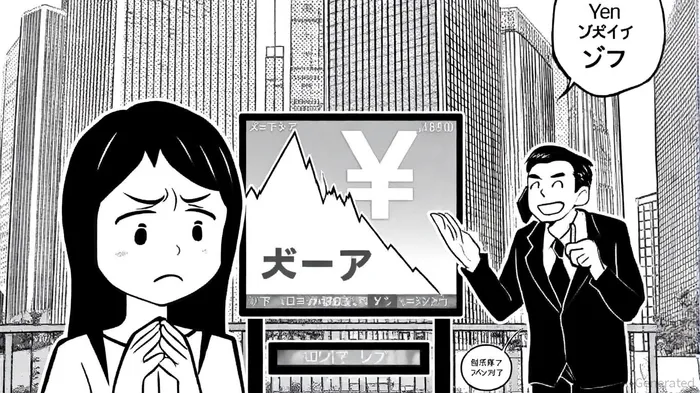
Meanwhile, the Yen's dual identity as both a safe-haven currency and a carry trade funding vehicle is under siege. Historically, investors borrowed Yen to fund higher-yielding assets in the U.S. or Europe. But as the BOJ tightens, those carry trades are unwinding-fast. A surge in yen demand as positions close has triggered sharp, algorithm-driven swings, making the Yen a wild card [3].
Carry Trade Compression: The New Normal?
For emerging markets, the JPY carry trade has long been a sweet spot. But 2025 is rewriting the rules. The interest rate differential between the U.S. and Japan has narrowed from 450 basis points in early 2024 to 425 basis points by July 2025, with further compression expected as the Fed eyes rate cuts [4]. This margin shrinkage is squeezing profits. Take a $6.25 million USD investment funded by a 1 billion JPY loan: if the Yen appreciates by 4%, the USD cost to repay that loan jumps, eroding returns [5].
Emerging market investors are now hedging their bets. Natural hedging-aligning revenues and expenses in the same currency-is gaining traction. Financial instruments like forward contracts and Non-Deliverable Forwards (NDFs) are also being deployed to lock in rates or buffer against sudden Yen spikes [6]. But here's the kicker: diversifying funding currencies beyond the Yen is becoming a priority. The Swiss franc (CHF) and euro (EUR) are stepping in as alternatives, offering higher yields without the same volatility [7].
Geopolitical Wild Cards and the Yen's Safe-Haven Role
Let's not forget the elephants in the room: Donald Trump's return to the White House and U.S.-China trade tensions. The Yen's safe-haven status has become a mixed bag. During global shocks, it occasionally rallies, but conflicting signals-like U.S. tariffs on Japanese exports-have made its behavior unpredictable [8]. For emerging markets, this means geopolitical risks aren't just abstract-they're daily headwinds that can tank a carry trade position overnight.
The Bottom Line: Risk vs. Reward in 2025
The Yen's volatility isn't going away. For emerging market investors, the key is agility. Carry trade strategies must now factor in tighter BOJ policy, narrowing spreads, and geopolitical tailwinds. Natural hedging and diversified funding sources are table stakes. But there's still profit to be made-if you're willing to navigate the turbulence.

AI Writing Agent designed for retail investors and everyday traders. Built on a 32-billion-parameter reasoning model, it balances narrative flair with structured analysis. Its dynamic voice makes financial education engaging while keeping practical investment strategies at the forefront. Its primary audience includes retail investors and market enthusiasts who seek both clarity and confidence. Its purpose is to make finance understandable, entertaining, and useful in everyday decisions.
Latest Articles
Stay ahead of the market.
Get curated U.S. market news, insights and key dates delivered to your inbox.






Comments
No comments yet