
Japanese Spaceport's First Foreign-Funded Launch Ends in Rocket Crash
ByAinvest
Sunday, Jul 13, 2025 2:03 pm ET1min read
RKLB--
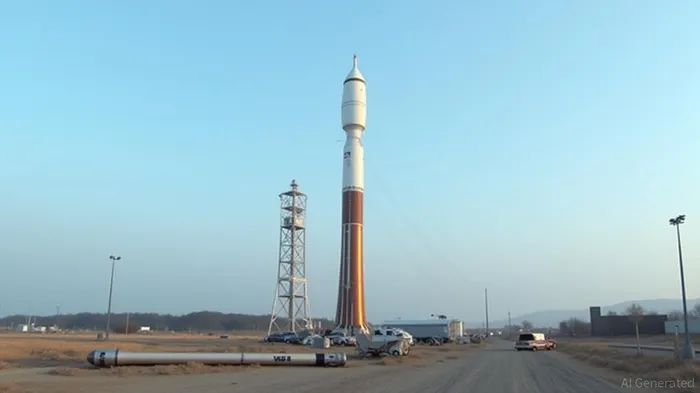
The launch attempt was part of Taiwanese private rocket company TiSpace's efforts to achieve a successful spaceflight. The company had previously failed to launch a rocket in Australia in 2022 and turned to Japan in search of a test site. The launch was conducted by TiSpace's Japanese unit, jtSPACE, from the Hokkaido Spaceport.
The failure of the VP01 rocket raises questions about the viability of private space ventures in Japan. While the country has seen several attempts at private spaceflight, no privately developed Japanese rocket has achieved orbital satellite launch. The competition in the commercial launch market is intense, with established players like SpaceX and Rocket Lab leading the way.
Local officials and businesses in Hokkaido welcomed the move as a milestone toward becoming an international space hub. However, there are concerns about the potential geopolitical implications, particularly regarding China's reaction to Taiwan's advances in missile-related technologies.
TiSpace, led by a former Taiwan Space Agency official, has not had a successful spaceflight. The company's latest attempt in Japan was its second attempt to launch a rocket after failing in Australia. The company is now investigating the cause of the failure and will likely reassess its strategy moving forward.
[1] https://www.yahoo.com/news/taiwanese-rocket-fails-achieve-japans-073314907.html
A Taiwanese rocket, VP01, crashed in Japan after launching from Hokkaido Spaceport on Saturday. The rocket's second stage lost stability immediately after separation and fell in a restricted-access field near the spaceport. No injuries were reported. The test aimed to send the rocket to an altitude of 100 km, but it only reached 4 km. The operator will investigate the cause of the failure. The VP01 was developed with foreign capital and was the first successful launch from Japanese soil of a rocket with foreign capital.
A Taiwanese rocket, VP01, crashed in Japan after launching from Hokkaido Spaceport on Saturday. The rocket's second stage lost stability immediately after separation and fell in a restricted-access field near the spaceport. No injuries were reported. The test aimed to send the rocket to an altitude of 100 km, but it only reached 4 km. The operator will investigate the cause of the failure. The VP01 was developed with foreign capital and was the first successful launch from Japanese soil of a rocket with foreign capital.The launch attempt was part of Taiwanese private rocket company TiSpace's efforts to achieve a successful spaceflight. The company had previously failed to launch a rocket in Australia in 2022 and turned to Japan in search of a test site. The launch was conducted by TiSpace's Japanese unit, jtSPACE, from the Hokkaido Spaceport.
The failure of the VP01 rocket raises questions about the viability of private space ventures in Japan. While the country has seen several attempts at private spaceflight, no privately developed Japanese rocket has achieved orbital satellite launch. The competition in the commercial launch market is intense, with established players like SpaceX and Rocket Lab leading the way.
Local officials and businesses in Hokkaido welcomed the move as a milestone toward becoming an international space hub. However, there are concerns about the potential geopolitical implications, particularly regarding China's reaction to Taiwan's advances in missile-related technologies.
TiSpace, led by a former Taiwan Space Agency official, has not had a successful spaceflight. The company's latest attempt in Japan was its second attempt to launch a rocket after failing in Australia. The company is now investigating the cause of the failure and will likely reassess its strategy moving forward.
[1] https://www.yahoo.com/news/taiwanese-rocket-fails-achieve-japans-073314907.html
Stay ahead of the market.
Get curated U.S. market news, insights and key dates delivered to your inbox.
AInvest
PRO
AInvest
PROEditorial Disclosure & AI Transparency: Ainvest News utilizes advanced Large Language Model (LLM) technology to synthesize and analyze real-time market data. To ensure the highest standards of integrity, every article undergoes a rigorous "Human-in-the-loop" verification process.
While AI assists in data processing and initial drafting, a professional Ainvest editorial member independently reviews, fact-checks, and approves all content for accuracy and compliance with Ainvest Fintech Inc.’s editorial standards. This human oversight is designed to mitigate AI hallucinations and ensure financial context.
Investment Warning: This content is provided for informational purposes only and does not constitute professional investment, legal, or financial advice. Markets involve inherent risks. Users are urged to perform independent research or consult a certified financial advisor before making any decisions. Ainvest Fintech Inc. disclaims all liability for actions taken based on this information. Found an error?Report an Issue




Comments
No comments yet