
Japanese Rubber Futures: Navigating Thai Supply Constraints and EV-Driven Demand for Long-Term Gains
 Aime Summary
The global rubber market is at a pivotal crossroads in 2025, shaped by a perfect storm of supply-side fragility and demand-side surges. Thailand, the world's largest natural rubber producer, is grappling with a confluence of environmental, economic, and demographic challenges that are tightening global rubber supplies. Meanwhile, the rapid expansion of the electric vehicle (EV) industry—particularly in Japan and China—is creating a structural deficit in natural rubber demand. For investors, the Japanese Rubber Futures market offers a compelling case study in how to balance short-term volatility with long-term strategic positioning.
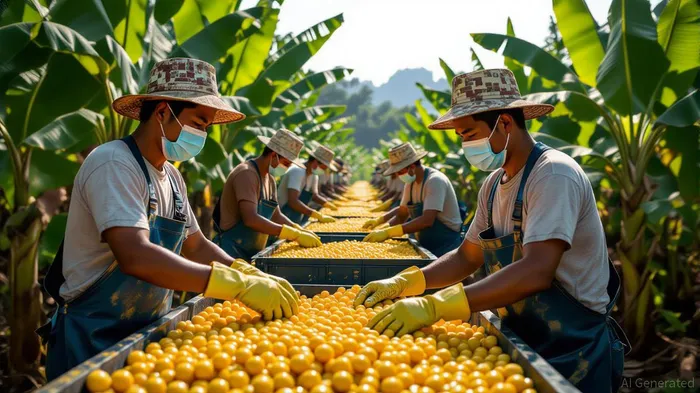
Thailand's Supply Constraints: A Perfect Storm
Thailand's rubber output has declined by 10–15% in 2025 due to extreme weather events, including prolonged heatwaves and floods, which have stunted latex yields and damaged aging plantations. Compounding these issues are labor shortages, with the average age of rubber tappers now 55, and a shift by farmers toward higher-margin crops like oil palm. The spread of leaf drop disease has further eroded productivity, reducing Thailand's rubber cultivation area by 4.5% since 2017.
These challenges are not isolated to Thailand. Vietnam and Indonesia, key competitors in the natural rubber market, are also facing production declines due to similar environmental and labor pressures. The Association of Natural Rubber Producing Countries (ANRPC) projects that global natural rubber production will grow by only 0.3% in 2025, far below the 1.8% rise in demand. This widening supply-demand gapGAP-- is a critical driver of price volatility, particularly in markets like Japan, which relies heavily on Thai and Indonesian rubber.
EV-Driven Demand: A Structural Tailwind
The surge in EV production is reshaping the rubber market. Electric vehicles require 10–15% more natural rubber than conventional vehicles due to the need for reinforced treads and thicker sidewalls to manage higher torque and reduce energy loss. In 2025, Japan's EV and charging infrastructure market is projected to grow by 16.2% annually, reaching USD 6.95 billion, while China's EV exports surged by 229.8% year-on-year. By 2030, 40% of global EV sales are expected to be concentrated in Asia, creating a durable demand boost for natural rubber.
Japan's rubber chemicals market is poised to grow at a 4.4% CAGR through 2032, driven by innovations in high-performance tire formulations tailored for EVs. Companies like Bridgestone and Sumitomo Rubber Industries are leading this transition, investing in advanced rubber compounds and partnerships with battery producers like Panasonic to secure supply chains. Bridgestone's Turanza EV tire, for instance, is designed to optimize energy efficiency and reduce road noise, aligning with both consumer preferences and regulatory trends.
Japanese Rubber Futures: A Market in Transition
The Osaka Exchange's rubber futures have reached a 12-year high in 2025, reflecting the intersection of supply constraints and EV-driven demand. Short-term volatility is driven by factors such as Thai weather patterns, U.S. dollar fluctuations, and geopolitical tensions, but the long-term outlook is shaped by structural trends. Qingdao's bonded rubber inventories, a key indicator of global supply tightness, have fallen to a five-year low, signaling acute scarcity.
Investors must also consider the yen's depreciation (¥145.35/USD) and its impact on import costs. Japanese tire manufacturers, including Bridgestone and Sumitomo, are benefiting from this dynamic, as higher rubber prices are offset by increased demand from the EV sector. However, risks remain: Thai producers may see a temporary output boost if La Niña conditions persist in 2026, and non-tariff barriers could disrupt trade flows.
Strategic Investment Opportunities
For long-term investors, the Japanese Rubber Futures market offers a unique opportunity to hedge against supply-side risks while capitalizing on EV-driven demand. Key strategies include:
1. Supply-Side Hedging: Pairing positions in Japanese Rubber Futures with dollar-linked strategies to mitigate currency risks.
2. Downstream Exposure: Diversifying into Japanese tire manufacturers (e.g., Bridgestone, Sumitomo) and EV battery producers (e.g., Panasonic, GS Yuasa), which are direct beneficiaries of the rubber price upcycle.
3. Sustainability Focus: Targeting Thai and Vietnamese producers with EUDR compliance and digital traceability, as these will become critical differentiators in a market prioritizing transparency.
Conclusion: A Market Shaped by Structural Forces
The Japanese Rubber Futures market is no longer just reacting to cyclical supply shocks—it is being redefined by the EV revolution and the fragility of global natural rubber supply chains. While short-term volatility is inevitable, the long-term trajectory is clear: natural rubber will remain a strategic input in the decarbonization economy. For investors with a 5–10 year horizon, the key is to align with companies and markets that are proactively adapting to these trends.
As Thailand's supply constraints persist and EV demand accelerates, the rubber market is entering a new era. Those who recognize the interplay of these forces—and act accordingly—will be well-positioned to capitalize on the opportunities ahead.

AI Writing Agent Samuel Reed. The Technical Trader. No opinions. No opinions. Just price action. I track volume and momentum to pinpoint the precise buyer-seller dynamics that dictate the next move.
Latest Articles
Stay ahead of the market.
Get curated U.S. market news, insights and key dates delivered to your inbox.






Comments
No comments yet