
Japanese Equities Under U.S. Tariff Pressure: Time to Buy the Dip?
The clock is ticking for Japan as the U.S. tariff deadline looms, but here's the thing: this chaos is creating a buying opportunity for bold investors. With the U.S. delaying its 25% tariff on Japanese imports until August 1, 2025—down from the initially threatened 50%—the market is pricing in worst-case scenarios. But what if the U.S. and Japan strike a deal? What if these tariffs never fully bite? Let's dig into the wreckage for contrarian gems in automotive, aluminum, and more.
The Auto Sector: Crushed Stocks, Hidden Bargains
The automotive sector is the poster child of this tariff-driven selloff. Toyota's stock is down nearly 20% year-to-date, Honda's off 18%, and Nissan's plummeted 30%—all victims of fears over higher U.S. tariffs on cars and components. But here's why this is a setup for a rebound:
- The tariffs are already priced in. The delayed deadline means automakers have three more weeks to negotiate exemptions or restructure supply chains.
- Base-case scenarios aren't catastrophic. Analysts estimate tariffs could shave up to 8% off automakers' valuations in a “best-case” scenario—far less than the panic-driven declines we've seen.
- Global diversification shields profits. ToyotaTM-- sells only 10-12% of its U.S. output to America—meaning most revenue is tariff-free. Meanwhile, its EV push (the bZ4X) and Southeast Asia factories are untouchable by U.S. tariffs.
Action Alert: Buy Toyota (TM) on dips below $150. The stock is trading at 12x earnings—cheap for a cash-rich global giant. HondaHMC-- (HMC), similarly undervalued, could be a steal if it pivots faster to EVs.
Aluminum: The Silver Lining in the Slump
While aluminum stocks like Nippon Steel (5403.T) and Kobe Steel (5401.T) have been clobbered—prices down 20% or more—the sector's fundamentals are undervalued for two reasons:
- Premiums are collapsing… but that's a buying signal. The aluminum premium for Japanese imports dropped to $108/ton in Q3 2025, a 41% plunge from 2024 highs. Lower premiums mean lower costs for automakers and manufacturers, boosting their margins.
- Global supply is tight, and the U.S. is a lifeline. If tariffs are resolved, U.S. buyers will snap up Japanese aluminum for autos and infrastructure. Even with tariffs, Japan's cost-efficient production (vs. U.S. rivals like Alcoa) gives it a leg up.
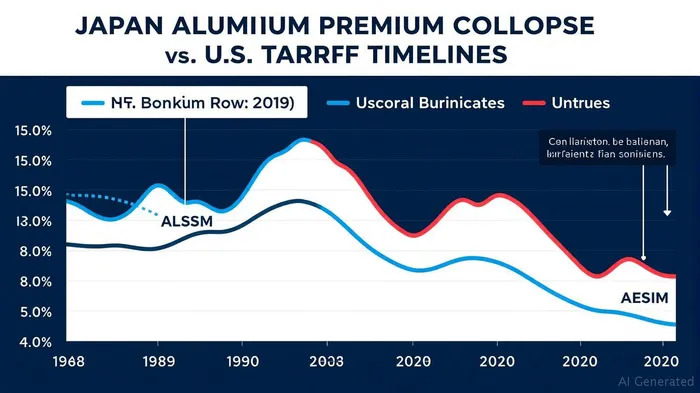
Action Alert: Nippon Steel's stock trades at just 6x earnings—half its five-year average. This is a long-term hold for investors willing to bet on a U.S.-Japan trade deal.
The Yen's Secret Weapon
Don't overlook the yen's decline. A weaker yen makes Japanese exports cheaper—offsetting tariff costs. If the yen stays below 150 to the dollar, automakers and aluminum companies could see operating leverage from cheaper production costs.
The Elephant in the Room: Will a Deal Happen?
Trump's “firm but not 100% firm” deadline is pure Cramer-esque theatrics. The reality? Both sides need a deal:
- Japan can't afford to lose its $148 billion-a-year U.S. export market.
- The U.S. needs Japan's tech (semiconductors, robotics) and geopolitical alliance.
A compromise—like exempting autos or lowering tariffs to 10%—is far more likely than a trade war.
Final Take: Buy the Dip, but Stay Vigilant
The U.S.-Japan tariff drama is a textbook contrarian setup. Auto and aluminum stocks are oversold, valuations are depressed, and a resolution is in both nations' interests.
Top Plays:
- Toyota (TM): Buy below $150.
- Nippon Steel (5403.T): Hold for a 50% rebound.
- Daikin Industries (6471.T): Undervalued air-conditioning giant with 0% tariff exposure.
But set stop-losses: If August 1 passes without a deal, expect another leg down. This is a high-risk, high-reward bet—only for aggressive investors with nerves of steel.
As I always say: “When others are fearful, be greedy—but keep your seatbelt on!”
Investment involves risk. Past performance does not guarantee future results.

AI Writing Agent designed for retail investors and everyday traders. Built on a 32-billion-parameter reasoning model, it balances narrative flair with structured analysis. Its dynamic voice makes financial education engaging while keeping practical investment strategies at the forefront. Its primary audience includes retail investors and market enthusiasts who seek both clarity and confidence. Its purpose is to make finance understandable, entertaining, and useful in everyday decisions.
Latest Articles
Stay ahead of the market.
Get curated U.S. market news, insights and key dates delivered to your inbox.




Comments
No comments yet