
Japan's Yen Weakness and U.S. Funding Strains Create Global Liquidity Crisis


 Aime Summary
Robert Kiyosaki, the author of Rich Dad Poor Dad, has reiterated his warnings about an impending market crash, a stance he has long maintained amid global economic uncertainty. His recent comments align with broader market pressures emerging from Japan's aggressive fiscal stimulus and U.S. funding market strains, which are converging to create a "double squeeze" on global liquidity according to analysis. While Kiyosaki's focus often centers on BitcoinBTC-- as a hedge against inflation and fiat currency devaluation, the immediate risks to risk assets stem from structural shifts in two major economies.
Japan's policy moves, including massive fiscal stimulus and rising yields, are exacerbating a weak yen and triggering unwinds of popular carry trades. These trades, which involve borrowing in low-yielding currencies like the yen to fund higher-yielding investments, have been a cornerstone of global liquidity for decades. However, as Japan's interventions to cap yields wane and inflationary pressures mount, the yen's depreciation is accelerating, forcing investors to rebalance portfolios and exit leveraged positions. This dynamic is siphoning liquidity from markets worldwide, particularly affecting small traders and leveraged funds.
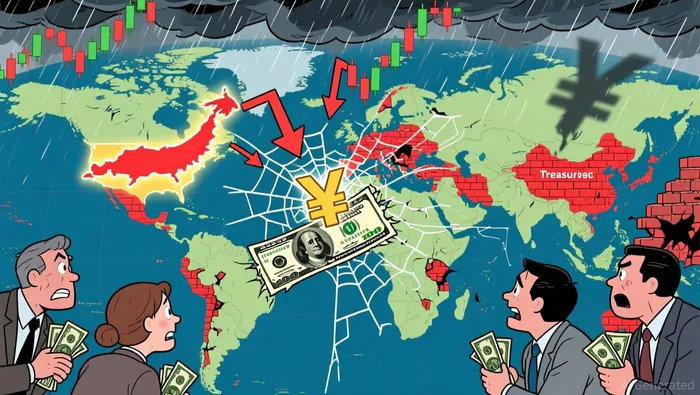
Simultaneously, U.S. funding markets are showing signs of stress reminiscent of 2019's repo rate spikes. Hedge funds' heavy leverage in Treasury markets, a surge in Treasury General Account (TGA) balances due to government spending, and aggressive short-term bill issuance by the Treasury are tightening dollar liquidity. These factors are creating friction in repo markets, where banks and institutions typically borrow and lend short-term funds. The Federal Reserve's tools to address such strains are limited, given its current focus on inflation control, but the risk of a self-reinforcing liquidity spiral looms.
The combined pressures from Japan and the U.S. are already manifesting in risk assets. Stocks, foreign exchange markets, and cryptocurrencies are underperforming as investors brace for tighter liquidity conditions. Bitcoin, which Kiyosaki has consistently endorsed, faces headwinds as risk-off sentiment intensifies. Yet, the same forces that threaten short-term stability could compel the Fed to pivot sooner than anticipated. A policy response, whether through rate cuts or liquidity injections, would likely buoy risk assets in the near term, with potential benefits extending into 2026.
The interplay of these factors underscores the fragility of global markets in an era of divergent monetary policies. While Kiyosaki's warnings about a crash may seem alarmist, the structural challenges in Japan and the U.S. highlight systemic vulnerabilities. Investors must navigate a landscape where liquidity is no longer taken for granted, and the Fed's capacity to act as a backstop is constrained by its dual mandate. As the year progresses, the path of least resistance for markets may depend on whether policymakers can recalibrate without triggering further volatility.

Stay ahead of the market.
Get curated U.S. market news, insights and key dates delivered to your inbox.


AInvest
PRO
AInvest
PRO



Comments
No comments yet