
Japan's Yen: Political Crosswinds and Policy Risks Fuel Devaluation Opportunities
The Japanese yen has long been a barometer of global economic and geopolitical tensions, but in 2025, its volatility has reached new heights. Political instability, divergent monetary policies, and escalating trade disputes are creating both risks and opportunities for investors. Let's dissect the forces at play and explore how to position portfolios for this turbulent environment.
Political Instability and Policy Uncertainty
Japan's upper house election in July 2025 marked a turning point. The ruling Liberal Democratic Party (LDP) lost its majority for the first time since 2009, leaving Prime Minister Ishiba Shigeru's government weakened. This political fragmentation has introduced uncertainty over fiscal and monetary policy continuity.
A minority government faces challenges in passing legislation, potentially slowing the Bank of Japan's (BoJ) planned rate hikes. While the BoJ has raised its policy rate to 0.5%—the highest since 2008—analysts expect only one more hike in 2025, with terminal rates capped at 1.25% by 2026. This cautious approach contrasts sharply with the U.S. Federal Reserve's hawkish stance, widening interest rate differentials and pressuring the yen.
Monetary Policy Divergence: A Structural Drag
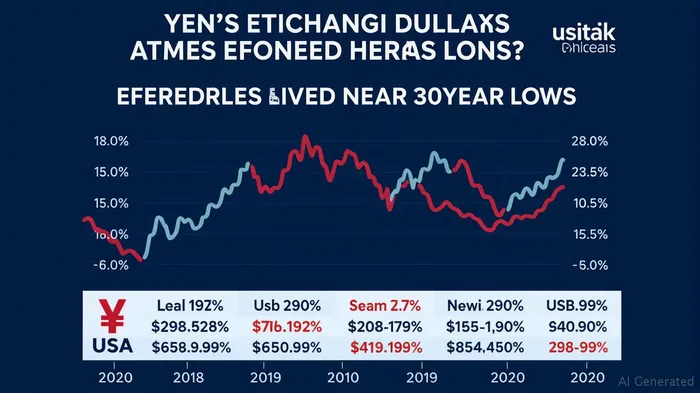
The BoJ's yield-curve control policy, which caps 10-year bond yields at 0.5%, has created a structural imbalance. As U.S. Treasury yields rise, Japanese investors seek higher returns abroad, fueling capital outflows. This dynamic, combined with the BoJ's gradual reduction in bond purchases (¥400 billion quarterly cuts until 2026), has kept the yen near 30-year lows.
Yet the yen's decline isn't solely monetary. Fiscal policies compound the pressure. A planned 4% corporate tax hike in 2026 to fund defense spending and public debt (227% of GDP) could deter foreign investment, further weakening the currency. Meanwhile, subsidies for energy and households aim to offset inflation, but they risk perpetuating fiscal deficits.
Geopolitical Crosscurrents: Trade Wars and Energy Risks
Japan's geopolitical position between the U.S. and China amplifies its vulnerabilities. U.S. tariffs on Japanese auto and steel exports—already at 10%—threaten to erode export competitiveness. With automobiles accounting for 6% of Japan's exports, any escalation could deepen trade deficits and weaken the yen.
Energy costs add another layer of risk. Japan relies on imported LNG (9% from Russia) and 90% of its crude oil from the Middle East. Geopolitical tensions—such as U.S.-Iran conflicts or Russian supply disruptions—could spike energy prices, worsening inflation and further depressing the yen.
Investment Opportunities in Yen Volatility
For investors, the yen's devaluation presents two strategic angles:
Shorting the Yen vs. the Dollar:
The yen's structural disadvantages—monetary policy divergence, fiscal deficits, and trade risks—make it vulnerable to continued depreciation. A long position in USD/JPY could benefit from a Fed rate hike cycle and geopolitical instability.Playing Corporate Winners:
A weaker yen boosts export-heavy sectors like automotive (Toyota, Honda) and electronics (Sony, Panasonic). These companies often hedge currency risks, but a sustained yen decline could amplify profits. Meanwhile, tourism stocks (Japan Travel Corp.) gain as inbound travel surges.
Risks and Caution Flags
- Policy Overreach: A BoJ surprise rate hike or fiscal austerity could abruptly strengthen the yen, harming exporters.
- Trade Retaliation: Japan might respond to U.S. tariffs, sparking a trade war that disrupts supply chains.
- Global Growth Slump: A U.S. or Chinese recession could reduce demand for Japanese exports, worsening the trade deficit.
Conclusion: Navigating the Storm
Japan's yen is caught in a perfect storm of political paralysis, monetary divergence, and geopolitical friction. While these factors create devaluation opportunities, investors must remain nimble. Pair short yen positions with hedged exposure to Japanese equities, and monitor U.S.-Japan trade negotiations closely. For the bold, the yen's volatility offers a high-reward, high-risk playground—but always keep one eye on the exit.
As the saying goes: In turbulent waters, the smart sailor tacks—not panics.
This analysis incorporates data from the Bank of Japan, OECD reports, and geopolitical risk assessments as of July 2025.

Stay ahead of the market.
Get curated U.S. market news, insights and key dates delivered to your inbox.


AInvest
PRO
AInvest
PRO



Comments
No comments yet