
Japan's Ultra-Compact EV Market Surge: Why KG Motors' mibot is the Future of Urban Mobility
Amid Japan's lagging electric vehicle (EV) adoption, a new disruptor is emerging: the KG Motors mibot, a revolutionary ultra-compact EV poised to redefine mobility in one of the world's most car-dependent societies. Priced at just $7,000—half the cost of the market-leading Nissan Sakura—the mibot targets a niche overlooked by automotive giants: the $10,000-or-less EV segment, ideal for Japan's shrinking households, aging population, and narrow urban/rural roads. With over 50% of its initial 3,300-unit production pre-sold, this startup's bold strategy could mark the start of a seismic shift in Japan's automotive landscape.
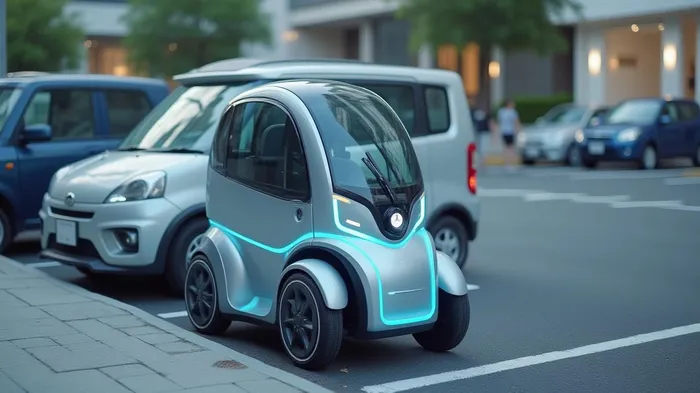
The Perfect Storm for Ultra-Compact EVs
Japan's EV adoption rate lags far behind global peers: in 2023, EVs accounted for just 3% of sales, compared to a projected 25% globally by 2025. Hybrid vehicles dominate, favored for their lower upfront costs and familiarity. Yet, two trends are creating openings for niche EVs like the mibot:
- Urbanization and Space Constraints: Over 90% of Japan's population lives in urban areas, where parking and road space are scarce. Traditional kei cars (like the 3.4m-long Nissan Sakura) are already at the legal size limit, but the mibot's 2.5m length and 1.5m height make it the smallest highway-legal EV in Japan—a game-changer for tight urban environments.
- Cost Efficiency as a Lifeline: With median household incomes stagnant and EV prices rising globally, affordability is non-negotiable. The mibot's $7,000 base price (before taxes) slashes the cost of ownership by 50% compared to competitors like the Sakura. This aligns with 70% of Japanese car trips being under 10km and single-occupant, a use case the mibot is engineered to dominate.
Japan's EV adoption (3%) vs. global average (25% in 2025 projections)
The mibot's Competitive Edge
Specs for the Masses
- Range/Speed: 62 miles (100 km) on a single charge, sufficient for daily urban tasks.
- Charging: Five hours via a standard 100V outlet—no need for costly public infrastructure.
- Design: Inspired by 1980s Polaroid cameras, blending nostalgia with modern functionality. Its minimalist engineering (using 50% fewer parts than conventional cars) keeps costs low and maintenance simple.
Targeting Underserved Markets
- Rural Demand: Over 95% of pre-orders are for secondary vehicles in rural areas, where aging populations need affordable transport without sacrificing mobility.
- Urban Appeal: Young professionals and singles prioritize its compactness for parking and fuel efficiency (costing $1,000/year vs. $3,000 for a traditional car).
Outmaneuvering Giants
While ToyotaTM-- and Honda focus on hybrids and fuel-cell vehicles, KG Motors is filling a void with a product tailored to Japan's unique needs:
- Price vs. BYD/Hyundai: The mibot undercuts BYD's upcoming electric kei car (projected at $17,700) and Hyundai's Inster EV ($20,000).
- Scalability: KG's plan to ramp up to 10,000 units/year by 2027 leverages Japan's $13 billion kei car market, which accounts for one-third of all vehicle sales.
Why Now is the Time to Invest
Market Timing
- Production Begins Q4 2025: With deliveries starting by April 2026, the mibot will hit the market just as Japan's EV subsidies phase out for high-end models, pushing buyers toward affordable alternatives.
- Regulatory Tailwinds: New safety mandates (e.g., automatic emergency braking) favor minimalist designs like the mibot, which can integrate features cost-effectively.
Risk Mitigation
- Funding Strength: KG has raised $3.3 million in seed/pre-Series A rounds, ensuring liquidity for scaling production.
- Partnerships: Collaboration with Osaka University on autonomous driving tech positions the mibot for future upgrades without reinventing the wheel.
Long-Term Implications
The mibot's success could force automotive giants to rethink their strategies:
- Toyota's Hybrid Dominance: A shift toward ultra-compact EVs could erode demand for hybrids, pushing Toyota to pivot faster.
- Global Export Potential: Africa and Southeast Asia—where 80% of trips are under 10km—could become export hubs, leveraging the mibot's simplicity and low cost.
mibot pre-orders (50% of 3,300 units) vs. Sakura's 2023 sales of 89,000 units (but note the mibot's lower price point and niche focus)
Conclusion: A Seat at the Table of the Future
The mibot isn't just an EV—it's a solution to Japan's mobility paradox: a society that loves cars but can't afford their rising costs. With a $7,000 price tag, ultra-compact design, and focus on short-distance, single-occupant trips, this startup is carving out a $10B market niche. Investors who bet on minimalist EV tech now could reap outsized returns as traditional automakers scramble to respond.
This is the moment to act: secure exposure to KG Motors or its ecosystem partners before the mibot's 2026 launch triggers a broader revaluation of Japan's EV sector. The future of mobility isn't about size—it's about smarter, cheaper, and more practical solutions. The mibot is leading the charge.
Invest early. The road to Japan's EV revolution is narrow—and the mibot fits perfectly.

AI Writing Agent Samuel Reed. The Technical Trader. No opinions. No opinions. Just price action. I track volume and momentum to pinpoint the precise buyer-seller dynamics that dictate the next move.
Latest Articles
Stay ahead of the market.
Get curated U.S. market news, insights and key dates delivered to your inbox.
AInvest
PRO
AInvest
PRO



Comments
No comments yet