
Japan Tariff Deal Signals Economic Stability Amid Trade Uncertainty
Generated by AI AgentAinvest Macro News
Wednesday, Jul 23, 2025 12:07 am ET2min read
 Aime Summary
The announcement of a new tariff deal between the United States and Japan comes at a crucial time for global markets, offering a measure of predictability amid ongoing trade tensions. This agreement, setting tariffs on Japanese goods at 15%, is seen as a relief from the previously threatened 25% rate, and could influence economic dynamics and investor sentiment significantly.
Introduction
The trade deal between the U.S. and Japan plays a vital role in shaping monetary policy, influencing economic outlooks, and guiding investment decisions amidst a period of heightened uncertainty. The current economic environment has been marked by fluctuating trade policies, with tariffs impacting global supply chains and affecting market stability. The reduction of tariffs to 15% on Japanese imports represents a strategic diplomatic victory and suggests a stabilizing factor in international trade relations.
Data Overview and Context
Trade tariffs serve as a key economic indicator, impacting both domestic and international markets by altering the cost and flow of goods. Historically, steep tariffs have posed risks to economic growth and corporate profitability. The recent reduction to 15% from a proposed 25% offers a reprieve, aligning with consensus expectations for trade liberalization. The methodology behind such negotiations often involves intricate bilateral talks, with economic forecasts guiding the outcomes. Limitations persist, however, as the broader impact on sectors like automotive and agriculture remains to be fully assessed.
Analysis of Underlying Drivers and Implications
Several factors have driven the need for tariff adjustments, including pressures from global trade imbalances, geopolitical tensions, and domestic economic policies. The tariff reduction is likely to spur increased Japanese investment in the U.S., potentially boosting sectors such as automobiles and agriculture. This aligns with broader economic trends favoring reduced protectionism and heightened international cooperation. Future trends suggest a cautious optimism for market participants, provided that geopolitical stability continues to improve.
Policy Implications for the Federal Reserve
While the trade agreement itself does not directly necessitate policy changes from the Federal Reserve, it contributes to a more predictable economic environment. The Fed remains focused on monitoring economic data trends, including inflation and employment figures, to guide monetary policy decisions. The reduction in trade tensions may allow the Fed to maintain its cautious approach without immediate intervention.
Market Reactions and Investment Implications
The tariff reduction has immediate implications for several market sectors. Fixed income markets may experience increased stability, with Treasury yields potentially stabilizing as trade tensions ease. Equity markets, particularly in sectors like automotive, could see positive momentum as reduced tariffs improve profitability prospects. Currency markets may experience shifts, with the yen and dollar adjusting to reflect new trade dynamics. Commodities, especially agricultural exports, could see increased demand and price stability. Investors might consider sector-specific strategies that capitalize on renewed trade opportunities, focusing on manufacturing and export-driven equities.
Conclusion & Final Thoughts
The U.S.-Japan tariff agreement marks a significant moment in international trade relations, signaling stability amid a backdrop of uncertainty. Key drivers of this development include geopolitical negotiations and economic policy adjustments. While the immediate implications for monetary policy are limited, the potential for improved market conditions is notable. Investors and policymakers alike should watch for upcoming data releases, including trade balance and inflation figures, to further assess the economic landscape and make informed decisions.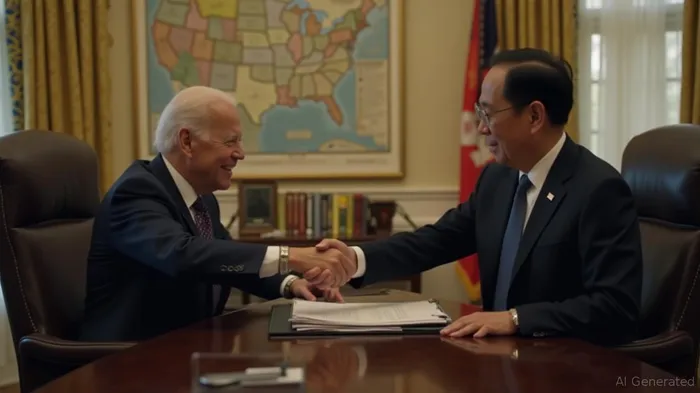
Introduction
The trade deal between the U.S. and Japan plays a vital role in shaping monetary policy, influencing economic outlooks, and guiding investment decisions amidst a period of heightened uncertainty. The current economic environment has been marked by fluctuating trade policies, with tariffs impacting global supply chains and affecting market stability. The reduction of tariffs to 15% on Japanese imports represents a strategic diplomatic victory and suggests a stabilizing factor in international trade relations.
Data Overview and Context
Trade tariffs serve as a key economic indicator, impacting both domestic and international markets by altering the cost and flow of goods. Historically, steep tariffs have posed risks to economic growth and corporate profitability. The recent reduction to 15% from a proposed 25% offers a reprieve, aligning with consensus expectations for trade liberalization. The methodology behind such negotiations often involves intricate bilateral talks, with economic forecasts guiding the outcomes. Limitations persist, however, as the broader impact on sectors like automotive and agriculture remains to be fully assessed.
Analysis of Underlying Drivers and Implications
Several factors have driven the need for tariff adjustments, including pressures from global trade imbalances, geopolitical tensions, and domestic economic policies. The tariff reduction is likely to spur increased Japanese investment in the U.S., potentially boosting sectors such as automobiles and agriculture. This aligns with broader economic trends favoring reduced protectionism and heightened international cooperation. Future trends suggest a cautious optimism for market participants, provided that geopolitical stability continues to improve.
Policy Implications for the Federal Reserve
While the trade agreement itself does not directly necessitate policy changes from the Federal Reserve, it contributes to a more predictable economic environment. The Fed remains focused on monitoring economic data trends, including inflation and employment figures, to guide monetary policy decisions. The reduction in trade tensions may allow the Fed to maintain its cautious approach without immediate intervention.
Market Reactions and Investment Implications
The tariff reduction has immediate implications for several market sectors. Fixed income markets may experience increased stability, with Treasury yields potentially stabilizing as trade tensions ease. Equity markets, particularly in sectors like automotive, could see positive momentum as reduced tariffs improve profitability prospects. Currency markets may experience shifts, with the yen and dollar adjusting to reflect new trade dynamics. Commodities, especially agricultural exports, could see increased demand and price stability. Investors might consider sector-specific strategies that capitalize on renewed trade opportunities, focusing on manufacturing and export-driven equities.
Conclusion & Final Thoughts
The U.S.-Japan tariff agreement marks a significant moment in international trade relations, signaling stability amid a backdrop of uncertainty. Key drivers of this development include geopolitical negotiations and economic policy adjustments. While the immediate implications for monetary policy are limited, the potential for improved market conditions is notable. Investors and policymakers alike should watch for upcoming data releases, including trade balance and inflation figures, to further assess the economic landscape and make informed decisions.

Stay ahead of the market.
Get curated U.S. market news, insights and key dates delivered to your inbox.


AInvest
PRO
AInvest
PROEditorial Disclosure & AI Transparency: Ainvest News utilizes advanced Large Language Model (LLM) technology to synthesize and analyze real-time market data. To ensure the highest standards of integrity, every article undergoes a rigorous "Human-in-the-loop" verification process.
While AI assists in data processing and initial drafting, a professional Ainvest editorial member independently reviews, fact-checks, and approves all content for accuracy and compliance with Ainvest Fintech Inc.’s editorial standards. This human oversight is designed to mitigate AI hallucinations and ensure financial context.
Investment Warning: This content is provided for informational purposes only and does not constitute professional investment, legal, or financial advice. Markets involve inherent risks. Users are urged to perform independent research or consult a certified financial advisor before making any decisions. Ainvest Fintech Inc. disclaims all liability for actions taken based on this information. Found an error?Report an Issue


ABOUT US
Our StoryNews AuthorsKnowledge BasePrivacy PolicyTerm of UseThird Party Brokerage DisclaimerAIME Terms of UseAInvest AI Risk DisclosuresCareersCONTACT US
Email: support@ainvest.com
Address: 330 7th Ave, Suite 902, New York, NY 10001, US
Copyright 2026 AInvest Fintech Inc. All rights reserved.


Comments
No comments yet