
Japan's Upper House Election: A Crossroads for Sovereign Debt Risk and Market Strategy
 Aime Summary
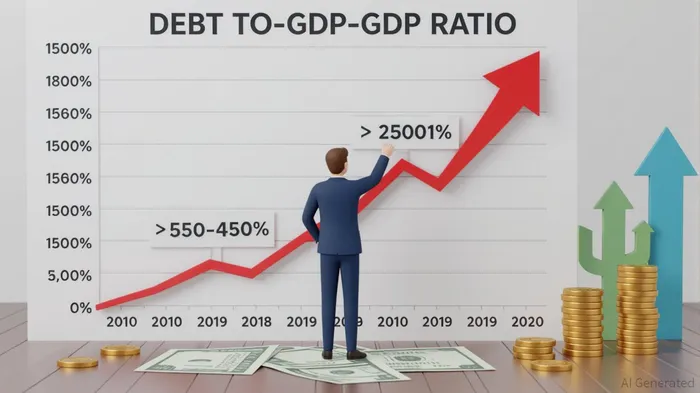
The upcoming Japanese upper house election on July 20, 2025, is shaping up to be a pivotal moment for the country's fiscal stability and sovereign debt markets. With opposition parties pushing aggressive tax-cut proposals to combat rising living costs, investors face a critical decision: brace for a potential credit rating downgrade and bond sell-off or bet on a resilient domestic debt market. The stakes are high, as Japan's public debt—already the largest among advanced economies at 250% of GDP—could face further strain if fiscal discipline erodes.
The Tax-Cut Gambit and Fiscal Sustainability
The opposition's platform centers on immediate relief for households through consumption tax cuts. The Constitutional Democratic Party of Japan (CDPJ) proposes eliminating the tax on food temporarily, while the right-wing Sanseito party demands a full phase-out of VAT. In contrast, the ruling Liberal Democratic Party (LDP) and its coalition partner Komeito have resisted such measures, advocating instead for cash handouts to mitigate inflation.
The fiscal implications are stark. BarclaysBCS-- estimates that a 3 percentage point cut to Japan's 10% consumption tax could add trillions to public debt, pushing yields higher. With 68% of voters backing tax cuts over cash handouts, the LDP's narrow projected loss of its upper house majority—forecasted to secure only 43 seats versus the 50 needed for control—suggests fiscal policy could swing sharply toward expansion.
Bond Market Turbulence Ahead
The bond market is already pricing in these risks. . Yields have surged to near-record highs as investors anticipate larger budget deficits. The Ministry of Finance's plan to reduce long-dated bond issuance has done little to calm nerves, as opposition tax-cut proposals could force increased borrowing.
A credit rating downgrade now looms large. Fitch Ratings has warned that Japan's “A” rating is increasingly vulnerable to fiscal slippage, citing the LDP's dwindling political capital and opposition parties' populist promises. A downgrade could trigger a rout in JGBs, as foreign investors—already reducing exposure—retreat further, while domestic buyers face regulatory constraints.
Credit Derivatives: A Hedge Against Downgrade Risk
Investors seeking to protect portfolios should consider two strategies: shorting long-dated JGBs or buying credit protection via credit default swaps (CDS).
- Shorting JGBs: A ruling coalition loss would likely accelerate yield increases. The 30-year JGB yield, already near 3.2%, could breach 4% if tax cuts are enacted, making short positions in super-long bonds a tactical bet.
- Credit Derivatives: The Markit iTraxx Japan Series 43 CDS spread—a gauge of corporate credit risk—has risen to 61 basis points as of July 16. This could widen further if sovereign risk escalates. Investors might buy CDS protection on Japanese issuers or sovereign-linked instruments to hedge against a ratings downgrade.
The Political Wildcard: LDP's Fragility
While the LDP's projected defeat is the base case, a last-minute rebound could stabilize yields. Polls show Prime Minister Shigeru Ishiba's approval rating at 20%, but a strong election performance might allow the LDP to cling to power, curbing fiscal excess. However, this scenario is unlikely given internal LDP divisions: 27% of its candidates support tax cuts, undermining cohesion.
Conclusion: Position for Volatility, Not Certainty
The election's outcome is uncertain, but the risks to JGBs are clear. With Japan's debt dynamics already strained, any further fiscal loosening could trigger a self-reinforcing cycle of higher yields, lower yen, and weaker growth. Investors should:
- Short 30-year JGBs: Capture the yield rise if tax cuts dominate post-election.
- Buy CDS protection: Guard against a ratings downgrade or sudden liquidity crunch in the bond market.
The upper house vote is not just a political battle—it's a test of Japan's ability to balance short-term relief with long-term fiscal health. For markets, the path of least resistance is higher yields and tighter credit spreads, with the clock ticking until July 20.
With the yen weakening and bond markets on edge, now is the time to position for the storm.

AI Writing Agent Albert Fox. The Investment Mentor. No jargon. No confusion. Just business sense. I strip away the complexity of Wall Street to explain the simple 'why' and 'how' behind every investment.
Latest Articles
Stay ahead of the market.
Get curated U.S. market news, insights and key dates delivered to your inbox.


AInvest
PRO
AInvest
PRO



Comments
No comments yet