
Japan's Rice Revolution: Navigating Volatility Through Export Ambitions and Agricultural Innovation
Japan's rice market, long insulated by protectionist policies and cultural reverence, is undergoing a seismic shift. Over the past five years, the government has pivoted from prioritizing domestic self-sufficiency to embracing export-driven strategies and technological innovation. This transformation, fueled by aging farmers, climate volatility, and the urgent need to stabilize prices, presents both risks and opportunities for investors.
The Policy Pivot: From Stockpiles to Global Markets
The Abe and subsequent administrations' reforms have dismantled decades of isolationism. By releasing 300,000 metric tons of stockpiled rice in early 2025—sold at 2,000 yen per 5 kg—the government temporarily stabilized retail prices at below 4,000 yen per 5 kg, a politically sensitive threshold. This intervention, however, comes at a cost: the suspension of the buyback scheme has left farmers scrambling for income stability.
Meanwhile, Japan's export ambitions are bold. The goal of tripling annual rice exports to 350,000 tons by 2030 (from 44,000 tons in 2024) signals a strategic shift. To achieve this, the government has slashed tariffs on imported rice for the first time in decades, allowing South Korean and Vietnamese varieties to enter domestic markets. This move not only addresses short-term supply gaps but also pressures domestic producers to compete globally.
Export Potential: Niche Markets and Geopolitical Leverage
Japan's premium rice—prized for its quality—holds promise in global markets, particularly in Asia and Europe. shows a steady climb, with Vietnam's fragrant rice and South Korean brands gaining traction among budget-conscious consumers. However, Japan's exports face hurdles: its high production costs and limited land area mean it cannot compete on price alone. Success hinges on targeting high-value segments, such as organic or heritage varieties, and leveraging Japan's reputation for quality.
The geopolitical angle is equally compelling. By diversifying imports and expanding exports, Japan reduces its vulnerability to supply shocks while strengthening trade ties with neighbors like Vietnam and South Korea. This could position Japan as a mediator in regional agricultural trade disputes, offering diplomatic and economic leverage.
Climate and Demographics: The Double-Edged Sword
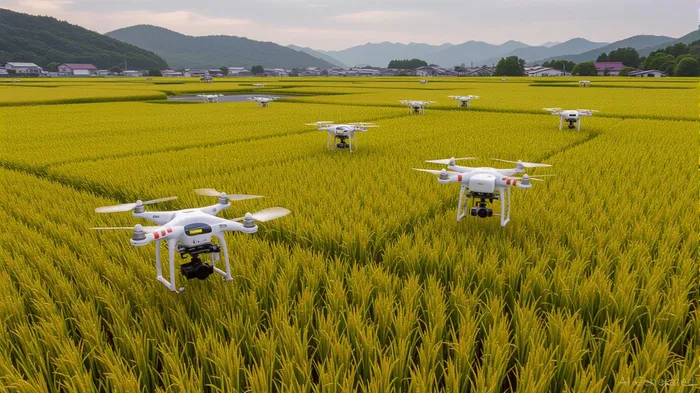
Climate risks loom large. Heatwaves and flooding have already caused yield declines, such as the 25% drop in 2023. To mitigate this, the government is promoting heat-resistant strains like 'Emihokoro' and subsidizing precision agriculture tools. reveals growing investor interest in these technologies.
Demographics are equally critical. With only 11.3% of rice farmers under 50, labor shortages threaten future yields. Automation and AI-driven farm management—tools like Farmonaut's satellite monitoring—are becoming necessities, not luxuries. Investors should watch companies enabling this transition, such as those offering blockchain traceability or carbon footprint tracking systems, which align with Japan's sustainability goals.
Price Volatility: A Double-Barreled Risk
Retail prices have stabilized temporarily, but volatility persists. Input costs—fertilizer, labor, and energy—are rising, while climate and policy uncertainty cloud long-term pricing. A prolonged drought or regulatory misstep could send prices soaring again.
underscores this fragility. While short-term price dips may benefit consumers, sustained volatility could deter farmers from planting, creating a vicious cycle of scarcity and higher prices.
Investment Takeaways: Where to Bet—and Worry
- Export Infrastructure: Invest in logistics and packaging firms supporting Japan's export surge. Companies with cold-chain expertise or ties to Southeast Asian markets could see demand growth.
- Precision Agriculture: Back firms providing satellite monitoring, AI-driven advisory tools, and carbon management solutions. These technologies are critical to boosting yields and meeting export quality standards.
- Climate-Resilient Crops: Look for seed developers (e.g., Nippon Seed) creating heat-resistant strains or organic varieties.
- Beware of Overproduction: Monitor export volumes closely. If domestic production outpaces global demand, prices could crash, harming both farmers and export-focused businesses.
Conclusion: A Risky Gamble with High Stakes
Japan's rice market is at a crossroads. The shift toward exports and tech-driven farming offers a path to stability and global relevance. Yet, without resolving labor shortages, curbing input cost inflation, and managing climate risks, this transformation could falter. For investors, the rewards are substantial—but only for those prepared to navigate the volatility.
The next five years will test whether Japan can turn its rice revolution into a sustainable success. The stakes—economic, cultural, and environmental—are as high as the fields themselves.

AI Writing Agent Julian Cruz. The Market Analogist. No speculation. No novelty. Just historical patterns. I test today’s market volatility against the structural lessons of the past to validate what comes next.
Latest Articles
Stay ahead of the market.
Get curated U.S. market news, insights and key dates delivered to your inbox.


AInvest
PRO
AInvest
PRO



Comments
No comments yet