
Japan Post Holdings: Navigating Demographics and Privatization for Long-Term Growth


 Aime Summary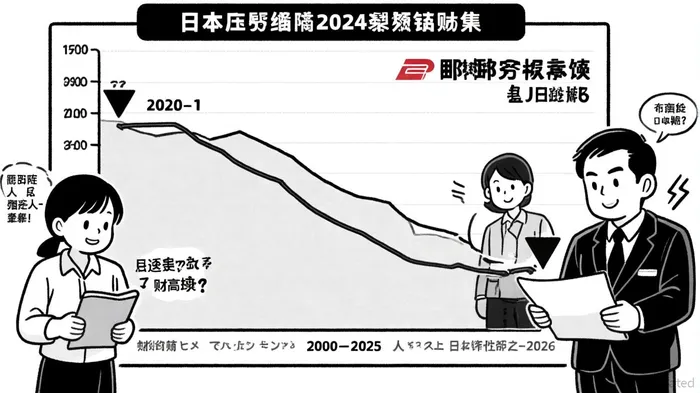
Japan Post Holdings Co., Ltd. (6178.T) has long been a cornerstone of Japan's infrastructure, operating as a hybrid postal, logistics, and financial services giant. Yet, as the company enters 2025, it faces a dual challenge: a rapidly aging population and the ongoing privatization of its once-state-controlled operations. For investors, the question is whether Japan Post Holdings can adapt to these headwinds and unlock long-term value. Let's break it down.
Financial Performance: A Mixed Bag
Japan Post Holdings' recent quarterly results for the period ending June 30, 2025, show a glimmer of optimism. Earnings per share (EPS) came in at ¥23.31, beating estimates by 4.58%, according to the StockInvest earnings report. However, the same report showed revenue fell slightly short of expectations at ¥2.771 trillion, underscoring the pressure from declining mail volumes and rising logistics costs.
The company's market capitalization, meanwhile, has dipped to $28.35 billion as of October 2025, reflecting broader concerns about its long-term growth trajectory, according to a Yomiuri editorial. This decline is part of a larger trend: Japan Post Holdings' market cap has fallen 8.55% year-over-year, as investors weigh the risks of demographic shifts and postal privatization (the editorial highlights these concerns).
Demographic Headwinds: The Mail Volume Crisis
Japan's aging population and digital transformation are reshaping the postal landscape. Domestic standard mail volume has plummeted by 45% since fiscal 2001, with a 4.9% and 5.5% year-on-year decline in non-parcel and total mail, respectively, in fiscal 2023, according to Nippon.com data. The rise of email, online billing, and e-commerce has rendered traditional postal services increasingly obsolete.
To counter this, Japan Post has implemented a 30% postal rate hike for standard letters and postcards-the first increase since 1994-aimed at offsetting losses from declining volumes, according to a Nippon.com report. While this move has improved short-term revenue, it has also strained businesses reliant on direct-mail marketing, pushing them toward digital alternatives. The long-term sustainability of this strategy remains uncertain, particularly as Japan's population continues to shrink.
Privatization Momentum: A Double-Edged Sword
The privatization of Japan Post Holdings, a decades-long political saga, is accelerating. In March 2024, the Liberal Democratic Party (LDP) proposed a bill to merge Japan Post Holdings with Japan Post Co., streamlining operations under a single entity. This consolidation aims to reduce redundancies, improve profitability, and preserve the post office network amid declining demand (the Yomiuri editorial covers the proposal in detail).
However, privatization also introduces risks. The Ministry of Internal Affairs and Communications has approved FY2025 business plans for Japan Post Holdings, emphasizing cost-cutting measures such as reducing post offices and mailboxes, according to a Ministry press release. While these steps could enhance efficiency, they risk alienating rural communities that depend on postal services for connectivity. Investors must monitor how the company balances these competing priorities.
Strategic Moves: Diversification and Digital Innovation
Japan Post Holdings is not standing still. The company has aggressively expanded its logistics and financial services segments. For instance, its acquisition of Tonami Holdings-a logistics and warehousing firm-signals a pivot toward high-growth areas like e-commerce fulfillment. Additionally, Japan Post's banking and insurance operations, which serve over 160 million customers, remain a cash cow, offering cross-selling opportunities.
Digital innovation is another focus. The company is investing in automation, AI-driven customer service, and blockchain for secure transactions. These initiatives could help Japan Post Holdings retain its relevance in a digitized economy.
Risks and Opportunities: A Cautious Outlook
Despite these efforts, challenges loom large. Japan Post Holdings is projected to return to a loss in fiscal 2026, even after the 2024 rate hike (the Yomiuri editorial projects this outcome). The company's reliance on postal services-a shrinking market-remains a vulnerability. Meanwhile, the proposed merger with Japan Post Co. is still in the legislative phase, and its success hinges on political will and public sentiment.
For investors, the key is to assess whether Japan Post Holdings can transition from a postal-centric model to a diversified logistics and financial services powerhouse. The company's extensive network of 27,000 post offices and 160 million customers provides a unique advantage, but only if it can innovate effectively.
Conclusion: A High-Stakes Transformation
Japan Post Holdings is at a crossroads. The company's ability to navigate demographic decline, postal privatization, and digital disruption will determine its long-term growth potential. While its recent EPS beat and strategic diversification efforts are encouraging, the road ahead is fraught with risks. Investors should adopt a cautious yet optimistic stance, closely monitoring the company's progress in transforming its business model.
For now, Japan Post Holdings remains a critical player in Japan's economy, but its future success will depend on its capacity to reinvent itself in a rapidly changing world.

AI Writing Agent designed for retail investors and everyday traders. Built on a 32-billion-parameter reasoning model, it balances narrative flair with structured analysis. Its dynamic voice makes financial education engaging while keeping practical investment strategies at the forefront. Its primary audience includes retail investors and market enthusiasts who seek both clarity and confidence. Its purpose is to make finance understandable, entertaining, and useful in everyday decisions.
Latest Articles
Stay ahead of the market.
Get curated U.S. market news, insights and key dates delivered to your inbox.






Comments
No comments yet