
Japan's Political Uncertainty and Its Impact on Market Stability: A Deep Dive into Risks and Opportunities
 Aime Summary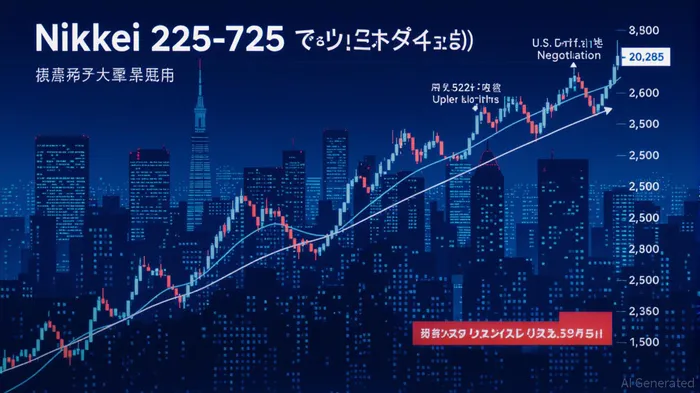
Japan's political landscape in 2025 has become a theater of contradictions. Prime Minister Shigeru Ishiba's Liberal Democratic Party (LDP) and its coalition partner, Komeito, lost their majority in the July 2025 upper house election, leaving Ishiba to govern as a minority leader for the first time in the LDP's 70-year history. Yet, amid this instability, the prime minister has defied expectations, refusing to resign and doubling down on his economic agenda. This defiance raises a critical question for investors: Is Japan's political turbulence a cautionary signal, or a unique opportunity to capitalize on undervalued equities in a market primed for structural change?
Political Instability and Investor Sentiment
The July election results—a loss of 19 seats for the LDP—exposed deep public frustration with rising inflation, stagnant wages, and the soaring cost of essentials like rice. Ishiba's government now relies on cooperation with opposition parties, including the far-right Sanseito, whose populist policies clash with the LDP's reformist agenda. This fragmentation has created a “governance gap,” where legislative progress is delayed and policy coherence is eroded.
Investor sentiment has reflected this uncertainty. The Nikkei 225, while technically within an ascending channel, has shown weak momentum, trading sideways as markets await clarity on trade policies and fiscal stimulus. However, history suggests that political instability in Japan often precedes market corrections followed by rebounds. For example, the 2012 election of Shinzo Abe, which ended a decade of LDP rule, initially triggered volatility but eventually led to a decade-long bull market under his Abenomics reforms.
Currency Fluctuations and the Yen's Paradox
The yen has been a barometer of Japan's political and economic health. After briefly strengthening to 148.46 per dollar post-election, the currency has since weakened to 155, pressured by fears of a fiscal stimulus package and prolonged policy gridlock. The Bank of Japan's (BOJ) gradual withdrawal from yield curve control has further amplified volatility, with 10-year JGB yields surging to 1.6%—a 30-year high.
This paradox—a weak yen boosting JGB returns for domestic investors but undermining Japan's role as a safe-haven currency—has created a mixed bag for foreign investors. A weaker yen makes Japanese exports more competitive, potentially benefiting sectors like automotive and machinery. However, it also increases the cost of imported raw materials, squeezing margins for energy and manufacturing firms. For long-term investors, hedging currency risk while targeting yen-undervalued equities could yield asymmetric rewards.
Foreign Direct Investment: A Double-Edged Sword
Japan's political instability has introduced headwinds for foreign direct investment (FDI). The LDP's weakened position may delay structural reforms in labor markets and pension systems, which are critical for sustaining long-term growth. Additionally, the rise of protectionist factions like Sanseito threatens to erode Japan's reputation as a trade-friendly partner.
Yet, this instability also creates openings. The U.S.-Japan trade negotiations, now a focal point of Ishiba's agenda, could unlock new opportunities in sectors like semiconductors, green technology, and hydrogen energy. A favorable trade deal—expected by August 1—might stabilize investor sentiment and attract capital to sectors aligned with Japan's strategic priorities.
Risks vs. Opportunities: A Calculated Bet
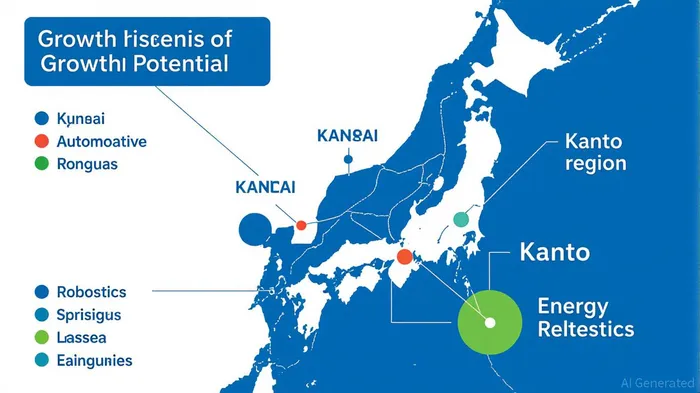
For long-term investors, Japan's current environment resembles a “buy-the-dip” scenario. The Nikkei 225's 12-month trailing P/E ratio of 18.5 is below its 10-year average of 22.5, suggesting undervaluation relative to global peers. Sectors like robotics, semiconductors, and renewable energy—key pillars of Japan's structural growth—offer resilience against political noise.
However, short-term risks remain. A no-confidence motion or snap election could disrupt reform timelines, while a prolonged yen depreciation could erode corporate profitability. Investors must balance these risks with Japan's enduring strengths: a skilled labor force, advanced manufacturing capabilities, and a strategic role in global supply chains.
Investment Strategy for the New Normal
- Sector Focus: Prioritize companies in robotics (Fanuc, Yaskawa Electric), semiconductors (Toshiba, Renesas), and green energy (Itochu, Mitsubishi). These sectors align with Japan's long-term growth drivers and are less sensitive to political shifts.
- Currency Hedging: Use forward contracts or yen-pegged ETFs to mitigate currency volatility while maintaining exposure to undervalued equities.
- Event-Driven Plays: Monitor the U.S.-Japan trade deal and Ishiba's ability to secure a no-confidence motion. A favorable outcome could trigger a market rebound.
- Dividend Yielders: Japanese equities offer an average dividend yield of 2.1%, outpacing global averages, making them attractive in a high-yield environment.
Conclusion: Stability in the Storm
Japan's political uncertainty is neither a death knell nor a silver bullet for investors. For those with a long-term horizon, the current environment offers a rare combination of undervaluation, structural growth potential, and policy-driven tailwinds. Ishiba's defiance may yet prove to be the catalyst for a new era of reform, turning today's chaos into tomorrow's opportunity. As the Nikkei charts its path through this volatility, patience and precision will be the keys to unlocking Japan's enduring value.

Stay ahead of the market.
Get curated U.S. market news, insights and key dates delivered to your inbox.


AInvest
PRO
AInvest
PRO



Comments
No comments yet