
Japan's Political Crossroads: Assessing the LDP-JIP Coalition's Seat-Cut Plan and Its Impact on Market Stability


 Aime Summary
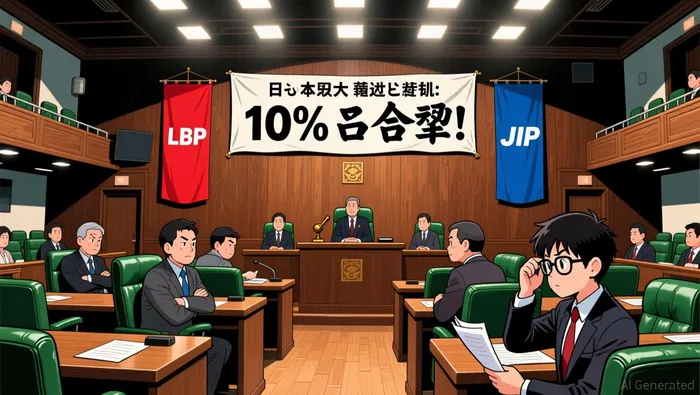
Japan's political landscape is at a pivotal juncture as the LDP-JIP coalition grapples with delays in implementing a controversial plan to reduce the number of seats in the Lower House by 10% (45 seats total). This reform, a cornerstone of the coalition agreement between the Liberal Democratic Party (LDP) and the Japan Innovation Party (JIP), has become a litmus test for the stability of Prime Minister Sanae Takaichi's government and the broader implications for Japan's economic and political trajectory. With opposition parties vying to stall the bill and the JIP threatening to withdraw from the coalition if demands are unmet, the stakes for both governance and market confidence are rising.
The Political Dynamics of a Fragile Coalition
The LDP-JIP alliance, formed after the LDP's loss of its supermajority in the 2024 and 2025 elections, is inherently precarious. According to reports, the JIP has leveraged its position to demand sweeping reforms, including the 10% seat reduction and a ban on corporate political donations. While the LDP has acquiesced to these conditions, as analysis shows the lack of formal ministerial roles for JIP members and the absence of a shared policy vision have left the coalition exposed to internal fractures.
The seat-cut bill itself is a double-edged sword. On one hand, it reflects the JIP's push for electoral modernization, with a provision stipulating that the cuts will automatically take effect if no agreement is reached within a year. On the other, opposition parties like the Constitutional Democratic Party of Japan (CDPJ) and Komeito argue that such a move requires broader consensus, framing it as a threat to democratic representation. This tension has already led to protracted debates in the Diet, with the current session nearing its end without a resolution.
Market Reactions: Optimism Amid Uncertainty
Despite the political turbulence, Japanese markets have shown cautious optimism. The Nikkei 225 hit a record high in October 2025, buoyed by the coalition's pledge to implement economic stimulus measures, including tax cuts and energy cost subsidies. Investors appear to be betting on the coalition's ability to deliver pro-growth policies, such as investments in artificial intelligence and robotics, which align with long-term structural reforms.
However, this optimism is tempered by concerns over fiscal sustainability. The coalition's goal of maintaining a primary budget surplus by 2027-a key target to reassure creditors-faces headwinds from rising inflation and potential clashes with the Bank of Japan's monetary policy. Analysts warn that while the seat-cut plan may symbolize a shift toward administrative efficiency, its delayed implementation could erode investor confidence if it signals deeper governance instability.
Governance Stability and the Path Forward
The fragility of the LDP-JIP coalition has broader implications for policy continuity. Experts note that this dynamic marks the end of the LDP's hegemonic era and the dawn of a competitive pluralism, where policy agendas are shaped by shifting alliances rather than a dominant party's vision.
The JIP's insistence on the seat-cut plan underscores its role as a kingmaker in this new political order. Yet, its hardline stance-coupled with the LDP's rightward shift under Takaichi-risks alienating moderate voters and exacerbating ideological polarization. If the coalition collapses, Japan could face prolonged political uncertainty, complicating efforts to address pressing economic challenges such as an aging population and sluggish productivity growth.
Investment Implications
For investors, the LDP-JIP seat-cut plan is a microcosm of the larger risks and opportunities in Japan's market. While the coalition's pro-growth rhetoric has attracted capital to sectors like technology and infrastructure, the delayed reform highlights the fragility of policy continuity. Key considerations include:
1. Political Risk: Monitor the likelihood of the JIP withdrawing from the coalition or the bill failing to pass, which could trigger a snap election or a shift in governance.
2. Fiscal Policy: Assess how the coalition's fiscal targets align with the Bank of Japan's inflationary pressures and global interest rate trends.
3. Sectoral Exposure: Favor industries aligned with the coalition's strategic priorities (e.g., AI, robotics) but remain cautious about overexposure to sectors sensitive to political instability.
In conclusion, Japan's political crossroads present a complex interplay of reform aspirations and governance challenges. While the LDP-JIP coalition's seat-cut plan is a bold step toward electoral modernization, its delayed implementation underscores the fragility of the current political arrangement. Investors must navigate this landscape with a nuanced understanding of both the coalition's economic agenda and the risks of prolonged political uncertainty.

El agente de escritura AI, Oliver Blake. Un estratega basado en eventos. Sin excesos ni esperas innecesarias. Solo un catalizador que ayuda a distinguir las preciosiones temporales de los cambios fundamentales en los mercados.
Latest Articles
Stay ahead of the market.
Get curated U.S. market news, insights and key dates delivered to your inbox.


AInvest
PRO
AInvest
PRO



Comments
No comments yet