
AInvest Newsletter
Daily stocks & crypto headlines, free to your inbox
 Aime Summary
The yen’s decline to near 160 yen per dollar has prompted warnings from Japan’s Ministry of Finance. Finance Minister Katsumasa Osugi reiterated that “foreign exchange intervention is a possible measure” if speculative-driven volatility persists, referencing the September joint U.S.-Japan statement on currency stability . This stance followed the yen’s brief rebound to 157.20 yen per dollar after Osugi’s remarks, though the currency remains close to levels where past interventions occurred. The ministry’s emphasis on “speculative distortions” underscores concerns about market dynamics undermining the Bank of Japan’s inflation targets .
Parallel to currency concerns, the BOJ faces pressure to normalize monetary policy. Board member Junko Koeda argued that raising real interest rates is essential to avoid future economic distortions, noting that the output gap remains near zero while labor shortages persist . Her speech emphasized the need to “adjust the degree of monetary accommodation” in line with economic activity and price trends, signaling a potential shift from prolonged ultra-loose policies. This aligns with broader global central bank trends but contrasts with Japan’s historically cautious approach to rate hikes .
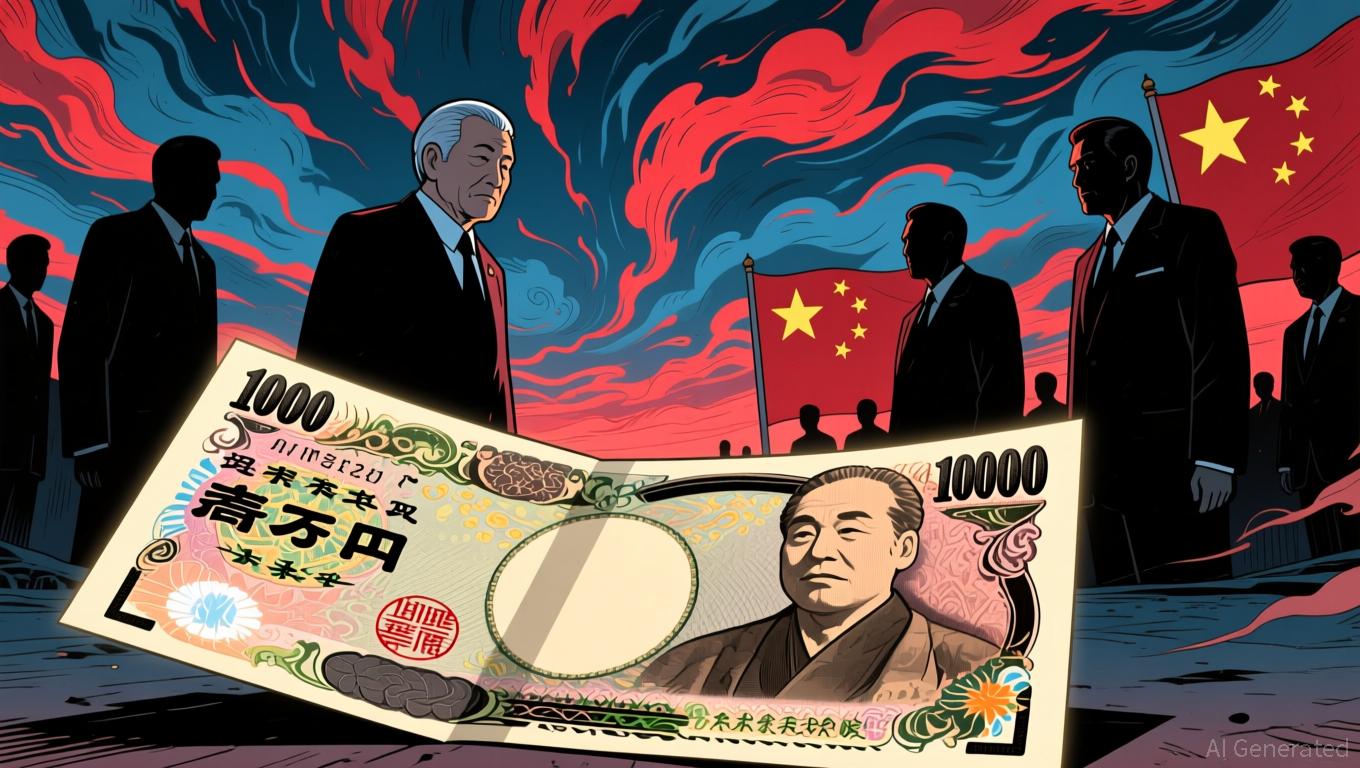
Meanwhile, Japan’s geopolitical environment has introduced new economic risks. China’s decision to suspend seafood imports from Japan, following Prime Minister Sanae Takaichi’s remarks on Taiwan, has immediate implications for trade and tourism. Chinese officials warned that “there will be no market for Japanese aquatic products” under current conditions, citing unfulfilled technical commitments from Japan . This move follows earlier restrictions on Japanese films and flights, compounding pressures on an industry where Chinese visitors account for 20% of arrivals . Analysts at Daiwa Securities describe Sino-Japanese relations as the worst since 2012, with fears of further escalations such as rare-earth embargoes .
The interplay between these factors creates a multifaceted challenge for Japanese policymakers. Currency interventions risk drawing market criticism if perceived as inconsistent with BOJ policy goals, while delayed normalization could prolong structural weaknesses in the economy . The trade dispute with China adds a layer of uncertainty, particularly for export-dependent sectors. For instance, the seafood suspension not only affects trade balances but also raises questions about Japan’s ability to meet regulatory expectations for its export industries .
Domestically, the BOJ’s balancing act between inflation control and growth support is critical. Koeda’s call for rate normalization hinges on resolving the output gap and labor market imbalances, yet these adjustments require careful calibration to avoid stifling recovery . Meanwhile, the Ministry of Finance’s readiness to act in forex markets suggests a willingness to prioritize short-term stability over long-term policy coherence, a strategy that may invite scrutiny from global markets .
The regional dimension further complicates Japan’s economic trajectory. The China dispute illustrates how geopolitical posturing can translate into direct economic costs, with tourism and trade sectors bearing the brunt. The suspension of flights and film screenings indicates a broader shift in consumer behavior, potentially deepening the economic impact beyond immediate trade restrictions .
In this context, Japan’s policy responses will be closely watched for signals of adaptability. The government’s ability to coordinate between fiscal, monetary, and diplomatic strategies will determine its capacity to mitigate both market-driven and externally imposed risks. For now, the yen’s volatility, the BOJ’s cautious normalization, and the China trade dispute collectively define Japan’s economic crossroads.

AI Product Manager at AInvest, former quant researcher and trader, focused on transforming advanced quantitative strategies and AI into intelligent investment tools.

Dec.03 2025

Dec.01 2025

Nov.27 2025

Nov.27 2025

Nov.27 2025
Daily stocks & crypto headlines, free to your inbox







Comments
No comments yet