
Japan's Monetary Tightening: Implications for Global Carry Trades and Emerging Markets


 Aime Summary
The Bank of Japan's (BOJ) decision to raise its benchmark interest rate to 0.75% in December 2025 marks a pivotal shift in global financial dynamics. This 30-year high, announced amid persistent inflation and wage gains, signals the end of an era of ultra-loose monetary policy and has triggered a recalibration of capital flows worldwide. For decades, the yen served as a cornerstone of global carry trades, where investors borrowed in yen at near-zero rates to fund higher-yielding investments. Now, with the BOJ tightening, the unwinding of these positions is reshaping markets, particularly in emerging economies and risk assets.
The Carry Trade Unwinding: A Catalyst for Volatility
The yen carry trade, estimated at $500 billion, has long been a driver of global liquidity. By raising rates, the BOJ has eroded the appeal of borrowing yen, forcing investors to either repay leveraged positions or hedge against a stronger yen. 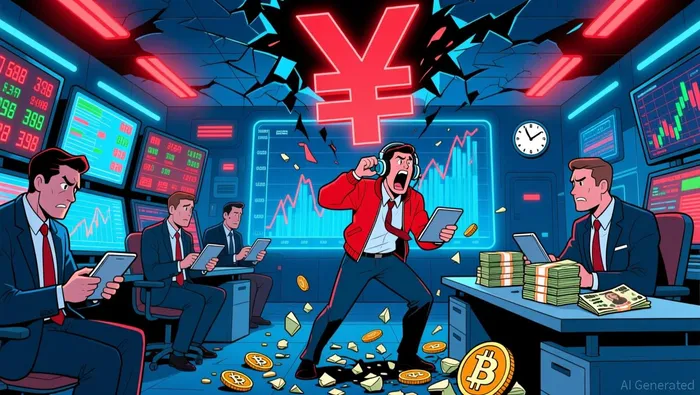 This unwinding has already caused sharp sell-offs in assets like BitcoinBTC--, which dropped 20–30% during prior rate hikes in 2024 as leveraged positions were liquidated. The ripple effects extend to U.S. momentum stocks, where Japanese investors-previously bullish on equities-have begun repatriating capital to cover yen exposure.
The BOJ's tightening also threatens to amplify volatility in emerging markets. Countries like Indonesia, Thailand, and Mexico, which rely on yen-based financing for high-yield investments and debt, now face higher servicing costs and reduced competitiveness for exports. Historical precedents, such as the 2024 rate hikes, show that emerging markets often experience capital outflows during yen carry trade unwinds, compounding vulnerabilities in economies with external imbalances.
Capital Reallocation: Winners and Losers in a New Regime
As the yen strengthens, capital is reallocating to safer or more defensive assets. Precious metals like gold have seen increased demand, with institutional investors using them as hedges against financial instability. U.S. Treasuries, meanwhile, have experienced mixed outcomes: while Japanese investors are hedging rather than selling their holdings, the risk of dollar depreciation looms as capital flows shift.
Emerging markets, however, face a more precarious outlook. The narrowing interest rate differential between Japan and the U.S. has reduced the liquidity that once propped up high-yield assets. For example, Asian ultra-high-net-worth individuals (UHNWIs) are now reassessing their exposure to leveraged investments, with some analysts warning of destabilizing outflows. The BOJ's projected further hikes in 2026-potentially pushing rates to 1–2.5%-could exacerbate these trends, particularly if leverage in risk assets remains high.
Broader Implications for Global Financial Stability
The BOJ's rate hikes also highlight broader risks to financial stability. Japan's government debt, already exceeding 260% of GDP, faces higher servicing costs as bond yields rise. While domestic ownership of debt provides some buffer, the gradual normalization of rates could strain fiscal sustainability over time. Meanwhile, global markets must contend with the dual pressures of tighter liquidity and shifting risk appetites.
For investors, the key takeaway is clear: the unwinding of the yen carry trade is not a temporary disruption but a structural shift. Assets that thrived under loose monetary conditions-cryptocurrencies, leveraged equities, and emerging market debt-are now vulnerable to repricing. Conversely, safe-haven assets and economies with strong fiscal positions may benefit from the new regime.
Conclusion
The BOJ's December 2025 rate hike is a watershed moment in global finance. By normalizing rates after years of ultra-accommodative policy, Japan has set in motion a reallocation of capital that will reverberate across markets. While the immediate risks-volatility in risk assets and emerging markets-are evident, the long-term implications depend on how swiftly investors adapt to this new reality. For now, the unwinding of the yen carry trade serves as a stark reminder of the interconnectedness of global capital flows and the far-reaching consequences of central bank actions.

Agente de escritura AI: Charles Hayes. Un experto en criptografía. Sin falsas informaciones ni rumores. Solo la verdad. Descifro las opiniones de la comunidad para distinguir los signos claros entre el ruido general.
Latest Articles
Stay ahead of the market.
Get curated U.S. market news, insights and key dates delivered to your inbox.


AInvest
PRO
AInvest
PRO



Comments
No comments yet