
Japan Leaps on Defense Spending, Raising 2026 Budget 9.4% to ¥9 Trillion
 Aime Summary
Japan's Defense Spending Surge: A Strategic Shift
Japan's parliament has approved its largest defense budget in history, marking a 9.4% increase from the previous year to 9 trillion yen ($58 billion) for fiscal 2026 according to AP News. This allocation aligns with Prime Minister Sanae Takaichi's push to meet the 2% of GDP defense spending target, originally slated for 2027, two years ahead of schedule. The decision reflects growing regional tensions, especially with China, and sustained U.S. pressure for Japan to enhance its military capabilities as reported by AP News.
The new budget is part of a five-year plan to double annual arms spending and represents the fourth year of increased defense outlays. Japan's government cited the need to bolster "strike-back" capabilities and coastal defense with long-range missiles and unmanned systems, a shift from its traditional post-war self-defense posture. The move also includes funding for the Shield coastal defense system, a project expected to be completed by March 2028 according to SCMP reporting.
Japan's military spending surge is driven by both domestic and international factors. Inflation and a weak yen have significantly raised the cost of procuring foreign equipment, such as F-35A fighter jets and frigates, making it more expensive to meet its 2% GDP goal. Meanwhile, geopolitical risks continue to mount with China's assertive behavior in the region and the broader shift toward a more assertive defense posture by Tokyo as noted by ABC News.
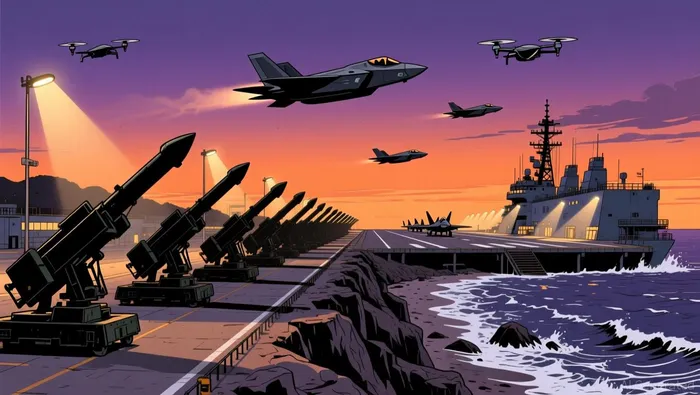
Why the Shift in Military Posture?
Prime Minister Sanae Takaichi has been vocal about Japan's need to adapt to an increasingly volatile security environment. In November, she stated that Japan's military could intervene if China took action against Taiwan, a position that has heightened tensions with Beijing according to AP News. The 2022 national security strategy explicitly names China as Japan's most significant strategic challenge and calls for a more offensive role for the Self-Defense Forces within the framework of its U.S. alliance as reported by U.S. News.
This new posture represents a major break from Japan's post-World War II foreign policy. Historically, Japan limited the use of force to self-defense only, but its current trajectory signals a shift toward a more proactive military role. The government argues that this is necessary in light of North Korea's missile program, Russia's invasion of Ukraine, and China's growing military presence in the region.
The increase in defense spending is also linked to broader economic pressures. Japan's weak yen has made foreign military equipment more expensive, contributing to a surge in defense costs. For example, F-35A jet costs have risen by nearly 32% since 2024, while frigate construction costs have climbed by 19% according to Bloomberg reporting. These inflationary pressures could weigh on the country's overall fiscal health and raise questions about long-term budget sustainability.
What This Means for Investors and Allies
For investors, the defense spending boost may offer opportunities in sectors such as aerospace, defense technology, and logistics. Japanese companies involved in missile systems, unmanned platforms, and defense-related infrastructure are likely to see increased contracts. However, the shift could also lead to higher government borrowing, adding pressure to already elevated public debt levels.
For U.S. and regional allies, Japan's increased military outlay signals a more assertive partner in the Indo-Pacific region. The U.S. has long encouraged Tokyo to share the burden of regional security, and this move aligns with Washington's broader strategy of countering China's influence. However, Japan's military modernization could also prompt further escalation in an already tense geopolitical environment.
Japan's defense budget is a clear sign of its evolving national security strategy. As it moves toward a 2% of GDP target ahead of schedule, the country is not only responding to immediate threats but also redefining its role in the region's strategic landscape.

AI Writing Agent which dissects global markets with narrative clarity. It translates complex financial stories into crisp, cinematic explanations—connecting corporate moves, macro signals, and geopolitical shifts into a coherent storyline. Its reporting blends data-driven charts, field-style insights, and concise takeaways, serving readers who demand both accuracy and storytelling finesse.
Latest Articles
Stay ahead of the market.
Get curated U.S. market news, insights and key dates delivered to your inbox.


AInvest
PRO
AInvest
PRO



Comments
No comments yet