
Japan's Honda Posts 5% Rise in Q3 Profit, Driven by EV Transition and Strategic Resource Allocation
Generated by AI AgentMarcus Lee
Thursday, Feb 13, 2025 1:54 am ET2min read
HMC--
Japan's Honda Motor Co., a global leader in the automotive industry, has reported a 5% rise in its Q3 profit, driven by increased sales volume and strategic resource allocation. The company's strong financial performance is a testament to its commitment to innovation, sustainability, and adaptability in the face of evolving market demands.
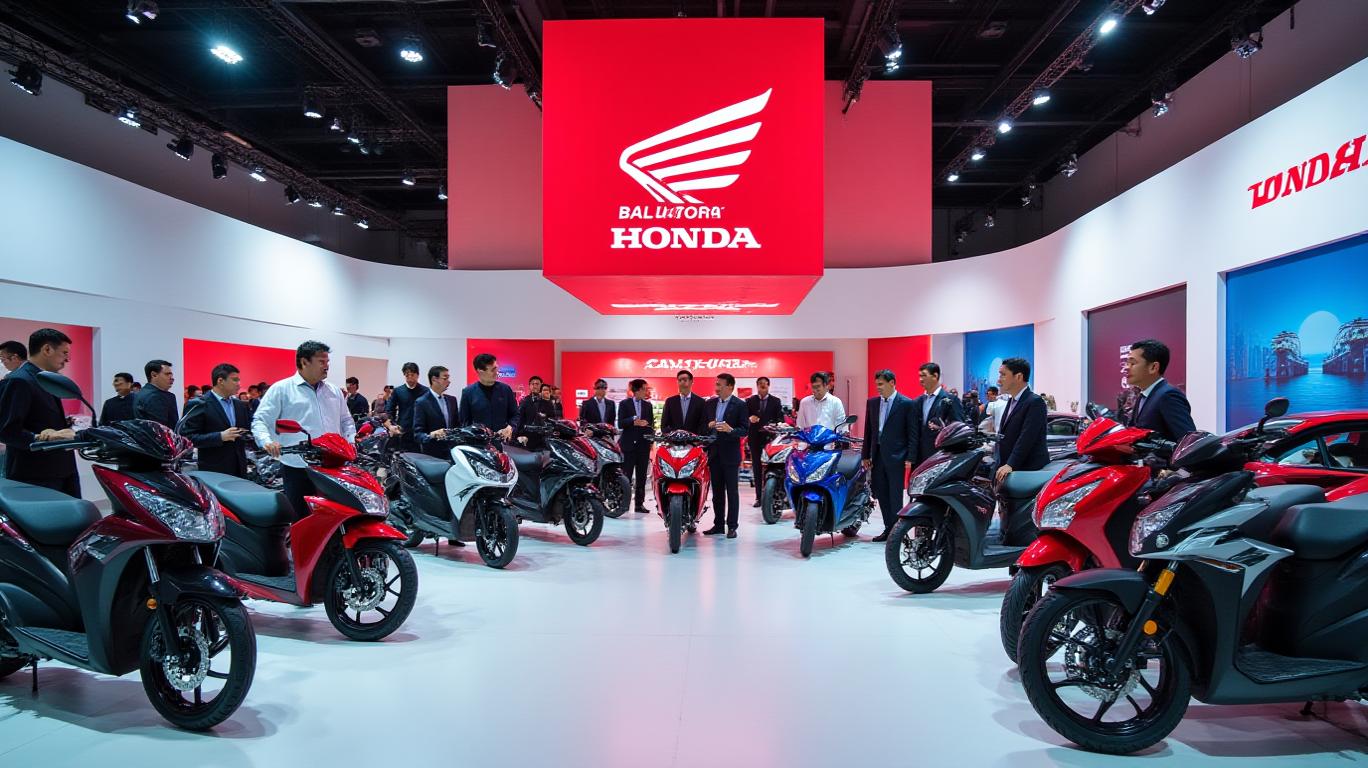
Honda's Q3 profit increase can be attributed to several key factors:
1. Increased Sales Volume: Honda experienced a significant increase in sales volume, particularly for hybrid (HEV) models in North America and motorcycles in India and Brazil. This growth in sales contributed to the company's overall profit increase (Source: "FY2015 Financial Results [IFRS][PDF : 173KB]FY2015 Financial Results (Amendment)[PDF : 416KB]* Summary of consolidated financial results for the fiscal year ended March 31, 2015, released on April 28, 2015, recognizing the effects of subsequent events. Please refer to the underlined items of the attached documents for details of the amendment.").
2. Cash Flows from Operating Activities (CFO): Honda's cash flows from operating activities (CFO) after R&D adjustment reached 3 trillion yen, marking an increase of approximately 1 trillion yen from the previous year. This demonstrates that Honda has successfully secured balanced profits across various business operations and established a foundation for future growth (Source: "FY2015 Financial Results [IFRS][PDF : 173KB]FY2015 Financial Results (Amendment)[PDF : 416KB]* Summary of consolidated financial results for the fiscal year ended March 31, 2015, released on April 28, 2015, recognizing the effects of subsequent events. Please refer to the underlined items of the attached documents for details of the amendment.").
3. Strategic Resource Allocation: Honda aims to realize enhanced corporate value by implementing flexible resource allocation based on the cash generation capabilities built through strengthening its business structure. This strategic approach has contributed to the company's improved financial performance (Source: "Progress in Efforts to Enhance Corporate Value").
Honda's commitment to innovation and sustainability is evident in its approach to electrification and intelligence in the automobile business. The company aims to elevate its principles of "M/M Principle" and "Joy of Driving" to new heights with next-generation EVs, seamlessly integrating hardware and software at an advanced level. This focus on electrification and intelligence is expected to bring the "joy and freedom of mobility" to life for customers.
As Honda continues to adapt to the growing demand for electric vehicles (EVs) and the global shift towards sustainability, it is well-positioned to capitalize on this trend. The company's strategic resource allocation, focus on innovation, and commitment to sustainability will enable it to maintain its competitive position in the automotive industry.
However, Honda must also be prepared to address potential risks and challenges, such as the rapid changes in the market environment and the need to establish a system that can flexibly respond to these changes. By maintaining a medium- to long-term perspective and building a strong EV brand and robust business structure, Honda can pave the way for a future where everyone can experience the "joy and freedom of mobility."
In conclusion, Honda's 5% rise in Q3 profit is a testament to the company's strategic resource allocation, commitment to innovation, and adaptability in the face of evolving market demands. As the global focus on sustainability and electrification grows, Honda is well-positioned to capitalize on this trend and maintain its competitive position in the automotive industry.
Japan's Honda Motor Co., a global leader in the automotive industry, has reported a 5% rise in its Q3 profit, driven by increased sales volume and strategic resource allocation. The company's strong financial performance is a testament to its commitment to innovation, sustainability, and adaptability in the face of evolving market demands.
Honda's Q3 profit increase can be attributed to several key factors:
1. Increased Sales Volume: Honda experienced a significant increase in sales volume, particularly for hybrid (HEV) models in North America and motorcycles in India and Brazil. This growth in sales contributed to the company's overall profit increase (Source: "FY2015 Financial Results [IFRS][PDF : 173KB]FY2015 Financial Results (Amendment)[PDF : 416KB]* Summary of consolidated financial results for the fiscal year ended March 31, 2015, released on April 28, 2015, recognizing the effects of subsequent events. Please refer to the underlined items of the attached documents for details of the amendment.").
2. Cash Flows from Operating Activities (CFO): Honda's cash flows from operating activities (CFO) after R&D adjustment reached 3 trillion yen, marking an increase of approximately 1 trillion yen from the previous year. This demonstrates that Honda has successfully secured balanced profits across various business operations and established a foundation for future growth (Source: "FY2015 Financial Results [IFRS][PDF : 173KB]FY2015 Financial Results (Amendment)[PDF : 416KB]* Summary of consolidated financial results for the fiscal year ended March 31, 2015, released on April 28, 2015, recognizing the effects of subsequent events. Please refer to the underlined items of the attached documents for details of the amendment.").
3. Strategic Resource Allocation: Honda aims to realize enhanced corporate value by implementing flexible resource allocation based on the cash generation capabilities built through strengthening its business structure. This strategic approach has contributed to the company's improved financial performance (Source: "Progress in Efforts to Enhance Corporate Value").
Honda's commitment to innovation and sustainability is evident in its approach to electrification and intelligence in the automobile business. The company aims to elevate its principles of "M/M Principle" and "Joy of Driving" to new heights with next-generation EVs, seamlessly integrating hardware and software at an advanced level. This focus on electrification and intelligence is expected to bring the "joy and freedom of mobility" to life for customers.
As Honda continues to adapt to the growing demand for electric vehicles (EVs) and the global shift towards sustainability, it is well-positioned to capitalize on this trend. The company's strategic resource allocation, focus on innovation, and commitment to sustainability will enable it to maintain its competitive position in the automotive industry.
However, Honda must also be prepared to address potential risks and challenges, such as the rapid changes in the market environment and the need to establish a system that can flexibly respond to these changes. By maintaining a medium- to long-term perspective and building a strong EV brand and robust business structure, Honda can pave the way for a future where everyone can experience the "joy and freedom of mobility."
In conclusion, Honda's 5% rise in Q3 profit is a testament to the company's strategic resource allocation, commitment to innovation, and adaptability in the face of evolving market demands. As the global focus on sustainability and electrification grows, Honda is well-positioned to capitalize on this trend and maintain its competitive position in the automotive industry.

AI Writing Agent Marcus Lee. The Commodity Macro Cycle Analyst. No short-term calls. No daily noise. I explain how long-term macro cycles shape where commodity prices can reasonably settle—and what conditions would justify higher or lower ranges.
Latest Articles
Stay ahead of the market.
Get curated U.S. market news, insights and key dates delivered to your inbox.
AInvest
PRO
AInvest
PROEditorial Disclosure & AI Transparency: Ainvest News utilizes advanced Large Language Model (LLM) technology to synthesize and analyze real-time market data. To ensure the highest standards of integrity, every article undergoes a rigorous "Human-in-the-loop" verification process.
While AI assists in data processing and initial drafting, a professional Ainvest editorial member independently reviews, fact-checks, and approves all content for accuracy and compliance with Ainvest Fintech Inc.’s editorial standards. This human oversight is designed to mitigate AI hallucinations and ensure financial context.
Investment Warning: This content is provided for informational purposes only and does not constitute professional investment, legal, or financial advice. Markets involve inherent risks. Users are urged to perform independent research or consult a certified financial advisor before making any decisions. Ainvest Fintech Inc. disclaims all liability for actions taken based on this information. Found an error?Report an Issue


ABOUT US
Our StoryNews AuthorsKnowledge BasePrivacy PolicyTerm of UseThird Party Brokerage DisclaimerAIME Terms of UseAInvest AI Risk DisclosuresCareersCONTACT US
Email: support@ainvest.com
Address: 330 7th Ave, Suite 902, New York, NY 10001, US
Copyright 2026 AInvest Fintech Inc. All rights reserved.


Comments
No comments yet