
Japan's H3 Rocket Fails Again — What This Means for Space Ambitions and Geolocation Plans


 Aime Summary
Japan's space ambitions took another hit this week when the H3 rocket, a flagship of the nation's space program, failed to place a critical navigation satellite into orbit. The incident, which occurred on December 21, 2025, marks the second failure for the H3 rocket — the first since its debut in March 2023. The rocket was carrying the Michibiki 5 satellite, 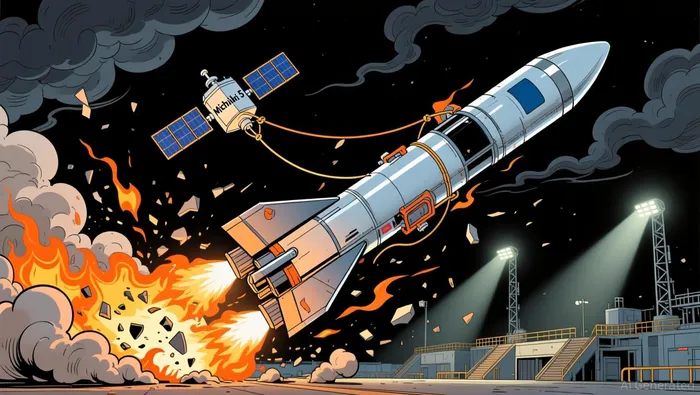 a key component in Japan's push to build an independent geolocation system to rival the U.S. GPS. With global space competition intensifying, this setback raises questions about the reliability and future of the H3 rocket — and by extension, Japan's broader space strategy according to reports.
Technical Glitches and the Path Forward
The H3 rocket, developed by the Japan Aerospace Exploration Agency (JAXA) and Mitsubishi Heavy Industries, is designed to be a cost-effective and powerful launch vehicle. Its recent failure was attributed to a premature shutdown of the second-stage engine, which left the rocket unable to place the satellite into its intended orbit. JAXA has confirmed that it cannot move forward with additional launches until a task force identifies and addresses the root cause according to JAXA.
This isn't the first time the H3 rocket has faced issues. The initial launch in March 2023 also ended in failure when the second-stage engine failed to ignite. Following that incident, JAXA and its partners conducted extensive investigations and made several modifications to the design. However, these updates appear to have been insufficient to prevent another failure.
Implications for Japan's Geolocation Ambitions
The Michibiki 5 satellite was a crucial piece of Japan's plan to expand its Quasi-Zenith Satellite System (QZSS). This system, which is compatible with GPS, aims to provide more accurate and reliable positioning data for Japan and the broader Asia-Pacific region. The failure of this mission now delays Japan's timeline to complete its network, which is expected to grow from five to seven satellites by March 2026 and eventually to 11 by the late 2030s.
For investors and market observers, this delay could impact the commercial potential of the QZSS. A robust geolocation system is key to supporting industries like autonomous vehicles, precision agriculture, and logistics — all of which are growing rapidly in Asia. If Japan's system lags, the region could remain dependent on existing global systems like GPS and BeiDou, reducing the potential market for Japan's indigenous solution.
Market and Investment Considerations
The failure of the H3 rocket also raises questions about the commercial viability of Japan's rocket program. The H3 was designed to be cost-competitive with other global launch providers, including SpaceX and Rocket Lab. With two high-profile failures already under its belt, the rocket may struggle to attract commercial clients — or to do so on favorable terms.
JAXA has taken a firm stance, stating that the next launch won't proceed without a thorough investigation and implementation of preventive measures. This approach is necessary for safety and technical integrity, but it could also mean months or even years of delays, which is a red flag for investors expecting near-term progress according to market analysts.
Still, the H3 rocket is a significant investment for Japan. The government has backed the project as a key element of its national space strategy, and JAXA has received repeated assurances from political leaders to ensure success. If the technical issues can be resolved and confidence restored, the H3 could still become a major player in the global launch market.
What's Next for Japan's Space Program
In the coming weeks and months, JAXA will lead the investigation into the cause of the failure. A government task force has already been established, and both the agency and the government have expressed a commitment to transparency. JAXA's president, Hiroshi Yamakawa, has apologized for the setback, acknowledging the importance of the H3 program to Japan's future in space.
For now, the failure serves as a cautionary reminder that space is a high-risk endeavor — even for advanced nations. Japan's program has seen success before, and it's expected that, with time and effort, the H3 will eventually achieve its intended goals. But until that happens, the country's space ambitions remain in limbo.
In the long run, the success or failure of the H3 rocket will be a key indicator of Japan's ability to compete in the global space market. For investors with an eye on space technology and geolocation infrastructure, this event is a signal to keep a close watch on the country's next moves. After all, in a field as dynamic as space, every setback is a chance to learn — and every success could be a game-changer.

Delivering real-time insights and analysis on emerging financial trends and market movements.
Latest Articles
Stay ahead of the market.
Get curated U.S. market news, insights and key dates delivered to your inbox.






Comments
No comments yet