
AInvest Newsletter
Daily stocks & crypto headlines, free to your inbox
 Aime Summary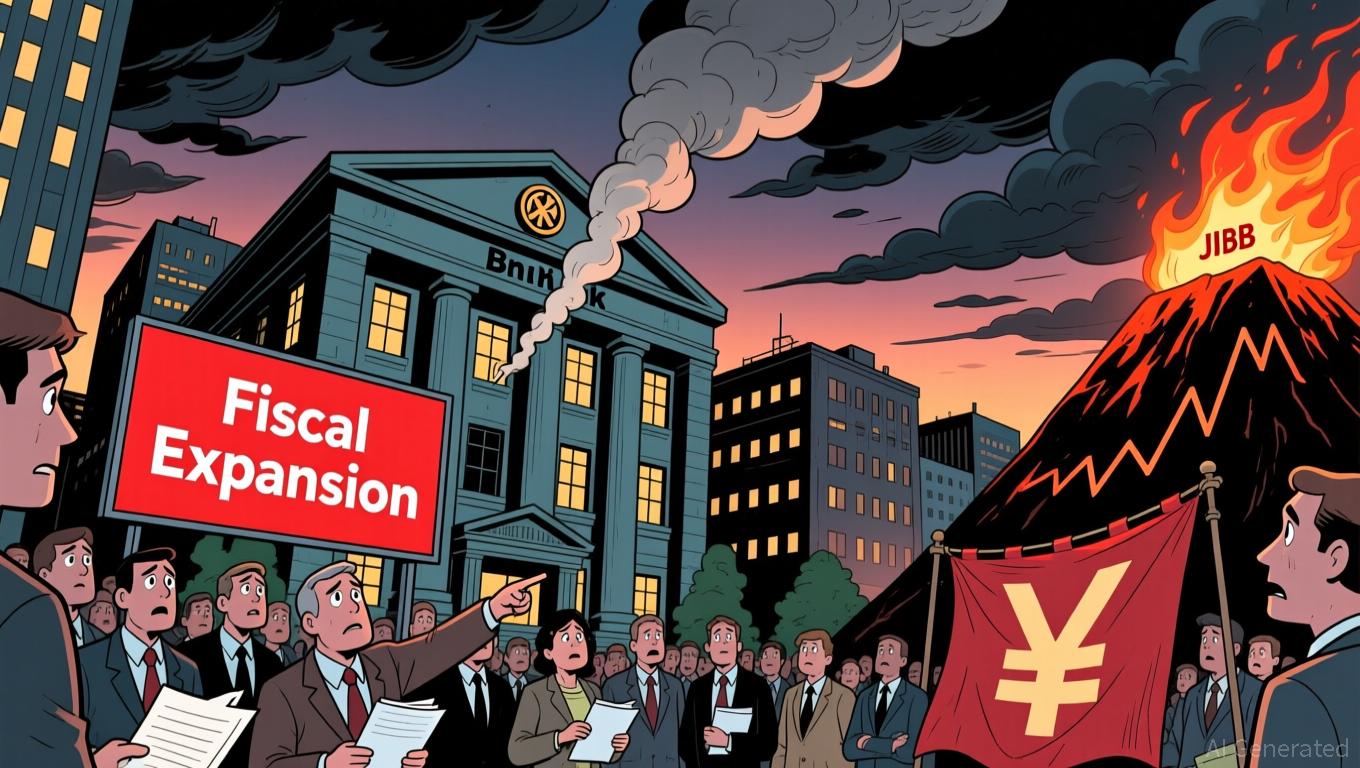
The government is preparing to unveil its largest post-pandemic spending plan, with a ruling-party panel proposing a supplementary budget exceeding ¥25 trillion to support Takaichi’s economic agenda . This has sent 30-year JGB yields to over 3.35%, a multi-decade high, according to data from November 20 . Albert Edwards of Societe Generale SA described the rise in long bond yields as a “major warning sign,” noting that Japan’s bond market is leading a secular bear trend that could unwind decades of valuation inflation in equities and real estate .
Foreign investor behavior highlights the market’s mixed signals. Despite growing fiscal concerns, net foreign inflows into Japanese long-term bonds reached ¥961.6 billion ($6.11 billion) in the week to November 15, the largest weekly purchase since October 4. Investors appeared to lock in higher yields before sentiment deteriorated . Concurrently, Japanese investors increased purchases of foreign stocks and debt, ending a four-week net selling streak . However, this inflow reversed as renewed worries over bond issuance and fiscal policy emerged, causing foreign outflows from JGBs to intensify .
Saravelos emphasized that Japan’s market dynamics differ from the 2022 UK crisis, which was driven by forced selling from leveraged pension funds. While no comparable risk exists in Japan, the potential for a self-reinforcing cycle of capital flight remains. “If domestic confidence in the government’s and BOJ’s commitment to low inflation is lost, the reasons to buy JGBs disappear, and more disruptive capital flight ensues,” he stated . The Nikkei 225 index briefly rose 4.2% on November 20 following Nvidia’s positive earnings guidance, but equity markets remain vulnerable to spillovers from bond market instability .
The BOJ’s dovish stance exacerbates concerns. With inflation expectations fragile and monetary policy unchanged, the central bank faces a dilemma: intervening to stabilize the yen could undermine its inflation-targeting credibility, while inaction risks accelerating capital outflows. Saravelos anticipates closer monitoring of equity market weakness and divergences in JGB valuations as key indicators of broader capital flight .
The situation underscores broader macroeconomic risks. Japan’s fiscal expansion at a time of global tightening could amplify cross-border capital flows and strain currency markets. Unlike the UK crisis, however, Japan’s debt structure lacks embedded leveraged investors, potentially limiting systemic spillovers. Still, the interplay between fiscal policy and monetary easing remains a critical test for policymakers .

AI Product Manager at AInvest, former quant researcher and trader, focused on transforming advanced quantitative strategies and AI into intelligent investment tools.

Dec.03 2025

Dec.01 2025

Nov.27 2025

Nov.27 2025

Nov.27 2025
Daily stocks & crypto headlines, free to your inbox





Comments
No comments yet