
AInvest Newsletter
Daily stocks & crypto headlines, free to your inbox
 Aime Summary
The BoJ’s policy ambiguity remains central to the yen’s underperformance. A key government panel member, Goushi Kataokam, stated that policymakers are unlikely to raise rates before March 2025, emphasizing the need to first assess whether the fiscal package boosts domestic demand . However, a Reuters poll revealed a narrow majority of economists anticipate a rate hike to 0.75% in December, with all forecasting at least that level by Q1 2025 . This divergence between official statements and market expectations has created a volatile environment for the yen.
Meanwhile, JGB yields have reached historic levels, reflecting growing concerns over Japan’s fiscal sustainability. The 30-year JGB yield climbed to 3.37%, the highest on record, while the 10-year yield hit 1.8%, a level unseen since 2008 . These moves are driven by a combination of the new stimulus plan—more than double last year’s supplementary budget—and the yen’s continued depreciation . The ruling-party panel’s proposal for a 25 trillion yen ($159.34 billion) supplementary budget underscores the scale of fiscal intervention, which is exacerbating bond market pressure .
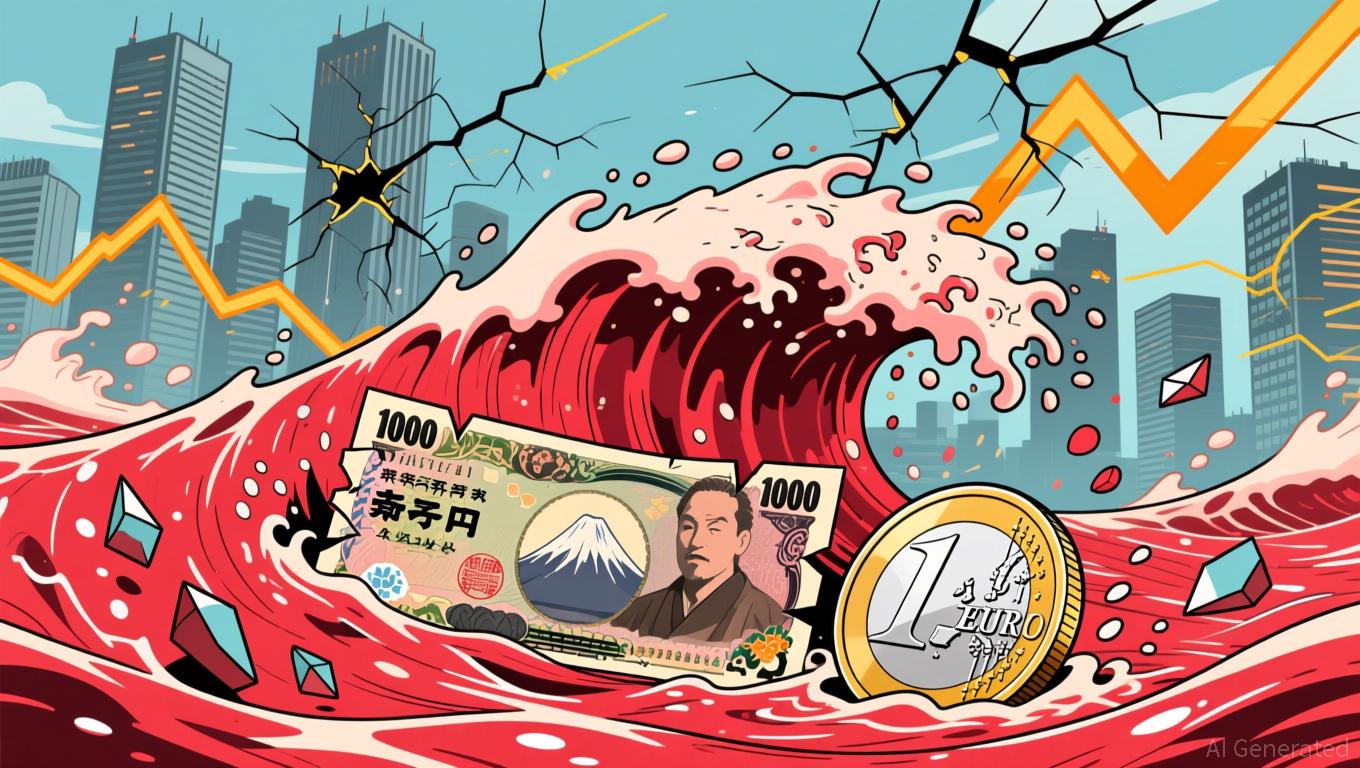
The yen’s weakness has drawn regulatory scrutiny. Chief Cabinet Secretary Minoru Kihara warned that recent foreign exchange (FX) moves are “sharp and one-sided,” urging the market to stabilize and reflect economic fundamentals . This interventionist rhetoric contrasts with the European Central Bank’s (ECB) cautious stance, which has kept interest rates unchanged since October and is expected to maintain them through 2026 . The ECB’s policy continuity provides temporary support to the euro against the yen, but the broader trend remains dominated by Japan’s fiscal and monetary dynamics.
Beyond currency markets, Japan’s geopolitical tensions are compounding economic challenges. The ongoing dispute with China over Taiwan has disrupted seafood exports and tourism, sectors vital to Japan’s trade balance . While the direct financial impact of this conflict is less quantifiable than fiscal or monetary factors, it adds another layer of uncertainty to Japan’s economic outlook.
The interplay of fiscal expansion, monetary policy uncertainty, and geopolitical risks highlights Japan’s complex position in global markets. The BoJ’s delayed rate hike and the government’s aggressive spending signal a strategy to stimulate domestic demand, but these measures risk inflating bond yields and eroding the yen’s value. Conversely, premature or excessive intervention by authorities—whether through verbal guidance or direct market actions—could destabilize investor confidence further.
As the EUR/JPY cross and JGB yields continue to reflect these dynamics, market participants are closely watching for clarity on the BoJ’s timeline for tightening and the sustainability of Japan’s fiscal commitments. The absence of a clear roadmap for resolving these tensions suggests that volatility will persist, with implications extending beyond Japan’s borders to global FX and bond markets.

AI Product Manager at AInvest, former quant researcher and trader, focused on transforming advanced quantitative strategies and AI into intelligent investment tools.

Dec.03 2025

Dec.01 2025

Nov.27 2025

Nov.27 2025

Nov.27 2025
Daily stocks & crypto headlines, free to your inbox







Comments
No comments yet