
Japan's Finance Minister Backs Crypto, Signals Regulatory Shift
 Aime Summary
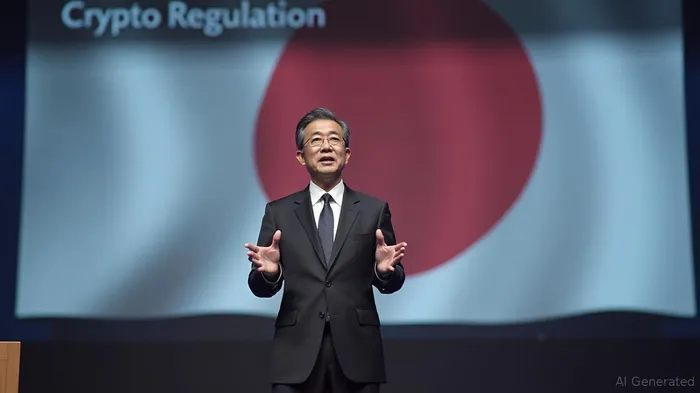
Japan’s finance minister has publicly endorsed cryptocurrencies as a viable option for portfolio diversification, emphasizing the need for a supportive investment environment to harness their potential despite inherent volatility. Katsunobu Kato made the remarks during a keynote speech at the Web3 Conference WebX 2025 in Tokyo, underscoring that while crypto assets present significant price fluctuations, they can offer value to investors when properly regulated and integrated into broader financial systems [1]. The minister’s statement aligns with a broader strategic push by Japan to modernize its financial infrastructure and position itself as a regional leader in digital asset adoption [2].
The endorsement comes alongside significant regulatory developments aimed at reshaping Japan’s crypto taxation and oversight framework. The Financial Services Agency (FSA) has proposed a sweeping reform package for fiscal 2026, including a flat 20% tax rate for cryptocurrency gains, mirroring the treatment of stocks and bonds. This would mark a departure from the current system, where crypto profits are classified as “miscellaneous income” and taxed at progressive rates that can exceed 50% when including local levies [3]. The reform is expected to reduce barriers to entry for investors and align Japan’s tax system with international standards, potentially attracting greater institutional participation in the crypto market [4].
Alongside the tax overhaul, the FSA aims to reclassify digital assets as financial products under the Financial Instruments and Exchange Act (FIEA). This reclassification is crucial as it would enable regulators to enforce investor protections, disclosure rules, and insider-trading regulations for crypto assets. It also paves the way for the eventual launch of cryptocurrency exchange-traded funds (ETFs), which are currently unavailable in Japan [3]. Analysts suggest that the creation of crypto ETFs could significantly boost retail and institutional demand by offering a regulated and accessible entry point into the market [5].
In parallel, Japan is also working on expanding the Small Investment Tax Exemption System (NISA) to include digital assets, a move that could further incentivize long-term investment in crypto. Under the proposal, investors would be allowed to carry forward crypto losses for up to three years, reducing the tax burden during periods of market volatility [6]. This approach reflects a broader regulatory philosophy of balancing innovation with oversight, as seen in the FSA’s decision to establish a dedicated Digital Finance Bureau to monitor and regulate the fast-evolving crypto landscape [4].
The government’s proactive stance is supported by growing participation in the crypto market, with over 12 million active accounts in Japan holding more than 5 trillion yen in digital assets. This level of engagement highlights the increasing relevance of cryptocurrencies in Japan’s financial ecosystem and underscores the need for a regulatory framework that fosters innovation while protecting consumer interests [6]. Notably, major financial institutionsFISI-- and fintech firms are also advancing blockchain-based solutions, including yen-pegged stablecoins and institutional-grade crypto custody services [5].
Kato’s comments and the broader policy reforms signal Japan’s intent to maintain its early-mover advantage in crypto regulation and adoption. As global markets continue to evolve, Japan’s efforts to create a more inclusive and transparent environment for digital assets could position it as a model for other nations seeking to integrate cryptocurrencies into their financial systems [2]. The FSA’s ongoing work on crypto-linked ETFs and stablecoin frameworks further reinforces the country’s commitment to shaping the future of digital finance [5].
Source:
[1] Japan's Finance Minister Endorses Crypto as Portfolio ... (https://cointelegraph.com/news/japanese-regulator-halves-taxes-on-crypto)
[2] Japan's Finance Minister Says Crypto Assets Can be Part ... (https://www.coindesk.com/markets/2025/08/25/japan-s-finance-minister-says-crypto-assets-can-be-part-of-diversified-portfolio)
[3] Japan plans major crypto overhaul with flat 20% tax ... (https://ambcrypto.com/japan-plans-major-crypto-overhaul-with-flat-20-tax-pathway-to-etfs)
[4] Japan Prepares Weeping Crypto Reforms: Tax Cuts and ... (https://cryptodnes.bg/en/japan-prepares-wweeping-crypto-reforms-tax-cuts-and-etf-approval-on-the-horizon/)
[5] Japan's New Crypto Tax Law: 20% Flat Rate on Digital ... (https://www.bitrue.com/blog/japan-new-crypto-law-20percent-flat-rate)
[6] Japan's FSA Pushes Bold Crypto Tax Reform, Boosting ... (https://coingape.com/japans-fsa-pushes-bold-crypto-tax-reform-boosting-prospects-for-etf-listings/)

Stay ahead of the market.
Get curated U.S. market news, insights and key dates delivered to your inbox.


AInvest
PRO
AInvest
PRO



Comments
No comments yet