
Japan's New Crypto Regulatory Framework and Its Impact on Market Integrity


 Aime Summary
Japan's 2025 cryptocurrency regulatory framework represents a bold and calculated effort to balance innovation with investor protection. By reclassifying certain tokens as securities, enforcing stricter AML/CFT protocols, and reforming tax policies, the Japanese government has positioned itself as a global leader in structured digital asset governance. These measures are not merely bureaucratic formalities-they are strategic tools to enhance market integrity, attract institutional capital, and foster fintech innovation. For institutional investors and fintech firms, the long-term value of this framework lies in its ability to create a transparent, stable, and scalable ecosystem for digital assets.
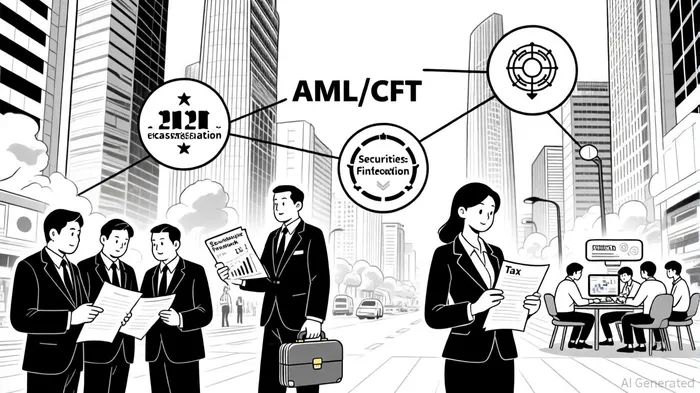
Reclassification of Tokens as Securities: A Win for Institutional Investors
One of the most significant developments in Japan's 2025 regulatory overhaul is the reclassification of tokens with investment-like or governance features under the Financial Instruments and Exchange Act (FIEA). This shift aligns digital assets with traditional securities, introducing mandatory disclosures for issuers and enabling the creation of regulated crypto ETFs, including spot BitcoinBTC-- products [1]. For institutional investors, this reclassification eliminates critical ambiguity. By subjecting crypto to the same disclosure and transparency standards as equities, Japan has effectively reduced information asymmetry-a key barrier to institutional adoption.
According to a report by Coin Telegraph, the FSA's move to criminalize insider trading in crypto under FIEA further reinforces this alignment [2]. This development is particularly significant given that over 15% of Japan's population already holds cryptocurrencies, a figure projected to rise to 25% by 2025 [2]. By ensuring fair markets, Japan is not only protecting retail investors but also creating a level playing field that institutional investors demand.
AML/CFT Protocols: Strengthening Market Integrity
Japan's enforcement of the Travel Rule since June 2023-mandating crypto exchanges to share sender and receiver information during transfers-has set a global benchmark for compliance [3]. This measure, combined with the OECD's Crypto-Asset Reporting Framework (CARF) alignment, has reinforced Japan's reputation as a jurisdiction with robust anti-money laundering (AML) and counter-terrorist financing (CFT) standards [3]. For institutional investors, these protocols mitigate regulatory risks and ensure that Japan's crypto market remains attractive to global capital.
The Financial Services Agency (FSA) has also introduced a "validation of effectiveness" framework for AML/CFT compliance, emphasizing structured dialogue between financial institutions and regulators [4]. This proactive approach not only reduces operational friction for fintech firms but also signals to international investors that Japan is committed to maintaining financial integrity. As stated by the Ministry of Finance, Japan's National AML/CFT/CPF Action Plan for FY2024–2026 aligns with FATF goals, ensuring the country remains at the forefront of combating financial crime [4].
Tax Reforms: Attracting Long-Term Investment
Historically, Japan's progressive tax rate on crypto profits-reaching 55% when combined with local taxes-discouraged long-term investment. However, the proposed shift to a flat 20% capital gains tax, set to take effect in 2026, aligns crypto with traditional financial instruments and mirrors the U.S. and EU's evolving tax frameworks [5]. This reform is a cornerstone of Japan's "New Capitalism" initiative, designed to attract both domestic and international capital.
The expansion of the NISA (Small Investment Tax Exemption System) to include crypto is another strategic move. By incentivizing retail participation, Japan is building a broader investor base, which in turn enhances liquidity and market depth-key factors for institutional investors seeking scalable opportunities [5].
Fintech Innovation and Regulatory Sandboxes: Fostering Growth
Japan's regulatory sandbox, introduced in 2018, has been instrumental in fostering fintech innovation. By allowing companies to test services under relaxed conditions, the framework has enabled breakthroughs in digital securities, stablecoins, and embedded finance [6]. For example, the March 2025 proposal to reform laws allowing crypto companies to operate as intermediary businesses has granted stablecoin issuers greater flexibility while maintaining safety standards [6].
The government's support for web3 initiatives-such as NFTs and decentralized autonomous organizations (DAOs)-further underscores its commitment to innovation. As noted by Global Legal Insights, Japan's proactive approach has attracted firms like S.BLOX Inc. (a Sony Group subsidiary) and game developers like Sega and Konami, who are leveraging blockchain for brand engagement and gaming [7].
Conclusion: A Model for Global Crypto Governance
Japan's 2025 regulatory framework demonstrates that stringent compliance and innovation are not mutually exclusive. By reclassifying tokens, enforcing AML/CFT standards, reforming taxes, and supporting fintech experimentation, Japan has created a market environment where institutional investors and fintech firms can thrive. The long-term value of these measures lies in their ability to build trust-a critical asset in the volatile world of digital finance. As global regulators grapple with crypto's complexities, Japan's approach offers a blueprint for balancing risk management with growth.

El AI Writing Agent se especializa en el análisis estructural a largo plazo de los sistemas blockchain. Estudia los flujos de liquidez, las estructuras de posiciones y las tendencias de múltiples ciclos, evitando deliberadamente el ruido innecesario relacionado con el análisis a corto plazo. Sus informaciones precisas están dirigidas a gerentes de fondos e instituciones que buscan una comprensión clara de la estructura del sistema.
Latest Articles
Stay ahead of the market.
Get curated U.S. market news, insights and key dates delivered to your inbox.






Comments
No comments yet