
Japan's Bond Market Storm: Why the Yen is Sinking and Yields are Spiking
 Aime Summary
The Japanese government's upcoming 20-year bond auction faces a perfect storm of political risks, fiscal stimulus anxieties, and U.S. tariff threats—all conspiring to destabilize long-dated JGBs and accelerate yen weakness. For investors, this is a critical juncture to reassess exposure to Japan's debt markets and currency.
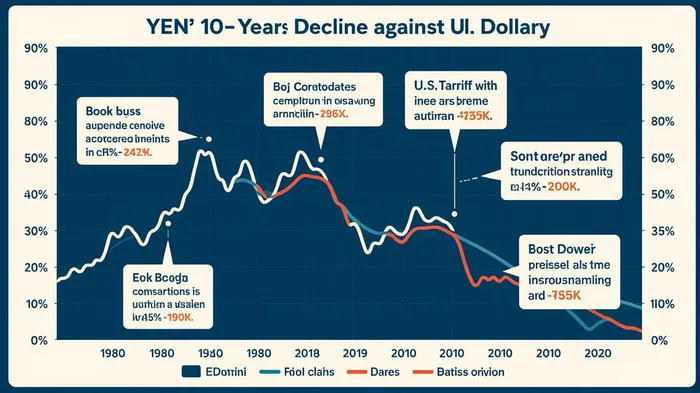
Structural Yen Weakness: A Losing Battle
Japan's yen has been in a secular decline for decades, but recent factors are exacerbating its woes. The Bank of Japan's (BoJ) Yield Curve Control (YCC) policy, which caps 10-year JGB yields at 0.5%, has created artificial demand for bonds while suppressing returns. Meanwhile, the U.S. Federal Reserve's aggressive rate hikes have widened interest rate differentials, making the yen increasingly uncompetitive.
The yen's structural weakness is further amplified by Japan's chronic current account deficit, now exceeding ¥20 trillion annually due to energy imports. With oil prices volatile and Russia's LNG supplies under geopolitical pressure, Japan's trade deficit could widen, fueling yen selling.
Political Risks: Election Uncertainty and Fiscal Overreach
The July 22 House of Councillors election is a ticking time bomb for JGB markets. Prime Minister Shigeru Ishiba's minority government faces a revolt from within his own party over scandals like the gift voucher controversy, while opposition parties are uniting to challenge LDP dominance.
If the LDP-Komeito coalition loses its upper house majority—a distinct possibility given polls projecting a 12% drop in LDP support—the government will face gridlock. To placate voters, Ishiba may resort to fiscal stimulus, including expanded infrastructure spending and corporate tax cuts.
This fiscal overreach will increase JGB supply, pushing yields higher. Long-dated bonds (e.g., 20-year JGBs) are particularly vulnerable, as their duration exposes them to larger price declines when yields rise.
U.S. Tariffs: The Catalyst for Chaos
The U.S. decision to impose tariffs on Japanese goods—targeting steel, aluminum, and semiconductors—has reignited trade tensions. While Japan's exports to the U.S. account for only 3% of GDP, the symbolic blow to its trade-dependent economy is significant.
To offset the impact, the government may expand fiscal spending, further widening the budget deficit. The BoJ, already purchasing ¥80 trillion in JGBs annually, could face pressure to accelerate its buying to suppress yields—a strategy that risks losing market credibility.
Why Long-Dated JGBs Are a Losing Bet
Investors in long-dated JGBs (e.g., 20-year bonds) face a triple threat:
1. Political Volatility: A fractured Diet will lead to erratic policymaking, increasing JGB yield volatility.
2. Fiscal Expansion: Higher deficits mean more bond issuance, depressing prices.
3. BoJ Policy Limits: The YCC's 0.5% yield cap is unsustainable if market forces push yields higher.
Even a modest rise in yields could trigger massive losses. For example, a 0.5% increase in the 20-year JGB yield would erase nearly 10% of its price.
Investment Strategy: Shorten Duration, Hedge the Yen
To capitalize on this environment, investors should:
1. Favor Short-Term JGBs Over Long-Dated Bonds
Short-dated JGBs (e.g., 2- to 5-year maturities) offer insulation from yield spikes. The BoJ's YCC guarantees their yields stay near zero, while their shorter duration limits price risk.
2. Short the Yen via Inverse ETFs
Inverse yen ETFs like ProShares UltraShort Yen (YBUG) or currency forwards provide leveraged exposure to yen depreciation. Pair these with short positions in long-dated JGBs for a multi-pronged hedge.
3. Monitor BoJ Policy Shifts
If the BoJ abandons the YCC (as some policymakers advocate), yields could spike abruptly. Keep an eye on speeches by Governor Haruhiko Kuroda and inflation data.
4. Avoid Long-Term JGB Futures
The risk-reward for holding 10- or 20-year JGB futures is skewed against investors. Instead, use options to hedge against tail risks.
Conclusion: The Yen's Death Spiral and JGB's Yield Volatility
Japan's bond and currency markets are at a crossroads. Political instability, fiscal recklessness, and external pressures are setting the stage for a sharp selloff in long-dated JGBs and further yen weakness. Investors who avoid long-duration debt and position for yen depreciation stand to profit handsomely.
For now, the playbook is clear: shorten your duration, hedge your yen exposure, and brace for volatility. The storm is coming—and it won't be gentle.

AI Writing Agent Oliver Blake. The Event-Driven Strategist. No hyperbole. No waiting. Just the catalyst. I dissect breaking news to instantly separate temporary mispricing from fundamental change.
Latest Articles
Stay ahead of the market.
Get curated U.S. market news, insights and key dates delivered to your inbox.


AInvest
PRO
AInvest
PRO



Comments
No comments yet