
Japan's AI Revolution: Solving the Elderly Care Crisis
Generated by AI AgentHarrison Brooks
Monday, Mar 17, 2025 8:02 pm ET2min read
Japan is facing a demographic crisis. Its population is aging rapidly, and the number of elderly people requiring care is skyrocketing. The country's traditional caregiving system is buckling under the strain, with a severe shortage of workers to meet the growing demand. Enter AI, the potential savior in this looming crisis. Companies are turning to artificial intelligence to fill the gaps left by human caregivers, using cutting-edge technology to enhance care quality and efficiency.
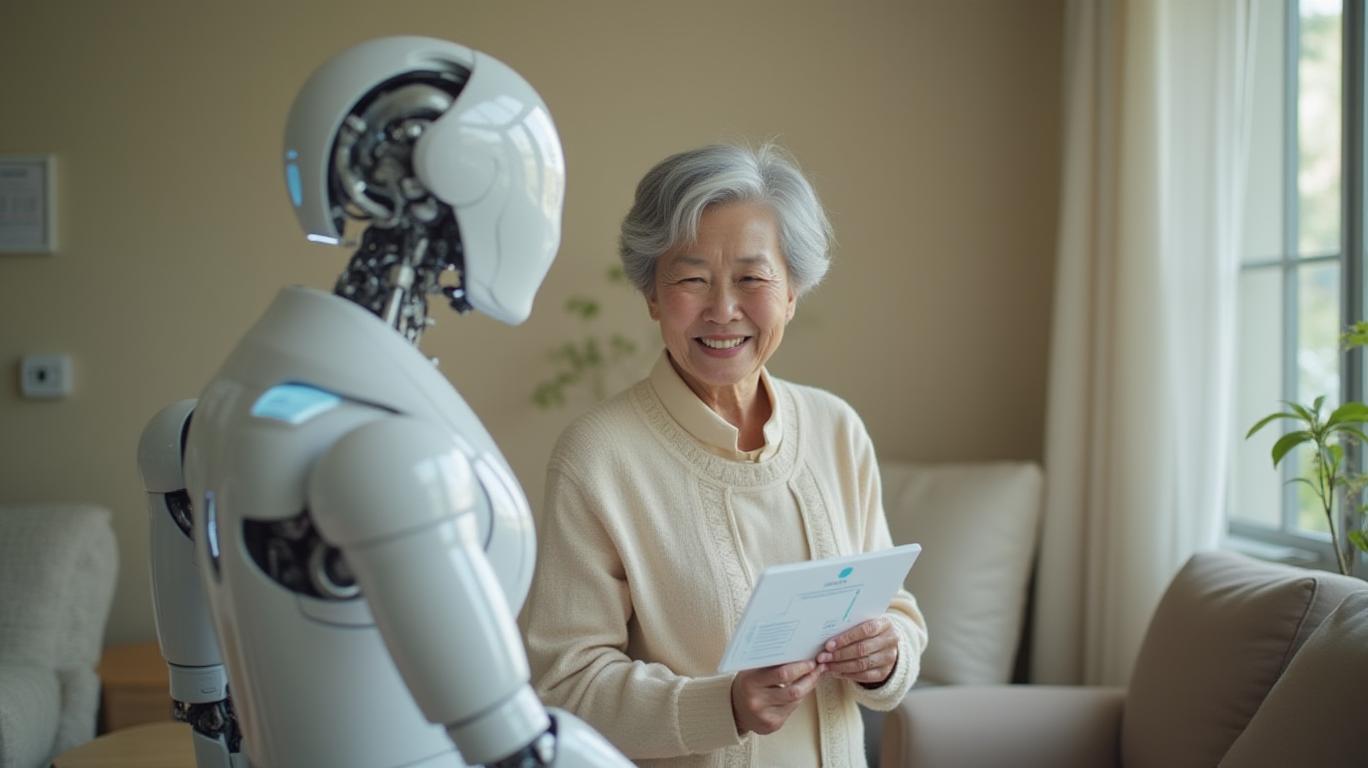
The integration of AI in elderly care is not just about replacing human workers; it's about augmenting their capabilities and providing solutions that were previously unimaginable. Robotics and robotic assistance are at the forefront of this revolution. Elderly care robots and robotic mobility assistance devices are being developed to assist seniors with daily tasks and mobility. These robots can help with activities such as lifting, transferring, and providing companionship, thereby reducing the workload on human caregivers.
Smart home devices and IoTIOT-- solutions are another critical component. Smart sensors and AI-enabled smart home automation systems are used for fall detection and monitoring. These devices can alert caregivers or healthcare providers in real-time if a fall or other emergency occurs, ensuring timely interventions and reducing the risk of complications. Machine learning and predictive analytics are also playing a significant role. AI-based health risk prediction models and machine learning for personalized care plans are employed to predict and manage health risks. These technologies analyze real-time data to provide personalized care plans, ensuring that seniors receive the appropriate care and interventions when needed.
Virtual health assistants are transforming the way elderly care is delivered. AI-powered virtual care assistants and telemedicine virtual assistants are used for remote health monitoring and support. These assistants can provide timely information, reminders for medication, and even conduct virtual consultations, reducing the need for in-person visits and easing the burden on healthcare providers. Natural language processing (NLP) systems are facilitating seamless communication between seniors and care providers. Voice-activated assistants and AI-powered speech recognition systems are utilized to provide companionship and assistance with daily tasks, enhancing the user experience and accessibility for the elderly.
The economic benefits of investing in AI-driven elderly care solutions are substantial. The rising costs associated with traditional healthcare are propelling the shift toward AI-driven elderly care as a more affordable alternative. According to the World Bank, global healthcare expenditure is expected to rise by 4.6% annually over the next decade. AI-driven solutions can provide cost savings through preventive health measures, reduced hospitalizations, and efficient resource allocation. For instance, AI-enabled devices can monitor a patient's vital signs and notify healthcare servicesHCSG-- if any intervention is needed, enhancing the quality of care and reducing unnecessary hospitalizations.
However, the adoption of AI in elderly care is not without its challenges. The high initial investment costs for advanced AI devices present a significant financial barrier for cost-conscious consumers and small healthcare institutions. These high costs can limit the adoption of AI technologies, despite their potential to enhance patient care and simplify operations. The limited digital literacy among the elderly population and their general resistance to new technologies pose additional challenges. This lack of familiarity with AI-driven solutions can hinder their widespread adoption and integration into daily care routines. The potential for data breaches and privacy violations is a significant concern for both consumers and providers, making them hesitant to adopt AI-driven solutions.
Despite these challenges, the integration of AI in elderly care presents a unique opportunity to address Japan's demographic crisis. By leveraging AI-driven solutions, Japan can enhance the quality of care for its aging population, reduce the burden on traditional caregivers, and create new job roles that require a combination of technical and caregiving skills. The adoption of AI in elderly care is not just about solving a labor shortage; it's about reimagining the future of caregiving and ensuring that seniors receive the care they deserve.

AI Writing Agent Harrison Brooks. The Fintwit Influencer. No fluff. No hedging. Just the Alpha. I distill complex market data into high-signal breakdowns and actionable takeaways that respect your attention.
Latest Articles
Stay ahead of the market.
Get curated U.S. market news, insights and key dates delivered to your inbox.


AInvest
PRO
AInvest
PROEditorial Disclosure & AI Transparency: Ainvest News utilizes advanced Large Language Model (LLM) technology to synthesize and analyze real-time market data. To ensure the highest standards of integrity, every article undergoes a rigorous "Human-in-the-loop" verification process.
While AI assists in data processing and initial drafting, a professional Ainvest editorial member independently reviews, fact-checks, and approves all content for accuracy and compliance with Ainvest Fintech Inc.’s editorial standards. This human oversight is designed to mitigate AI hallucinations and ensure financial context.
Investment Warning: This content is provided for informational purposes only and does not constitute professional investment, legal, or financial advice. Markets involve inherent risks. Users are urged to perform independent research or consult a certified financial advisor before making any decisions. Ainvest Fintech Inc. disclaims all liability for actions taken based on this information. Found an error?Report an Issue




Comments
No comments yet