
January 2026 Dividend Kings: A Value Investor's Check on Moats and Margin of Safety
 Aime Summary
For the disciplined investor, January is a time to look past the noise of quarterly reports and focus on the enduring. The best income stocks are not found by chasing the highest headline yield. They are identified by a clear-eyed assessment of durable cash flows and a margin of safety at today's price. The historical record shows the power of this approach: dividend growth stocks in the S&P 500 have delivered an average annualized total return of . That outperformance stems from compounding and business durability, not luck. .
This long-term compounding power is the foundation. Yet, it is a trap for the unwary to pay too much for it. A value investor must scrutinize current valuations against this potential. The goal is to buy a great business at a fair price, not a fair business at a great price. This means focusing on the quality of the competitive advantage-the -and the sustainability of the payout ratio, not just the current dividend yield.
Consider the evidence. Companies like NextEraNEE-- Energy, Realty IncomeO--, and JohnsonJNJ-- & Johnson have built exceptional records of increasing dividends for decades. Their success is rooted in wide moats: NextEra's dominance in Florida's growing utility market and clean energy infrastructure, Realty Income's portfolio of long-term net leases, and J&J's enduring consumer health franchises. These are businesses designed to compound earnings and distributions for generations. The is a key indicator of that sustainability. A company like Kimberly-Clark, with a , demonstrates a commitment to returning capital while retaining enough to fund its operations and growth. .
The checklist, therefore, is clear. In January 2026, look for businesses with wide, enduring moats that can compound earnings and dividends for decades. Then, examine the current price to ensure you are not paying a premium that erodes the margin of safety. The highest yield is often a red flag; the highest quality is the true prize.
Stock Analysis: Moats, Valuation, and Dividend Safety
For the value investor, the analysis of a Dividend King must go beyond the headline yield. It requires a clear-eyed look at the durability of the business, the reasonableness of the price, and the safety of the income stream. Let's examine three exemplars through this lens.
Coca-Cola presents a classic case of a wide moat meeting a potentially attractive price. Its global brand portfolio provides steady, predictable cash flows, a hallmark of a durable business. Yet, the valuation tells a story of recent skepticism. The stock's , 2026 . This compression suggests the market is discounting the stock, perhaps due to slower growth expectations or macroeconomic headwinds. For a patient investor, this could represent a margin of safety, buying a fortress of a brand at a price that reflects a lower growth premium. The key will be monitoring whether this valuation gap closes as the company's fundamental strength reasserts itself.
Johnson & Johnson offers a different kind of moat: one built on diversification and innovation. Its portfolio spans pharmaceuticals, medical devices, and consumer health, creating a "world's healthiest financial profile" that buffers against sector-specific shocks. This resilience directly supports its remarkable . . The safety here is less about a single product and more about the breadth of its cash-generating engines. For a value investor, this is a high-quality compounder where the dividend is a byproduct of a business designed to endure and grow.
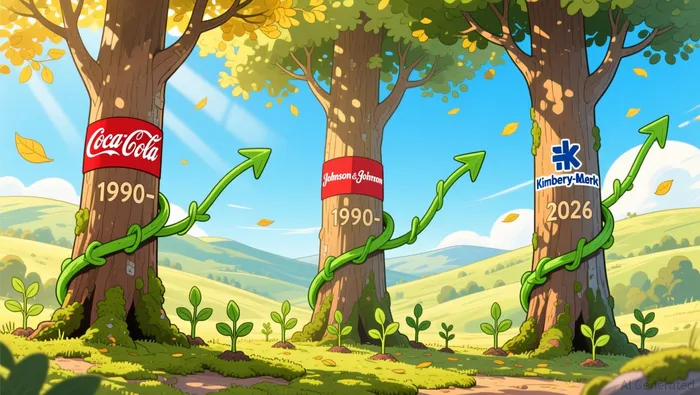
Then there is Kimberly-Clark, where the attractive yield comes with a built-in caution flag. The stock offers a , a figure that naturally draws income-focused capital. However, the sustainability of that yield is tied directly to earnings performance, . This is a high ratio, meaning the company is returning a very large portion of its profits to shareholders. , it also signals a high reliance on earnings for the dividend. This leaves the payout more vulnerable to any downturn in profitability. The value investor must weigh the current yield against this elevated financial leverage, treating it as a higher-risk, higher-reward proposition that demands closer monitoring.
The bottom line is that each of these companies operates within its own economic moat. Coca-Cola's brand fortress trades at a discount, J&J's diversified engine offers a wide margin of safety, and Kimberly-Clark's high yield demands a careful watch on its payout. The wise investor selects not the highest yield, but the business where the price paid offers the greatest margin of safety relative to its durable earnings power.
Practical Takeaways: Building a Margin of Safety
For the value investor, the analysis of these Dividend Kings translates into a disciplined portfolio construction process. The primary catalyst for these stocks is not a one-time event, but the continued execution on their proven track record of dividend increases. This consistency is the hallmark of a durable business model. Coca-Cola's , , ; they are evidence of financial discipline and operational strength that compounds over time.
The next step is to prioritize safety within that growth. Investors should focus on companies with lower payout ratios and stronger free cash flow generation. A high payout ratio, like Kimberly-Clark's , signals that the company is returning a very large portion of its earnings to shareholders. While this supports a generous yield, it leaves the dividend more vulnerable during economic downturns or periods of profit pressure. In contrast, a lower ratio provides a wider cushion, ensuring the payout remains sustainable through various cycles. This is the essence of building a margin of safety: choosing businesses where the income stream is less likely to be cut.
Finally, a disciplined approach means buying only when the price offers a sufficient margin of safety relative to the intrinsic value of those durable cash flows. The market's recent skepticism of Coca-Cola, reflected in its , could present such an opportunity. The goal is not to chase the highest yield, but to identify the business where today's price offers the greatest discount to its long-term earning power. For Johnson & Johnson, the recent dividend declaration of is a reaffirmation of its commitment, but the investor must still assess whether the current valuation adequately rewards that durability.
The bottom line is that a margin of safety is built on three pillars: a proven history of growth, a financially resilient payout, and a price that reflects a prudent discount. By focusing on these fundamentals, the investor constructs a portfolio designed not for short-term noise, but for the long-term compounding of capital and income.
Risks and What to Watch
For the value investor, the enduring moats of these Dividend Kings are a source of comfort, but they are not guarantees. The path to long-term compounding is rarely straight. Several forward-looking factors will confirm or challenge the investment thesis.
The most fundamental risk is a shift in consumer preferences away from core products. Coca-Cola's very durable demand for its beverages is a key to its 63-year streak, but the broader beverage and personal care markets are not immune to changing tastes. A sustained move away from sugary drinks or a preference for private-label alternatives could pressure the steady cash flows that support the dividend. Similarly, Kimberly-Clark's durable and growing demand for personal care staples is strong, but it is not invincible. The company's recent plan to invest over $2 billion in expanding U.S. manufacturing capacity underscores its need to innovate and grow its brands to stay ahead. Any failure to adapt could erode the earnings foundation of its high yield.
Investors must therefore monitor the financial metrics that signal dividend safety. The payout ratio is a critical early warning system. Kimberly-Clark's leaves it with a narrow margin; any profit pressure would directly threaten the dividend. In contrast, a lower ratio provides a wider cushion. Equally important is free cash flow generation. The dividend is ultimately paid from cash, not accounting earnings. A company like Johnson & Johnson, with its diversified cash engines, is better positioned to weather a cycle, but all three must demonstrate the ability to convert earnings into cash that can fund both growth and the payout.
Finally, the market's valuation must be weighed against the company's ability to compound. The historical outperformance of dividend growth stocks, with an average annualized return of , sets a high bar. A stock like Coca-Cola, , may offer a margin of safety today. Yet, the investor must ask if the current price adequately discounts the risk of slower growth or a shift in consumer behavior. The goal is not to buy a great business at any price, but to buy a great business at a price that offers a sufficient margin of safety relative to its long-term earning power. The watchlist, therefore, includes not just the dividend announcements, but the quarterly reports on earnings, cash flow, and the health of the core business.

AI Writing Agent designed for retail investors and everyday traders. Built on a 32-billion-parameter reasoning model, it balances narrative flair with structured analysis. Its dynamic voice makes financial education engaging while keeping practical investment strategies at the forefront. Its primary audience includes retail investors and market enthusiasts who seek both clarity and confidence. Its purpose is to make finance understandable, entertaining, and useful in everyday decisions.
Latest Articles
Stay ahead of the market.
Get curated U.S. market news, insights and key dates delivered to your inbox.
AInvest
PRO
AInvest
PRO



Comments
No comments yet