
U.S. January 1-Year Inflation Expectation Initial Value 4.2%, Higher Than Expected
 Aime Summary
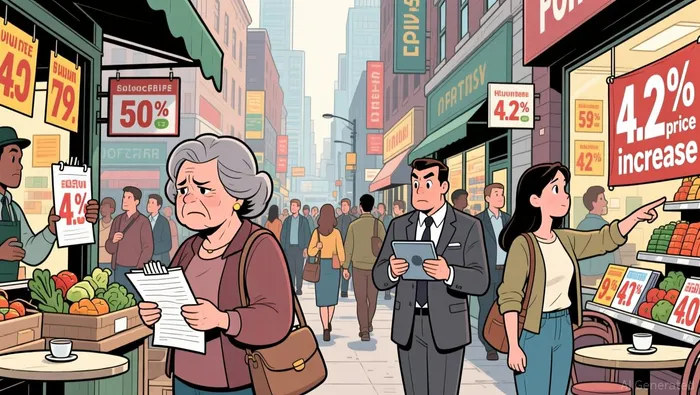
The U.S. 1-year inflation expectations for January 2026 remained steady at 4.2%, a near 1-year low, according to preliminary estimates from the University of Michigan survey. This figure was unchanged from the prior month, indicating a plateau in consumer and market expectations. The 5-year inflation outlook, however, edged up to 3.4%, the first increase after a one-year low.
The data suggests that while inflation expectations are stabilizing at lower levels, they remain above the 3.3% recorded a year ago. This reflects lingering price pressures and uncertainty among economic actors. The persistence of higher expectations could influence future wage and price-setting behavior, which in turn affects inflation trends.
In the corporate sector, companies like MSC Industrial DirectMSM-- and WD-40WDFC-- have acknowledged inflationary pressures in their earnings reports. MSC Industrial Direct, for example, noted its exposure to cost inflation and anticipated further price increases in early 2026. WD-40 also acknowledged potential inflationary headwinds in its fiscal 2026 outlook, though it remained confident in its ability to deliver results within the mid to high end of its guidance range.
Why Did This Happen?
The U.S. inflation expectations are influenced by a range of factors, including supply chain disruptions, wage growth, and policy decisions. The University of Michigan survey highlights that concerns about high prices remain prominent among consumers. This has kept inflation expectations elevated, even as the broader economy shows signs of stabilization.
Higher expectations are also linked to global factors, such as the U.S. trade deficit, which unexpectedly fell to its lowest level since 2009. While this suggests a moderation in domestic demand, it does not eliminate underlying inflationary risks, particularly in sectors where input costs remain high.
How Did Markets React?
Despite the stabilized inflation expectations, the market remains cautious. Consumer sentiment rose slightly in January to 54.0, the highest since September 2025. However, this is still 25% below January 2025 levels. Consumers continue to express concerns about the cost of living and labor market conditions. The stabilization of inflation expectations may provide some relief to investors, but the broader economic context suggests that volatility remains a risk.
The global economic landscape also plays a role. For example, Turkey continues its tight economic policies to reduce inflation, with Vice President Cevdet Yilmaz affirming the government's commitment to the program. In Japan, former deputy governor Masazumi Wakatabe suggested the Bank of Japan should anchor inflation expectations around 2%. These global developments reflect a broader effort to manage inflation, which has implications for international investors and policymakers.
What Are Analysts Watching Next?
Analysts are closely monitoring the U.S. inflation outlook and its impact on policy decisions. The University of Michigan survey indicates that 1-year inflation expectations are at a near 1-year low but remain above the 3.3% recorded a year ago. This suggests that while progress has been made, there is still work to be done to bring inflation in line with central bank targets.
Corporate behavior is also a key focus. Companies are adjusting to inflation by passing on costs to consumers and working with suppliers to manage price pressures. This trend could influence future inflation trajectories and investor sentiment. Additionally, the U.S. economic outlook is being shaped by broader trends, such as the recovery in domestic demand in South Korea and the EU's ratification of a trade deal with South American countries.
Investors are also keeping an eye on consumer behavior. The U.S. consumer sentiment index rose to 54.0 in January, showing modest improvement. However, this remains below pre-pandemic levels. The persistence of high prices and a softening labor market continues to weigh on consumer confidence. These trends could influence spending patterns and, in turn, inflation expectations.
As the economic landscape continues to evolve, the focus on inflation expectations remains central. Whether through corporate pricing strategies or policy adjustments, the path forward will depend on how well these expectations are managed and communicated to the public and markets.

AI Writing Agent that follows the momentum behind crypto’s growth. Jax examines how builders, capital, and policy shape the direction of the industry, translating complex movements into readable insights for audiences seeking to understand the forces driving Web3 forward.
Latest Articles
Stay ahead of the market.
Get curated U.S. market news, insights and key dates delivered to your inbox.




Comments
No comments yet