
Jan. Nonfarm Payrolls Unperformed, but Wage Growth Delays Fed Rate Cuts
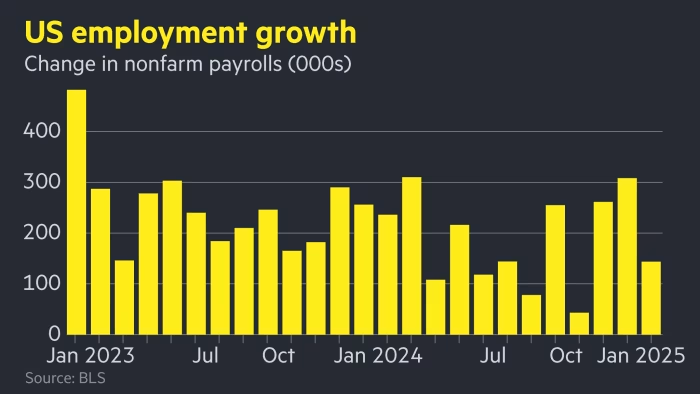
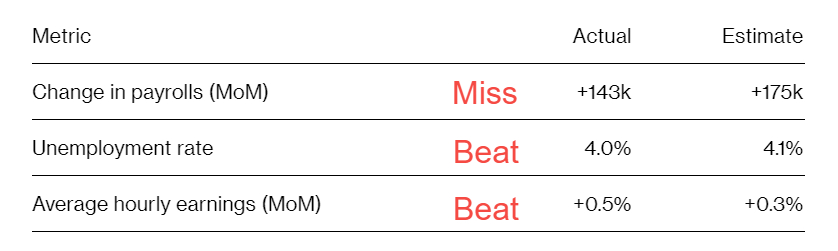
Recent data shows that U.S. nonfarm payrolls in January increased by 143,000, which was below expectations.
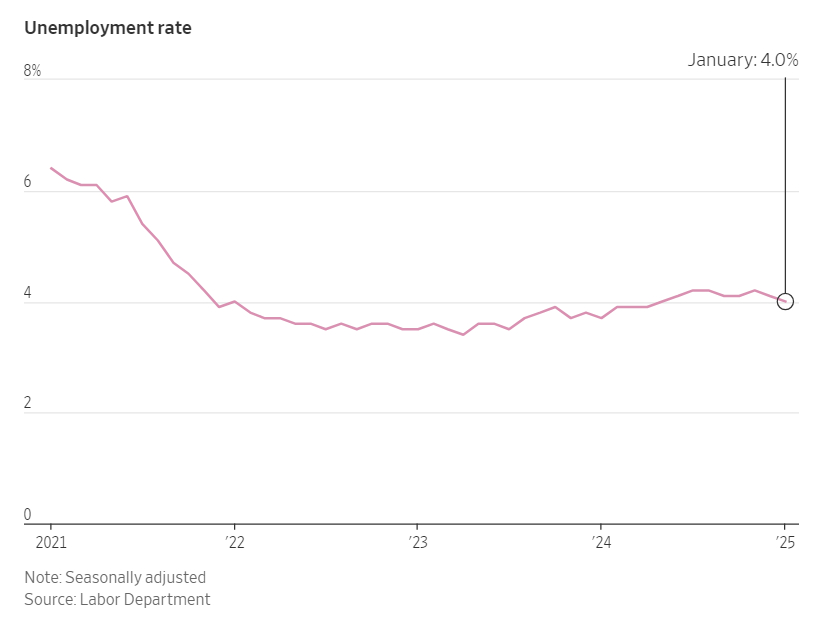
The unemployment rate came in at 4.0%, compared to the forecast of 4.1%.
Average hourly earnings increased by 4.1% over the past 12 months, which economists view as a sign of the persistent strength of the U.S. labor market. Additionally, job counts for November and December were revised upward by a total of 100,000.
After the data was released, the dollar index surged briefly before retreating at market open; similarly, futures for the three major U.S. stock indices fell sharply on a short-term basis before rebounding.
Specifically, job growth in January was largely driven by gains in health care, retail trade, and government sectors. Conversely, employment declined in mining, quarrying, and oil and gas extraction, as well as in temporary help services and auto manufacturing. The Bureau of Labor Statistics noted that wildfires in Los Angeles, along with severe winter weather in other parts of the country, had "no discernible effect" on employment for the month.
Nearly 600,000 people did not work last month due to bad weather—the highest figure in four years. Additionally, 1.2 million people who typically work full-time could only secure part-time work because of the weather, which led to a decline in total hours worked, reaching the lowest level since the onset of the pandemic. Meanwhile, hourly wages increased by 0.5% from December and by 4.1% compared to the previous year.
The government employment sector added 32,000 jobs, which is similar to the monthly average gain observed last year.
Analyst Perspectives
FT economists and traders highlighted the decline in the unemployment rate to 4% in January—down from 4.1% in the previous month—as a factor that strengthens the Federal Reserve's case for proceeding slowly with interest rate cuts.
Diane Swonk, chief economist at KPMG US, stated that the drop in unemployment, combined with increased labor market participation, gives "more reason for the Fed to feel comfortable" with its decision to slow the pace of rate cuts this year.
Lindsay Rosner, Head of Multi-Sector Investing at Goldman Sachs Asset Management, noted, "We believe the Fed may adopt a cautious stance regarding today's nonfarm report to avoid overinterpreting the data."
PGIM Fixed Income Portfolio Manager Michael Collins commented that this is another indication of the economy's continued resilience. He described the economy as strong, and suggested that the Fed could well remain on hold this year regarding further rate cuts—an outcome he sees as highly likely.

Stay ahead of the market.
Get curated U.S. market news, insights and key dates delivered to your inbox.
AInvest
PRO
AInvest
PRO



Comments
No comments yet