
Jamie Dimon's Recession Warning and Its Implications for Financial Markets


 Aime Summary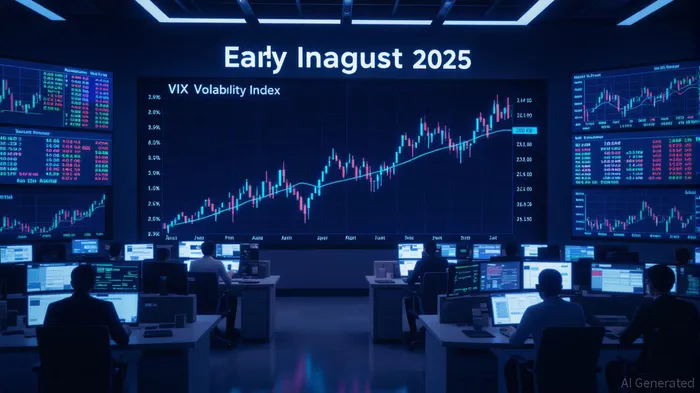
In the summer of 2025, JPMorgan ChaseJPM-- CEO Jamie Dimon delivered a stark warning: the U.S. economy is "weakening," and the risk of a recession cannot be dismissed. His remarks, . The implications are clear: investors must recalibrate their strategies to navigate a landscape marked by equity volatility, policy uncertainty, and structural economic headwinds.
The Anatomy of the Warning
Dimon's caution is not a knee-jerk reaction but a synthesis of macroeconomic signals. The downward revision to labor data, coupled with sector-specific slowdowns in education, healthcare, and public administration, underscores a "low-hire, low-fire" labor market equilibrium that could unravel under additional stress. Meanwhile, the delayed effects of Trump-era tariffs, , and immigration policies loom as long-term threats, compounding inflationary pressures and eroding global demand.
The 's anticipated rate cuts, expected to begin in late 2025, are viewed skeptically. Dimon argues that monetary policy lags economic reality, and the scale of cuts may prove insufficient to offset structural challenges. This skepticism is echoed in the market's response: the (VIX) surged from 18 in late July to 26 in early August 2025, reflecting heightened anxiety.
Equity Volatility and Sector Rebalancing
The rise in equity volatility has prompted a strategic shift in sector positioning. Defensive sectors—utilities, healthcare, and consumer staples—have emerged as safe havens. These industries, characterized by inelastic demand and stable cash flows, offer resilience during economic downturns. For instance, the Utilities Select Sector SPDR ETFXLU-- (XLU) has gained traction, . Similarly, the iShares US Health Care Providers ETF (IHF) benefits from demographic tailwinds, such as an aging population, ensuring consistent demand for medical services.
Conversely, like industrials and discretionary retail face heightened risks. , reflecting investor caution.
Defensive Strategies and Portfolio Hedges
To mitigate , investors are advised to adopt a multi-layered approach:
1. Quality Fixed Income: Short-duration U.S. Treasuries (e.g., , SHY) and investment-grade corporate bonds provide liquidity and stability.
2. Global Diversification: Non-U.S. equities, particularly in emerging markets like India and Southeast Asia, offer growth opportunities insulated from U.S.-centric risks.
3. Inflation Hedges: Gold and (TIPS) are gaining favor as macroeconomic uncertainties persist. JPMorganJPM-- explicitly recommends increasing , citing its role as a hedge against dollar weakness.
Tactical ETFs for a Defensive Portfolio
Several ETFs stand out for their alignment with defensive positioning:
- Invesco S&P 500 High Div Low Vol ETF (SPHD): Combines high dividends with low volatility, ideal for income-focused investors.
- Vanguard Consumer Staples ETF (VDC): Tracks essential goods producers like Procter & Gamble and CostcoCOST--, offering consistent demand.
- iShares Edge MSCI Min Vol USA ETF (USMV): Focuses on low-volatility stocks, reducing portfolio turbulence.
These funds are not merely reactive tools but proactive strategies to balance risk and return in a potential slowdown. For example, .
The Path Forward
is a call to action, not a definitive recession forecast. The U.S. economy remains in a precarious equilibrium, with mixed signals from the labor market and global growth divergences. Investors must prepare for a range of outcomes:
- Scenario 1: A soft landing, where rate cuts and fiscal stimulus stabilize growth.
- Scenario 2: A hard landing, with tariffs and geopolitical tensions triggering a deeper slowdown.
In either case, defensive positioning is critical. As Dimon emphasized, "The key to navigating economic cycles lies in preparation." By prioritizing quality, diversification, and hedging against policy-driven volatility, investors can weather uncertainty while positioning for long-term resilience.
In conclusion, the market's response to Dimon's warning—elevated volatility, sector rotation, and a shift toward defensive assets—reflects a recalibration to a more cautious macroeconomic outlook. For investors, the message is clear: adaptability and foresight will be the cornerstones of success in an era of economic and geopolitical uncertainty.

Delivering real-time insights and analysis on emerging financial trends and market movements.
Latest Articles
Stay ahead of the market.
Get curated U.S. market news, insights and key dates delivered to your inbox.




Comments
No comments yet