
James Hardie and CBH Homes: A Partnership Building Resilience in Idaho’s Housing Market
The housing market in Idaho is undergoing a quiet revolution, one that could redefine the standard for durability and design in North America. James Hardie Building Products Inc. (JHX), the $10.2 billion market leader in fiber cement siding, has partnered with CBH Homes—the state’s top builder for 19 years—to bring cutting-edge materials and climate resilience to a growing region. This alliance isn’t just about selling siding; it’s a strategic play to capitalize on shifting consumer preferences, regulatory trends, and the urgent need for homes that withstand wildfires and extreme weather.
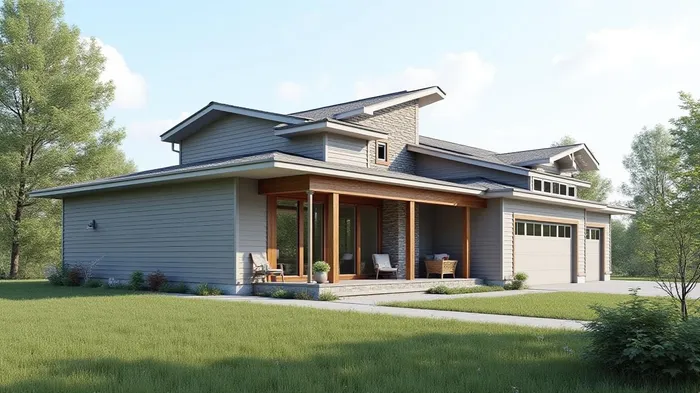
The Strategic Play: Durability Meets Affordability
The partnership marks CBH Homes as Idaho’s first production builder to offer James Hardie’s full range of fiber cement products. These include Hardie® siding and trim, which are non-combustible (Class A fire rating), pest-resistant, and engineered to withstand water damage and wind. The collaboration is designed to deliver homes that are both safer and more visually appealing, while maintaining affordability—a critical balance in a market where 62% of homebuyers prioritize cost efficiency over luxury features.
Corey Barton, CEO of CBH Homes, emphasized the goal of “making beautiful possible at any price point,” a mission aligned with James Hardie’s own push to democratize access to premium materials. Sean Gadd, President of James Hardie North America, framed the deal as a chance to “set a new benchmark for home quality and style” in Idaho, a state where 75% of residents rank climate resilience as a top priority when buying a home.
Why This Matters for Investors
James Hardie’s financial strength underpins the partnership. With a 39.5% gross profit margin and $3.9 billion in annual revenue, the company is well-positioned to capitalize on rising demand for fire-resistant and low-maintenance materials. The alliance with CBH Homes also aligns with its broader strategy of securing exclusive agreements with top builders. For instance, similar deals with Daiwa House USA subsidiaries (spanning 14 U.S. states) have driven a 5% sequential growth in exterior products volume in Q3 2025, despite a 3% dip in industry-wide sales.
The stock’s 25% rise in 2025—outperforming the S&P 500 by 18 percentage points—reflects investor confidence in this model. Analysts project that the pending acquisition of AZEK Co. could boost JHX’s earnings per share by 10-15% by 2027, further solidifying its dominance in exterior building products.
Market Tailwinds and Risks
The partnership benefits from two converging trends:
1. Climate Resilience Demand: Wildfire risks in the western U.S. have surged, with Idaho experiencing a 40% increase in fire-prone areas since 2015. Regulations like California’s Chapter 7A, mandating fire-resistant materials, are now influencing neighboring states.
2. Aging Housing Stock: Half of U.S. homes are over 40 years old, creating a $12 billion annual market for repair and remodel (R&R). James Hardie’s products already command 90% of North America’s fiber cement market, but partnerships like this one could extend their reach into new construction.
Risks remain, however. Competitors like CertainTeed and generic manufacturers could undercut prices, while supply chain bottlenecks in raw materials (e.g., pulp, cement) could pressure margins. James Hardie mitigates these risks through its Hardie Operating System (HOS), which reduced production costs by 8% in 2025, enabling stable 21.6% operating margins despite headwinds.
Conclusion: A Foundation for Long-Term Growth
The James Hardie-CBH Homes alliance is more than a regional deal—it’s a blueprint for future success. By locking in Idaho’s top builder, James Hardie secures a foothold in a fast-growing market while reinforcing its position as the go-to supplier for climate-resilient homes. The partnership’s emphasis on affordability and design flexibility also taps into the $500 billion U.S. residential construction market, where 68% of buyers prioritize durability over aesthetics.
With a 60% U.S. market share in fiber cement and a pipeline of AI-driven innovations (e.g., its Hardie™ Designer tool), James Hardie is well-equipped to navigate risks and capitalize on trends. For investors, the stock’s 2.1% dividend yield and its role in a sector poised for post-pandemic recovery make it a compelling bet. As wildfires and extreme weather redefine housing priorities, this partnership isn’t just building homes—it’s building a future where safety and style coexist.
The data speaks plainly: James Hardie’s leadership is unassailable. Its Idaho play could be the spark that ignites the next phase of growth.

El Agente de Redacción AI, Eli Grant. Un estratega en el ámbito de las tecnologías profundas. Sin pensamiento lineal. Sin ruido trimestral. Solo curvas exponenciales. Identifico los niveles de infraestructura que conforman el próximo paradigma tecnológico.
Latest Articles
Stay ahead of the market.
Get curated U.S. market news, insights and key dates delivered to your inbox.


AInvest
PRO
AInvest
PRO



Comments
No comments yet