
Jackson Hole Symposium: Investors Brace for Volatility as Fed Chairman Speaks
 Aime Summary
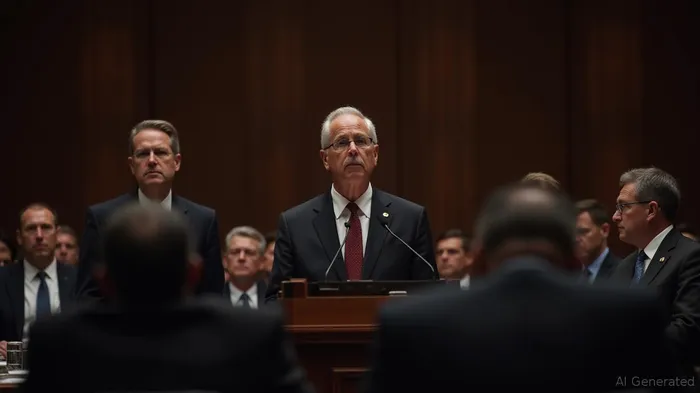
This year, the global market's attention will be focused on the small town of Jackson Hole, Wyoming, where economists, central bank governors, and prominent business figures from around the world will gather for the annual Global Central Bank Symposium hosted by the Federal Reserve Bank of Kansas City. This event has become a crucial point in the summer calendar for those observing the Federal Reserve, with the main attraction typically being the speech by the Federal Reserve Chairman on Friday.
Historically, the "Jackson Hole week" has been favorable for U.S. stock investors, with the S&P 500 index showing a median weekly gain of 0.8% since 2009. Out of 16 instances, the index has only declined five times, with significant drops of more than 1% occurring in 2019 and 2022. U.S. Treasury bonds also tend to rise during this week, although their returns are not as robust as those of stocks. The iShares 20+ Year Treasury Bond ETF has a median return of 0.2% during the Jackson Hole conference week.
One of the most memorable moments for some was in 2022, when the Federal Reserve Chairman delivered a hawkish speech emphasizing that combating inflation was the top priority and that interest rates would continue to rise. This statement was met with a negative reaction from the stock market, as the S&P 500 index fell by 4% that week.
Looking ahead to this year's Jackson Hole Central Bank Symposium, analysts suggest that investors are bracing for potential volatility. The Federal Reserve Chairman is under significant pressure from the White House to lower interest rates at the September meeting. However, there is growing disagreement among Federal Reserve policymakers about whether it is appropriate to resume rate cuts at this time. In the latest meeting, two Federal Reserve governors voted against the rate decision, the most dissenting votes since 1993. Currently, federal funds futures traders are pricing in a high probability of a rate cut in September, but some speculate that the Chairman may challenge these dovish expectations in his Friday speech.
Several analysts have warned that stock investors might consider taking profits before the Jackson Hole meeting. One analyst noted that their macroeconomic model strongly suggests that the Federal Reserve's policy rate should be lower. However, if the Chairman hints at a rate cut, he would need to acknowledge that the labor market is actually weakening. Given that stock valuations have surged to historical highs, any disappointment could put pressure on the stock market.
Another analyst expressed concern that investors are hoping for a dovish stance from the Chairman in his Jackson Hole speech, but there is a risk that this may not be achieved, potentially leading to market instability. The analyst pointed out that the Chairman's speech carries high risk due to the conflicting signals from the labor market and inflation data. While recent initial jobless claims have decreased, the average monthly job growth over the past three months is at its weakest level since 2010, when the unemployment rate was 9%. This backdrop comes as the stock market has been on a sustained rally, with the S&P 500's price-to-earnings ratio reaching 25.5 times, the highest level since 2000, and facing challenging seasonal factors in the fall.
The analyst suggested that the market might be disappointed if the Chairman only hints at a 25 basis point rate cut in September, but he is likely to emphasize that a 50 basis point cut is not an option, and whether there will be a rate cut in October or December will still depend on the data. In this scenario, a more balanced view on rate cuts could trigger a short-term correction of 7% to 15%, which is reasonable in the context of a structurally driven bull market by artificial intelligence. The analyst recommended buying October put options on the InvescoIVZ-- QQQ Trust Series I and investing in sectors with attractive valuations, such as healthcare, while partially offsetting costs by selling overvalued stocks.
The Jackson Hole Global Central Bank Symposium will be held from August 21 to 23 in the mountain resort town of Jackson Hole, Wyoming. The Chairman's speech will be one of the most anticipated central bank events of the year, as investors seek to gauge the central bank's assessment of future economic conditions and policy direction.
This year's theme for the Jackson Hole Symposium is "Labor Market Transformation: Demographics, Productivity, and Macroeconomic Policy." This theme is closely related to the recent dramatic changes in the U.S. labor market. Data shows that the labor market cooled significantly from May to July, with non-farm payrolls being revised down by over 250,000 in May and June, and only 73,000 new jobs added in July. Wage growth also slowed from a 6% annual rate in 2022 to approximately 3.9%. These data points surprised the market and caused a split within the Federal Open Market Committee, with two governors voting for a rate cut in July.
Inflation data has been mixed. While the July Consumer Price Index (CPI) showed a moderate increase, the labor market showed signs of slowing down, reinforcing market expectations of a rate cut in September. However, inflation pressures remain persistent, with the core CPI rising 0.3% month-over-month, the largest increase since January, and an annual rate of 3.1%. The Producer Price Index (PPI) also surged by 0.9%, the largest monthly increase in over three years. These data points indicate that input inflation risks are accumulating, and tariffs may be driving up business costs, which could eventually be passed on to consumers.
The Chairman faces a challenging economic situation. On one hand, signs of a cooling labor market indicate that the risk of economic slowdown cannot be ignored. On the other hand, tariff policies from the Trump administration are driving up inflation, making the decision to cut rates more complex. Amid conflicting economic signals and ongoing political interference, the Federal Reserve's accurate judgment of economic trends is crucial.
Investors are closely watching the Chairman's speech, as it could provide key insights into the future direction of U.S. monetary policy. This speech could be a significant moment in the Chairman's career as the head of the Federal Reserve. The Chairman has been cautious, with the federal funds rate remaining unchanged since a 25 basis point cut in December 2022, currently at 4.25% to 4.50%. In contrast, the European Central Bank has cut rates four times for a total of 100 basis points, while the Bank of England, Reserve Bank of Australia, and Reserve Bank of New Zealand have each cut rates three times, and the Bank of Canada has cut rates twice. The Chairman's caution is due to concerns that tariff policies could exacerbate inflation, potentially leading to double-digit inflation similar to the 1970s under the Nixon administration.
Market expectations for a rate cut in September have been volatile, with most investors hoping for a rate cut in the coming weeks. This expectation has kept the stock market at high levels, making it more sensitive and fragile. Any signal that contradicts this expectation could trigger significant market volatility. Analysts have warned that any hint from the Jackson Hole meeting that the situation is not as expected could make the market more susceptible to selling pressure. Another analyst cautioned that if investors expect a dovish Chairman and he takes a hawkish stance, the risk of market volatility increases. The more complacent investors are as they enter the meeting, the greater the risk of a market reaction.
Analysts predict that the Jackson Hole meeting may not give the green light for a rate cut, but instead, a hawkish statement aimed at pushing back against market expectations. The main reason is that the rise in inflation is driven by service sector prices, not the commodity prices that the market has been closely monitoring. Analysts believe that the Chairman's speech could calm the market while providing a solid economic basis for the Federal Reserve's decisions. This situation is also relevant to Japan and Europe, where the focus is on whether the European Central Bank's rate-cutting cycle has ended or if it will soon begin a rate-hiking cycle. In Japan, the country's strong economic performance in the second quarter has supported the possibility of another rate hike this year, but this performance needs to be sustained.
Some analysts are cautious about how much information on monetary policy adjustments will be revealed at this year's Jackson Hole meeting. They believe the Chairman may use this opportunity to cool down the market's overly aggressive rate cut expectations. Other analysts predict that the Chairman will not preemptively reveal the September rate decision, focusing instead on evaluating the Federal Reserve's monetary policy framework. In May, the Federal Reserve announced that it was reviewing its 2025 framework, which includes assessing its long-term goals, strategy statement, and communication tools. The results of this evaluation are expected to be released around the time of the Jackson Hole meeting, potentially impacting medium- to long-term interest rates, monetary policy, and gold prices.
Five years ago, the Federal Reserve revised its monetary policy framework to consider an average inflation target, allowing inflation to temporarily exceed the 2% target. This framework also increased the importance of employment goals, shifting the focus from controlling inflation to promoting economic growth. However, the economic environment has changed significantly since 2020. The Chairman has stated that he will not overemphasize the employment gap, and policy responses will depend on whether they trigger inflationary pressures. Although this does not involve short-term interest rate policy, adjusting the policy framework could lead to structural changes in the Federal Reserve's monetary policy. Analysts believe the Chairman could establish some guiding principles that transcend his term, such as how to respond to supply chain shocks and rebalance the goals of full employment and price stability. This is a key focus of this year's Jackson Hole meeting.

Stay ahead of the market.
Get curated U.S. market news, insights and key dates delivered to your inbox.


AInvest
PRO
AInvest
PRO



Comments
No comments yet