
The Jackson Hole Signal: Decoding Powell's Policy Speech for Market Direction
 Aime Summary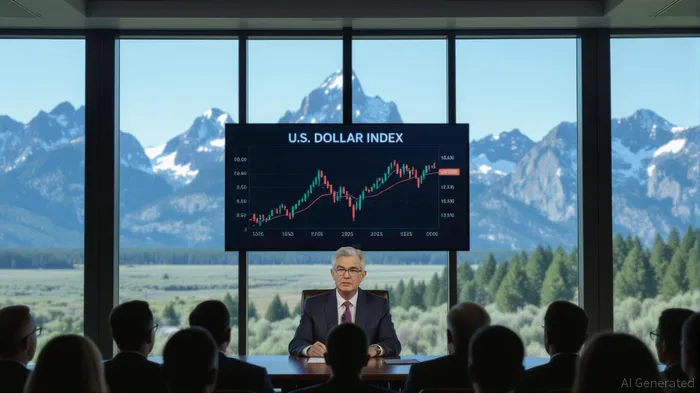
Federal Reserve Chair Jerome Powell's August 22, 2025, Jackson Hole speech has become a focal point for investors navigating a complex macroeconomic landscape. With inflation at 2.7%, unemployment rising to 4.3%, and political pressures mounting, the Fed faces a delicate balancing act. Powell's address is not just a policy update—it's a signal of the central bank's credibility, its evolving framework for managing inflation, and its tolerance for labor market softness. For investors, the speech offers a roadmap to recalibrate portfolios in alignment with the Fed's likely trajectory.
Fed Credibility and the Tightrope of Policy
The Federal Reserve's credibility hinges on its ability to maintain price stability while supporting employment. Powell's speech will likely emphasize the Fed's commitment to its 2% inflation target, even as internal divisions persist. While some officials, like Vice Chair Michelle Bowman, advocate for aggressive rate cuts to bolster the labor market, others caution against premature easing that could reignite inflation. This tension reflects a broader debate: Is the Fed willing to tolerate a weaker labor market to ensure inflation remains anchored?
The political dimension adds another layer of uncertainty. Treasury Secretary Scott Bessent's public push for a 50-basis-point rate cut in September underscores the Trump administration's desire for rapid economic stimulus. However, Powell's cautious approach—rooted in data dependency—suggests a more measured response. The Fed's ability to resist political pressures while maintaining its independence will be a key theme of the speech, with implications for market trust in its policy framework.
Inflation Dynamics and Growth Expectations
Inflation has stabilized at 2.7%, but the Fed remains wary of persistent core inflation and wage growth. Powell is expected to highlight the role of long-term inflation expectations, which have remained well-anchored despite recent volatility. This stability is critical for avoiding a self-fulfilling inflationary spiral. However, the cooling labor market—marked by slower job gains and rising unemployment—signals a shift in the Fed's priorities.
The Fed's dual mandate now faces a trade-off: further tightening could exacerbate labor market weakness, while premature easing risks inflation overshooting the target. Powell's speech will likely frame the September meeting as a potential inflection point, with a 25-basis-point rate cut seen as the most probable outcome. This dovish pivot would signal the Fed's willingness to prioritize employment support, even as it remains vigilant about inflation.
Equity Positioning: Underweight Magnificent Seven, Overweight Mid-Caps
The equity market has priced in aggressive Fed easing, with the S&P 500 trading at a Shiller CAPE ratio of 35—well above historical averages. This overvaluation, particularly in the "Magnificent Seven" tech stocks, creates a risk of profit-taking if the Fed signals a slower rate-cutting cycle. Investors should consider reducing exposure to growth stocks and shifting to value-oriented sectors like utilities and consumer staples, which offer defensive characteristics in a risk-off environment.
Mid- and small-cap equities, however, present compelling opportunities. These stocks trade at discounts to their large-cap counterparts and are more sensitive to lower interest rates. A Fed pivot toward easing would likely boost their valuations, as lower borrowing costs enhance corporate earnings and cash flow. Additionally, international developed markets—particularly in Europe and Japan—offer diversification benefits as central banks like the ECB and BOJ navigate their own rate-cutting cycles.
Bond Strategy: Extend Duration, Lock in Yields
Fixed income markets have already priced in a dovish Fed, with the 10-year Treasury yield hovering near 3.8%. However, a confirmed rate-cutting cycle would likely drive yields lower, making longer-duration bonds an attractive hedge. Investors should consider extending the duration of their bond portfolios, prioritizing long-term Treasurys and high-quality corporate bonds.
Investment-grade bonds, particularly those with inflation-linked features, can also provide downside protection. Municipal bonds and international government bonds may offer additional yield in a low-interest-rate environment. The key is to balance duration risk with credit quality, avoiding overexposure to high-yield or emerging market debt, which could underperform in a recessionary scenario.
Commodity Exposure: Gold as a Hedge, Energy as a Wild Card
Commodities remain a volatile asset class, with inflationary pressures easing but supply constraints persisting. Gold, historically a safe-haven asset, should be considered for its low correlation to equities and its role as a hedge against geopolitical risks. Energy markets, on the other hand, are more speculative. While crude oil prices have stabilized, they remain sensitive to global demand shifts and OPEC+ policy changes.
Investors should maintain a modest underweight in commodities overall but allocate selectively to gold and energy futures. A Fed-driven dollar weakness could boost non-dollar commodities, making hedging strategies—such as currency forwards—worth considering for those with exposure to emerging market assets.
Conclusion: A Balanced Approach in Uncertain Times
Powell's Jackson Hole speech is a critical inflection point for global markets. The Fed's credibility, inflation dynamics, and growth expectations will shape the trajectory of monetary policy for the remainder of 2025. For investors, the key is to adopt a balanced, diversified approach: underweight overvalued equities, extend bond duration, and selectively hedge with gold and energy. By aligning portfolios with the Fed's likely path, investors can navigate the uncertainties of a late-cycle economy while positioning for potential upside in a soft landing scenario.
As Powell navigates the tightrope between inflation control and labor market support, the markets will be watching closely. The message is clear: agility, discipline, and a focus on fundamentals will be the hallmarks of successful portfolio management in the months ahead.

Stay ahead of the market.
Get curated U.S. market news, insights and key dates delivered to your inbox.






Comments
No comments yet