
Jackson Hole and the Cross-Asset Implications of Fed Policy for Risk-On Sectors
 Aime Summary
As the Federal Reserve prepares to conclude its 2025 Jackson Hole symposium, markets are bracing for a pivotal moment. With Jerome Powell's final speech as Fed Chair scheduled for August 22, the central bank's messaging will shape the trajectory of risk-on assets, from equities to cryptocurrencies. Investors are already positioning portfolios in anticipation of a potential September rate cut, with macro signals, volatility trends, and cross-asset correlations offering a roadmap for strategic allocation.
Macroeconomic Signals: A Delicate Balancing Act
The Fed's dilemma is stark: inflation remains stubbornly above target (core PCE at 2.7%), while the labor market shows signs of fragility (unemployment at 4.2%, with July nonfarm payrolls adding just 73,000 jobs). This duality has led to internal FOMC dissent, with some policymakers advocating for a rate cut to avert a slowdown. The futures market currently prices in a 70% probability of a 25-basis-point reduction in September, a move that could catalyze a surge in risk assets.
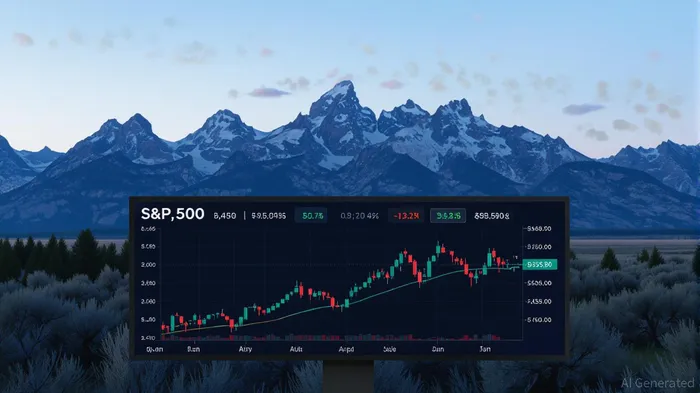
For equities, the S&P 500 and Nasdaq-100 have outperformed due to AI-driven earnings growth, but industrial and energy sectors remain under pressure from trade policy uncertainty. Meanwhile, the U.S. dollar's 11% decline over six months has spurred allocations to emerging markets and gold, as investors hedge against inflation and real yield fluctuations.
Volatility Trends: A Barometer of Market Sentiment
The CBOE Volatility Index (VIX) has climbed to 16.60 as of August 21, a 5.8% increase from the prior day, reflecting heightened uncertainty ahead of Powell's speech. While this level remains moderate compared to the 80.86 peak during the 2008 crisis, the upward trend suggests growing anxiety about a potential stagflationary environment.
In crypto, Bitcoin's 30-day implied volatility (DVOL) has spiked to 37%, up from a multi-year low of 26% just a week earlier. This surge indicates expectations of ±3.5% price swings, a precursor to sharp movements historically. The divergence between rising spot prices (Bitcoin recently rallied from $116,000 to $122,000) and declining open interest ($3.78 billion drop since early August) signals a maturing market structure, with institutional buyers stabilizing prices while retail de-leveraging reduces liquidity.
Positioning in Equities and Crypto: A Barbell Strategy
Investors are adopting a barbell approach, hedging against dollar strength with stablecoins while targeting speculative altcoins with high growth potential. Retail demand for leveraged crypto ETFs has surged, anticipating a post-rate-cut rally. In equities, a focus on AI-driven sectors and defensive plays (e.g., utilities, healthcare) reflects a cautious optimism.
The bond market's bifurcation—falling short-term yields versus rising long-term yields—underscores the Fed's struggle to reconcile inflation control with growth preservation. A flattening yield curve adds to the complexity, with investors pricing in a potential shift to dovish policy by year-end.
Powell's Speech: A Final Narrative Pivot
Powell's Jackson Hole address will likely emphasize the labor market's transition, given the symposium's theme of “Labor Markets in Transition.” A dovish pivot could trigger a short-term surge in crypto and equities, while a reaffirmation of hawkish intent would deepen bearish trends. The speech's timing—just days before the September FOMC meeting—adds urgency to its messaging.
For investors, the key is to balance exposure to rate-sensitive assets (e.g., high-yield bonds, growth equities) with hedges against policy uncertainty. A 25-basis-point cut in September would likely boost the S&P 500 toward 6,000 by year-end, as JPMorganJPM-- forecasts, but risks remain if inflation proves sticky or geopolitical tensions escalate.
Strategic Recommendations
- Equities: Overweight AI-driven sectors (semiconductors, cloud computing) and underweight energy/industrial stocks. Use volatility selling strategies (e.g., iron condors) if the S&P 500 consolidates near 5,800.
- Crypto: Allocate to BitcoinBTC-- and EthereumETH-- with a focus on volatility buying (straddles) if prices break above $122,000 or below $115,000. Hedge with stablecoins to mitigate dollar strength.
- Macro Hedges: Consider long-dated Treasury bonds and gold as inflation hedges, while short-term Treasuries benefit from rate-cut expectations.
As Powell's tenure nears its end, the Fed's policy path will remain a critical determinant of risk-on positioning. Investors who navigate the cross-asset implications of this transition—leveraging macro signals, volatility trends, and rate expectations—will be best positioned to capitalize on the evolving landscape. The coming weeks will test the resilience of markets, but also offer opportunities for those who act with discipline and foresight.

Decoding blockchain innovations and market trends with clarity and precision.
Latest Articles
Stay ahead of the market.
Get curated U.S. market news, insights and key dates delivered to your inbox.






Comments
No comments yet