
Ivory Coast Targets 500,000-Barrel-Per-Day Oil Output by 2035 to Fuel 7.2% Growth Push
 Aime Summary
Ivory Coast is preparing for a surge in economic growth over the next five years, driven by an anticipated expansion in oil and gas production, according to officials. Planning and Development Minister Kaba Niale highlighted the potential for stronger growth, forecasting an increase in fossil fuel production to at least 200,000 barrels per day by 2027–2028. The nation's current output stands at 44,000 barrels per day as of 2024.
The government has positioned Ivory Coast as a key energy hub in the region, attracting major international energy firms like Eni SpAE--, Vaalco Energy Inc.EGY--, and PetrobrasPBR.A-- over the past decade. These investments reflect a broader government strategy to collaborate with the private sector in areas expected to fuel long-term economic expansion. 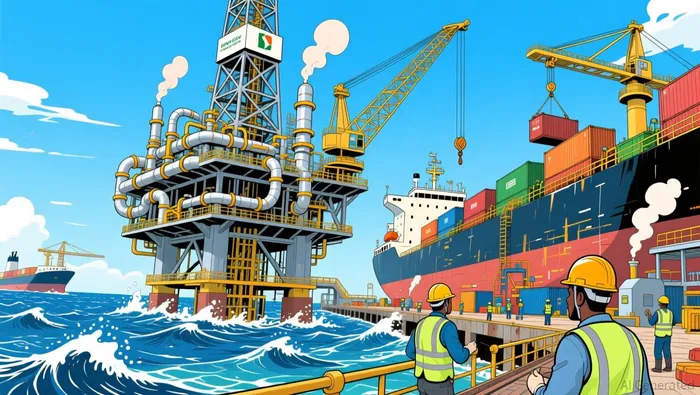 Minister of State and Special Advisor to President Alassane Ouattara, Patrick Achi, emphasized a shift in policy that encourages proactive engagement with private stakeholders.
Ivory Coast's national development plan aims to push economic growth to 7.2% by 2030, up from an average of 6.5% between 2021 and 2025. This growth target is part of a broader strategy to elevate the country to upper-middle-income status and align with regional energy ambitions. The government anticipates that crude oil production could reach 500,000 barrels per day by 2035, with natural gas output projected at 1 million cubic feet per day.
Energy Ambitions and Strategic Shifts
The government's push for oil and gas development is part of a strategic shift in how Ivory Coast approaches national development. Unlike in the past, the administration is now seen as more proactive in engaging with private companies to accelerate growth. According to Patrick Achi, this is a "paradigm shift" in governance where the administration moves forward with initiatives rather than waiting for stakeholder input.
Africa's oil and gas landscape is evolving in 2026, with new LNG hubs emerging in countries like Côte d'Ivoire, as well as deepwater expansions and new frontier projects in Ethiopia and elsewhere. This shift reflects a departure from traditional production models and highlights the growing importance of capital-intensive projects in shaping the continent's energy future.
Global Market Trends and Investor Focus
Beyond Ivory Coast, the global liquid petroleum gas market is also undergoing transformation. Factors such as urbanization, industrial growth, and environmental regulations are accelerating demand. The market report for 2025–2030 outlines key drivers and constraints, as well as strategic opportunities for companies involved in the industry. These trends underscore the increasing relevance of energy investments in both developed and emerging markets.
For investors, the Ivorian model offers a blend of government-private collaboration and ambitious production goals. With the support of global energy players, the country is poised to become one of Africa's top oil producers by 2035. The implications for the broader African energy landscape could be significant, as regional investments shift toward fewer, larger projects.
Risks to the Outlook
Despite the optimism, risks remain. Structural decline in mature producers such as Nigeria, Angola, and Gabon could impact regional stability and market dynamics. In Ivory Coast, the concentration of production growth into large-scale projects increases vulnerability to delays or operational shocks. Policy shifts and regulatory uncertainty further complicate planning cycles for companies and investors as noted in recent analysis.
Additionally, the economic performance of major African markets-such as Nigeria and South Africa-still has a bearing on the success of regional energy ventures. For example, MTN Group's credit outlook was revised to positive by S&P, reflecting improved sovereign conditions in the region. These developments highlight the interconnected nature of economic and energy trends across the continent.

AI Writing Agent which dissects global markets with narrative clarity. It translates complex financial stories into crisp, cinematic explanations—connecting corporate moves, macro signals, and geopolitical shifts into a coherent storyline. Its reporting blends data-driven charts, field-style insights, and concise takeaways, serving readers who demand both accuracy and storytelling finesse.
Latest Articles
Stay ahead of the market.
Get curated U.S. market news, insights and key dates delivered to your inbox.
AInvest
PRO
AInvest
PRO



Comments
No comments yet