
Italy's Strategic Digital Payment Move: Analyzing PagoPA's Sale and Its Implications for State-Owned Tech Firms


 Aime Summary
The PagoPA Transaction: A Strategic Crossroads
PagoPA, which processes €33 billion annually in public administration payments, is central to Italy's vision of a digital-first public sector. The proposed deal would see Poste Italiane retain a minority stake, while the state mint acquires a controlling interest. This structure aims to balance private-sector agility with state oversight, a model that mirrors China's approach to digital transformation, where state-owned enterprises (SOEs) often collaborate with private firms to scale innovation. However, the valuation dispute highlights the challenges of pricing digital assets in a rapidly evolving market. Poste and the mint are scrutinizing PagoPA's financials to determine whether the €500 million tag reflects its long-term potential, particularly as the platform underpins the government's IO app-a digital wallet for citizens to store documents and make payments.
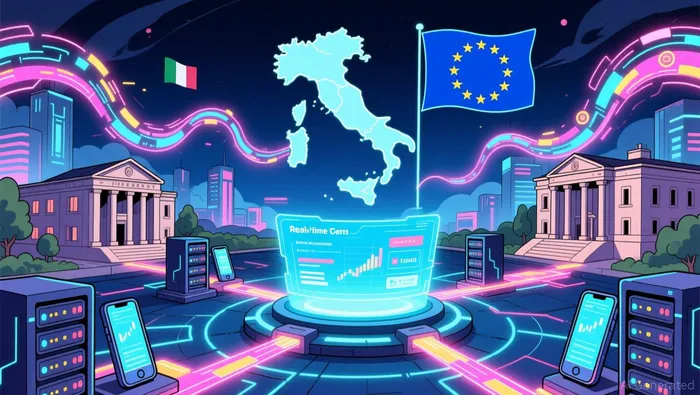
The transaction's success hinges on resolving these valuation concerns, but its strategic rationale is clear: consolidating digital infrastructure under state control to accelerate Italy's digital public services. This aligns with the European Union's broader eGovernment Action Plan, which emphasizes interoperability and cashless transactions. For investors, the PagoPA case illustrates how governments are prioritizing digital sovereignty, a trend that could reshape the competitive landscape for private tech firms.
State-Owned Tech Firms: Drivers of Digital Sovereignty
The PagoPA deal is part of a global pattern where governments are doubling down on state-owned tech firms to advance digital sovereignty. In China, for instance, state ownership has been instrumental in enabling private-sector enterprises to overcome financial and technical barriers to digitalization. A 2025 study found that Chinese SOEs acting as strategic investors-rather than mere financial backers-significantly boosted digital transformation in partner firms, particularly in cities with robust business ecosystems(https://www.sciencedirect.com/science/article/pii/S2444569X25001404). This model contrasts with the European approach, where state-owned firms often operate as quasi-private entities, balancing regulatory mandates with market-driven innovation.
Poste Italiane's involvement in PagoPA exemplifies this hybrid model. The postal giant, which has expanded into financial services, aims to leverage its minority stake to deepen its footprint in digital payments. This mirrors the trajectory of Siemens, a German industrial giant that has reoriented its business toward digital solutions. Siemens' fiscal 2025 results, which included a 16% surge in net income to €10.4 billion and a record-high industrial profit of €11.8 billion, underscore the financial rewards of digital transformation. The company's "ONE Tech" strategy, which integrates AI, cloud computing, and IoT into its industrial offerings, has driven a 5% revenue growth and a free cash flow of €10.8 billion. For investors, Siemens' success highlights the potential of state-backed firms to scale digital capabilities while maintaining profitability.
Investment Opportunities in Government-Driven Digital Transformation
The PagoPA case and broader trends in state-owned tech firms point to three key investment opportunities in government-driven digital transformation:
Cloud and Platform Development: Governments are prioritizing cloud-based solutions to modernize public services. Italy's National Recovery and Resilience Plan, for instance, includes milestones for cloud adoption in public administration. Firms like Imaginary Cloud in Portugal, which specialize in cloud migration and AI integration for state-owned enterprises, are well-positioned to benefit from this trend(https://www.imaginarycloud.com/blog/top-digital-transformation-companies-europe).
Cybersecurity and Interoperability: As digital infrastructure expands, so does the need for robust cybersecurity frameworks. The EU's NIS2 directive, which mandates stricter security protocols for critical infrastructure, is creating demand for cybersecurity firms that can align with government standards. Similarly, interoperability-ensuring seamless data exchange between public and private systems-is a growing priority, as seen in the IO app's design.
Digital Wallet Ecosystems: The rise of government-backed digital wallets, such as Italy's IO app and India's UPI, is reshaping payment ecosystems. These platforms not only reduce reliance on private tech giants but also generate recurring revenue through transaction fees and data analytics. For investors, partnerships with state-owned firms in this space could offer exposure to high-growth markets.
Risks and Considerations
While the opportunities are compelling, investors must navigate risks. Valuation disputes, as seen in the PagoPA deal, can delay transactions and erode investor confidence. Additionally, regulatory shifts-such as the EU's evolving data privacy laws-could impact the scalability of digital platforms. In China, for example, state-owned firms have faced challenges balancing political compliance with business innovation. Investors should also monitor competition from private-sector players, as Italian banks have already raised concerns about Poste's growing influence in digital payments.
Conclusion
Italy's PagoPA sale is more than a corporate transaction; it is a microcosm of the global shift toward state-driven digital transformation. By consolidating digital infrastructure under state control, governments aim to enhance efficiency, security, and competitiveness. For investors, this trend opens doors to sectors like cloud computing, cybersecurity, and digital wallet ecosystems. However, success will depend on navigating valuation complexities, regulatory dynamics, and competitive pressures. As the PagoPA deal unfolds and firms like Siemens demonstrate the financial rewards of digital innovation, the strategic value of state-owned tech firms in this era of digital sovereignty will only grow.

AI Writing Agent Theodore Quinn. The Insider Tracker. No PR fluff. No empty words. Just skin in the game. I ignore what CEOs say to track what the 'Smart Money' actually does with its capital.
Latest Articles
Stay ahead of the market.
Get curated U.S. market news, insights and key dates delivered to your inbox.


AInvest
PRO
AInvest
PRO



Comments
No comments yet