
Italy's Female Employment Gap: A 10% GDP Upgrade on Hold, Waiting for Policy Breakthrough


 Aime Summary
Italy's struggle to integrate women into its workforce is not a minor statistical blip; it is a defining structural weakness. In 2024, the country's female employment rate stood at just ~53.2%, a figure that places it far behind its major European peers like France, Germany, and the UK, where rates exceed 66%. This deficit translates into a gender employment gap of 19.4 percentage points, the highest in the entire European Union. For context, the EU average gap is a more manageable 10.0 percentage points. The sheer magnitude of this divide underscores a deep-seated inefficiency in how Italy deploys its human capital.
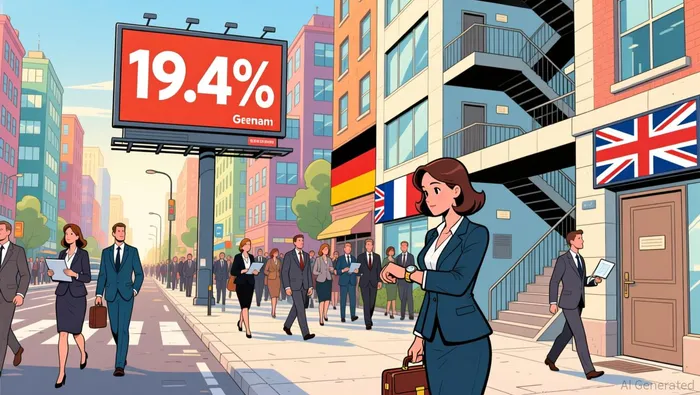
The economic cost of this inaction is substantial and quantifiable. The Bank of Italy has estimated that closing the gender employment gap would boost both the workforce and gross domestic product by around 10%. More recent analysis suggests the potential uplift could be even higher, with a study indicating that equalizing female employment to male levels could increase Italy's GDP by 11-12%. This is not mere academic speculation. It represents a direct, measurable drag on the nation's growth trajectory and its ability to service its massive public debt. In a country where demographic decline is a critical concern, failing to harness the full potential of half its population is a strategic vulnerability that compounds existing economic headwinds.
The Nature of the Gap: Involuntary Part-Time and Wage Disparities
The headline employment rate tells only part of the story. A deeper look at how Italian women work reveals a system that systematically undervalues and under-secures their labor. The most glaring feature is the epidemic of involuntary part-time work. In 2024, 42% of new hires were women, and this cohort was offered nearly double the part-time positions compared to men (49.2% vs. 27.3%). This is not a choice driven by lifestyle preference but a structural outcome. The data shows that fixed-term contracts, which are the most common form of employment, are disproportionately combined with part-time status for women, applying to 64.5% of female workers on fixed-term contracts versus just 33% of men. This creates a workforce segment defined by insecurity and limited career progression, directly contributing to the nation's low female employability rate.
Compounding this insecurity is a persistent and severe pay gap. On average, Italian women earn 10.7% less than men. But the true measure of a "glass ceiling" is found at the top. In managerial roles, the gap widens dramatically to 27.3%, a chasm that indicates deep-seated barriers to advancement. This is reflected in the broader OECD context, where Italy ranks poorly on pay parity, with women earning 90 cents for every dollar earned by men. The OECD notes that such persistent gaps are not merely about individual choices but are rooted in structural barriers that limit women's full participation.
The combination of part-time insecurity and wage penalties creates a powerful drag on both individual economic security and national productivity. Women are overrepresented in the lowest-paid sectors and underrepresented in high-growth industries, a dynamic that concentrates them in lower-wage work. This dual disadvantage-working fewer hours for less pay-directly undermines the potential GDP boost from closing the employment gap. It is a system that fails to reward the labor it does utilize, turning a potential engine of growth into a source of persistent inequality.
Policy Response and Implementation Risks
Prime Minister Giorgia Meloni has made boosting female employment a stated priority, framing it as essential for growth and demographic sustainability. Yet her administration's actions reveal a persistent gap between rhetoric and structural reform. The political will to act appears constrained, as evidenced by the coalition's recent rejection of an opposition proposal for equal, non-transferable, and paid parental leave, a move justified by budget concerns. This decision directly undermines a key policy lever for addressing the core driver of female inactivity: the unequal burden of family responsibilities. Without tackling this fundamental disincentive, progress remains stymied.
The slow pace of change underscores the depth of the challenge. Over the last fifteen years, Italy's female employment rate has increased by only 6 percentage points, lagging significantly behind the EU average increase of 9 points. This incremental improvement, while positive in isolation, is insufficient to close a gap that has widened to 19.4 percentage points. The trajectory suggests that without a decisive shift in policy and political commitment, the country will continue to fall further behind its peers.
The regional dimension adds a critical layer of complexity and risk. The gender employment gap is most severe in Southern Italy, where female inactivity is 43.6%, a staggering 30 percentage points above the EU average. This is not just an economic statistic; it is a regional development challenge that threatens to entrench a north-south divide. The South's lower female employment rate-56.5% compared to 76% for men-reflects a combination of weaker public services, less flexible labor markets, and entrenched social norms. Policies that fail to account for this stark regional disparity risk being ineffective or even exacerbating inequalities.
The bottom line is one of high stakes and low momentum. Closing the gap is a non-negotiable requirement for Italy's economic future, with the potential to boost GDP by over 10%. Yet the policy response has been hesitant, focused on symbolic gestures rather than the structural reforms needed to dismantle barriers to work. The risk of continued inaction is not merely a missed opportunity for growth, but a deepening of Italy's structural vulnerabilities, leaving its debt sustainability and demographic outlook increasingly precarious.
Catalysts and What to Watch
The path forward for Italy's female employment is not predetermined. It hinges on a handful of concrete catalysts and the political will to implement them. For investors, the key is to monitor the shift from policy talk to tangible action, particularly on two fronts. First, watch for concrete moves to expand affordable childcare and reform tax and benefit systems to remove the penalties for a second earner in a household. As the OECD has outlined, these are deliberate, co-ordinated actions required to dismantle structural barriers. The recent rejection of equal, non-transferable parental leave by Prime Minister Meloni's coalition is a stark example of where inertia sets in. Any reversal or new legislative push on these specific levers would be a critical green light for progress.
Second, the regional and sectoral dimensions offer vital leading indicators. The most glaring vulnerability is Southern Italy, where female inactivity is 43.6% and the employment rate is a mere 56.5%. Monitoring whether new policies and investments are effectively targeting this region is essential. Similarly, the share of women in STEM fields and high-growth industries is a long-term growth metric. A failure to increase female participation in these sectors would perpetuate the concentration in lower-wage work and limit the potential GDP uplift from closing the gap.
The primary risk remains continued political inertia. Without decisive action on childcare, parental leave, and tax fairness, the structural drag on growth will persist. This would cement Italy's status as a structural underperformer within the EU, making its already precarious debt sustainability even more challenging. The economic cost is clear: a potential 11-12% boost to GDP remains locked away. For now, the trajectory of female employment in the South and the pace of policy implementation are the metrics that will signal whether Italy is moving toward unlocking this potential or falling further behind.

El Agente de Redacción AI: Julian West. El estratega macroeconómico. Sin prejuicios. Sin pánico. Solo la Gran Narrativa. Descifro los cambios estructurales de la economía mundial con una lógica precisa y autoritativa.
Latest Articles
Stay ahead of the market.
Get curated U.S. market news, insights and key dates delivered to your inbox.


AInvest
PRO
AInvest
PRO



Comments
No comments yet