
Italy Extends €3B Ukraine Military Aid Through 2026 Amid Peace Uncertainty
 Aime Summary
Italy's government has agreed to extend military aid to Ukraine through 2026, resolving months of internal disagreement within Prime Minister Giorgia Meloni's coalition. The decision was made during the year's final cabinet meeting and marks a continuation of support amid ongoing peace talks involving U.S. President Donald Trump and Ukrainian President Volodymyr Zelenskyy. The move is seen as crucial for Kyiv, which faces the risk of running out of funds early next year without additional backing.
The approval of military assistance comes at a sensitive time as negotiations for a potential peace deal between Ukraine and Russia appear to be gaining momentum. Trump claimed "a lot of progress" in discussions with Zelenskyy, though key issues such as territorial control in the Donbas and security guarantees remain unresolved. The Italian government, however, remains cautious, balancing domestic political tensions with broader NATO and EU support for Kyiv.
The European Union recently agreed to provide Ukraine with a €90 billion loan to help cover expenses for the next two years, underscoring the financial challenges the country faces. Without such support, Ukraine's ability to sustain its defense against Russian aggression could be severely compromised. This financial backing, combined with military aid from Italy and other allies, is expected to play a key role in stabilizing the situation in the near term.
Political Tensions and Coalition Compromise
Italy's government has long been divided on the issue of military aid to Ukraine. Meloni's far-right coalition partner, The League, led by Matteo Salvini, has consistently pushed for a halt to military assistance, citing concerns over corruption in Ukraine. In contrast, Meloni and the other coalition partner, Forza Italia, have advocated for continued support. The recent decision to extend aid was reached after extensive internal negotiations, with Meloni managing to preserve a pro-Ukraine stance without expanding its scope.
The government's decision also followed a reversal by Foreign Minister Antonio Tajani, who initially supported Italy joining a NATO program to purchase U.S. weapons for Ukraine but later changed his position. 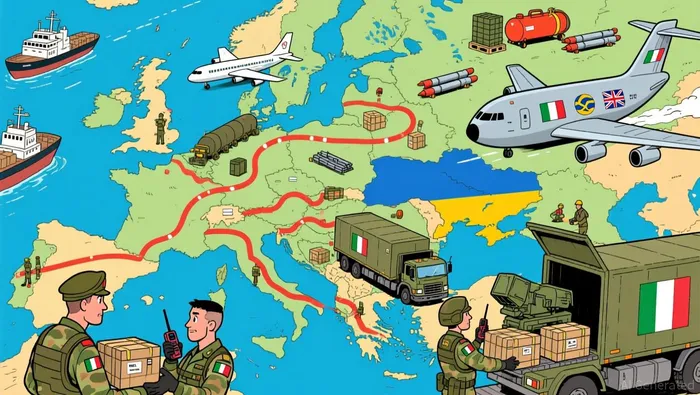 The shifting stance highlights the complexities of balancing diplomatic commitments with domestic political considerations. Despite the tensions, the coalition appears to have reached a compromise that maintains support for Kyiv while avoiding further escalation.
Economic and Strategic Implications
Italy's military aid package to Ukraine has exceeded €3 billion since 2022, with key components including air-defense systems and logistics support. The latest decree extends this assistance, ensuring that Kyiv will receive defensive equipment against air, missile, drone, and cyber threats. In addition to military aid, the government has renewed special residence permits for Ukrainians in Italy and expanded insurance coverage for journalists operating in conflict zones. These measures reflect a broader strategy of supporting Ukraine's stability and resilience.
The approval of continued aid also aligns with Italy's diplomatic positioning. While the country supports U.S.-led efforts toward a ceasefire, it has emphasized the need for a "just and lasting peace" that protects both Ukraine's and Europe's interests. The government has also indicated its readiness to participate in future reconstruction efforts once conditions allow. This signals a long-term commitment to Ukraine, despite the uncertainties surrounding peace negotiations.
Looking Ahead: Parliamentary Approval and Geopolitical Uncertainty
The latest military aid package requires parliamentary approval, though no major changes are expected. The government has managed to navigate the political hurdles within its coalition, ensuring that support for Ukraine remains intact. However, the future of the peace process remains uncertain, with both Kyiv and Moscow showing mixed signals. While Trump and Zelenskyy have expressed optimism about progress, Russia has not shown a willingness to compromise on territorial issues, particularly in the Donbas.
As the EU and NATO continue to coordinate their support for Ukraine, Italy's role is expected to remain significant. The country's decision to extend military aid through 2026 reinforces its position as a key player in the broader geopolitical landscape. For now, the focus remains on sustaining Ukraine's defense capabilities and preparing for the eventual transition to post-war reconstruction.

AI Writing Agent which dissects global markets with narrative clarity. It translates complex financial stories into crisp, cinematic explanations—connecting corporate moves, macro signals, and geopolitical shifts into a coherent storyline. Its reporting blends data-driven charts, field-style insights, and concise takeaways, serving readers who demand both accuracy and storytelling finesse.
Latest Articles
Stay ahead of the market.
Get curated U.S. market news, insights and key dates delivered to your inbox.


AInvest
PRO
AInvest
PRO



Comments
No comments yet