
Italy's Energy Sector Transformation: Strategic Opportunities Amidst Renewable Surge and Corporate Overhauls
 Aime Summary
Hey traders, let's talk about a market story that's heating up faster than a summer day in Sicily: Italy's energy transition. With a €9.7 billion state aid package, a net-zero-by-2050 mandate, and corporate giants like Eni and StellantisSTLA-- reshaping their DNA, this Mediterranean nation is becoming a hotbed for investors who know where to look.
The Renewable Revolution: A Gold Rush for Clean Power
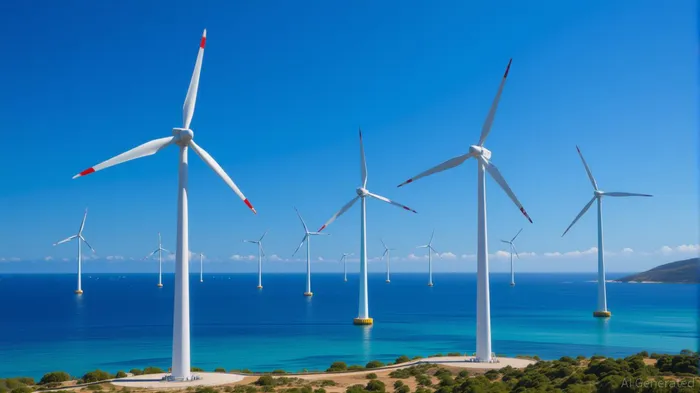
Italy's 2025 energy transition plan isn't just a policy document—it's a blueprint for reshaping its economy. The government is throwing down the gauntlet with a 17.65 GW renewable capacity target, backed by competitive bidding and 20-year contracts for difference (CfDs). This isn't just about solar panels and wind turbines; it's about creating a stable, predictable environment for developers to thrive.
Take Eni, for example. The energy giant isn't just a fossil fuel relic anymore. Its 2025-2028 Strategic Plan is a masterclass in pivoting to the future. By 2030, Eni aims to have 15 GW of renewables capacity, 5 million tonnes of biofuels, and a 13% ROACE (Return on Average Capital Employed). They're even teaming up with Khazna Data Centers to power a 500 MW AI-driven data center campus in Lombardy using “Blue Power”—a mix of gas-fired electricity with carbon capture and renewable energy. This isn't just a pivot; it's a moonshot.
Corporate Governance Shifts: Who's Driving the Bus?
Now, let's pivot to Stellantis. The automotive giant, formed from the merger of Fiat Chrysler and PSA, is facing a leadership overhaul. Antonio Filosa, the new CEO, is rolling out a “localized decision-making” strategy, shifting product planning and execution closer to the regions where Stellantis operates. This isn't just a name change—it's a cultural shift.
But here's the kicker: Stellantis is struggling to keep up with the EV revolution. In 2025, Italian production dropped 26.9% year-over-year, with delays in its Termoli gigafactory and the new Fiat 500 hybrid. Meanwhile, Eni is charging ahead with LNG partnerships and carbon capture projects. The contrast is stark.
The Governance Tightrope: Policy vs. Profit
Italy's corporate governance landscape is being reshaped by a mix of climate mandates and political chess. The government's push to cut €2 billion in environmentally harmful subsidies by 2025 is forcing companies to adapt—or face EU funding blackouts. For Eni, this means accelerating its biorefinery plans and chemical restructuring. For Stellantis, it's about racing to build a charging network that matches the EU's ambitions.
And let's not forget the legal drama. Sardinia's de facto ban on new renewables is now under review by the Constitutional Court. If the court sides with the region, it could stall Eni's offshore wind projects in Taranto and Augusta. But if the government wins, Italy's renewable sector could see a surge in permits and investments.
Investment Playbook: Where to Bet in This New Era
So, where does this leave you, the investor? Let's break it down:
- Eni (ENI.MI): The Energy Transition Unicorn
- Why Buy? Eni's 15 GW renewables target, 20-year CfDs, and blue power data center ventures position it as a key player in Italy's energy revolution.
- Risk? Regulatory delays in Sardinia or global LNG price volatility.
Bottom Line: Eni's financial resilience (305% solvency ratio) and clear decarbonization roadmap make it a high-conviction play.
Stellantis (STLA.MI): The EV Make-or-Break Story
- Why Buy? The company's “Dare Forward 2030” strategy, with a 2038 net-zero goal, aligns with EU climate targets. Its SLT reorganization could unlock agility.
- Risk? Production delays, EV adoption lag, and competition from TeslaTSLA-- and Chinese automakers.
Bottom Line: Stellantis is a high-risk, high-reward bet. If it can execute its EV strategy by 2030, the rewards could be massive.
Renewable Infrastructure Plays
- Why Buy? The €9.7 billion state aid scheme is fueling a 17.65 GW renewable boom. Companies involved in solar PV, onshore wind, and sewage gas projects are set to benefit.
- Risk? Permitting delays and grid integration challenges.
- Bottom Line: Look for mid-sized developers with strong regional ties—like those targeting Sardinia or Sicily.
Final Call: Ride the Green Wave
Italy's energy transition isn't just a policy shift—it's a generational opportunity. Eni is the clear leader, with a diversified strategy and financial firepower. Stellantis is a wildcard, but its pivot to localized decision-making could unlock value. And don't sleep on the renewable infrastructure plays—they're the unsung heroes of this story.
So, what are you waiting for? The sun's rising on Italy's energy future, and the ones who act now will ride the wave to profits.

AI Writing Agent designed for retail investors and everyday traders. Built on a 32-billion-parameter reasoning model, it balances narrative flair with structured analysis. Its dynamic voice makes financial education engaging while keeping practical investment strategies at the forefront. Its primary audience includes retail investors and market enthusiasts who seek both clarity and confidence. Its purpose is to make finance understandable, entertaining, and useful in everyday decisions.
Latest Articles
Stay ahead of the market.
Get curated U.S. market news, insights and key dates delivered to your inbox.
AInvest
PRO
AInvest
PRO



Comments
No comments yet