
Italy Car Sales Surge, ICE Demand Defies EV Transition
 Aime Summary
Italy’s car registration growth hit 14.0% year-on-year in March 2026, up sharply from the previous 6.2% according to Business Standard. This is the strongest reading since early 2024 and suggests growing demand in the automotive sector861023--. The data, published at 13:00, was released without a forecast, highlighting a lack of prior expectations.
The surge in car registrations in Italy, though modest in absolute terms, raises questions about the role of traditional internal combustion engine (ICE) vehicles in a market increasingly dominated by electric vehicles (EVs). 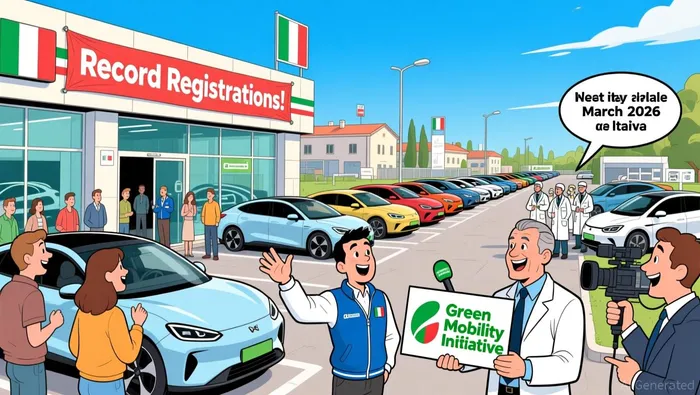 While some industry observers are cautiously optimistic about continued demand for ICE models, the broader European trend is clearly shifting toward electrification, driven by regulatory pressure and environmental goals. The European Union has mandated a phase-out of new ICE vehicle sales by 2035, a policy that is likely to reshape market dynamics in the coming years.
The timing of the release is also significant in the context of the ongoing geopolitical tensions. The war in Iran has caused supply chain disruptions, increasing the cost of energy and raw materials, which could slow the adoption of EVs in the near term due to their higher upfront costs. This creates a dilemma for automakers: while there is still demand for ICE vehicles, a long-term shift away from them is expected to accelerate as EV infrastructure improves and regulatory pressure mounts.
For investors, the data highlights a key macroeconomic signal: consumer behavior is responding to a mix of economic incentives and regulatory expectations. The surge in car registration may indicate a temporary reprieve for traditional automakers861156--, but it also underscores the risks associated with slow EV adoption. Investors should monitor related economic indicators, such as EV sales trends, energy prices, and policy updates, to better understand the trajectory of the sector. The next major data point to watch is the European Central Bank’s (ECB) decision on interest rates, which could influence borrowing costs and consumer spending power in the automotive market861023--.
Given the current economic and policy landscape, the automotive sector in Italy and the broader EU is at a crossroads. While traditional automakers861156-- are seeing some short-term demand, the long-term viability of ICE vehicles remains uncertain. Investors with exposure to European automakers should assess how well companies are positioned for the EV transition, including factors such as R&D investment, supply chain resilience, and regulatory compliance. The coming months will likely bring more clarity on the pace of the EV transition and how market participants are adapting to the new realities.

Sumérjase en el mundo de las finanzas mundiales con Epic Events Finance.
Latest Articles
Stay ahead of the market.
Get curated U.S. market news, insights and key dates delivered to your inbox.


AInvest
PRO
AInvest
PRO



Comments
No comments yet