
ITA Airways Travel Chaos: How Investors Can Navigate Strike Disruptions
 Aime Summary
- ITA Airways has canceled 55% of its flights on 26 February due to a 24-hour aviation strike.
- A follow-up rail strike from 27 to 28 February will impact freight and passenger services, particularly in Lombardy and Emilia-Romagna according to reports.
- Travelers are advised to rebook flights or request refunds for affected dates until 8 March.
- The strikes are driven by union demands for higher wages and improved staffing levels.
- Air India and Lufthansa Group announced a joint business partnership that includes ITA Airways, signaling broader collaboration opportunities in transatlantic routes.
Italy's air and rail systems are in the grip of major disruptions this week, with ITA Airways at the center of a nationwide aviation strike. The ripple effects extend beyond leisure travelers—business operations, freight logistics, and even Swiss-Italy routes are at risk. For investors and financial professionals, understanding the stakes and preparing for the fallout is essential in this volatile environment.
For investors watching ITA Airways and related travel stocks, the stakes are clear: labor unrest, flight cancellations, and supply chain bottlenecks create both risks and opportunities. As the 2026 Winter Olympics approach, pressure is mounting on the Italian government to find a resolution—but for now, the disruptions are real. This is the moment to reassess travel exposure and consider how to position in a shifting mobility landscape.
What Is Behind the ITA Airways Strike Disruptions?
Transport unions across Italy—representing ground-handling crews, flight attendants, and rail workers—are staging a coordinated 24-hour aviation strike on 26 February, followed by a 24-hour rail stoppage from 27 to 28 February. These actions are driven by frustrations over wages and staffing issues, despite government assurances of limited strikes during the 2026 Winter Olympics.
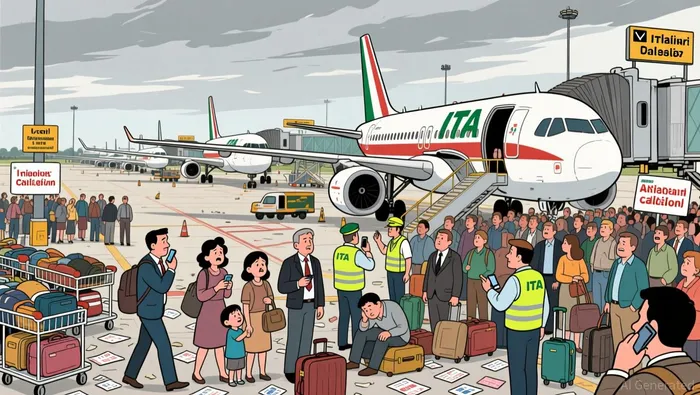
ITA Airways has already canceled 55% of its flights on 26 February, with additional cancellations expected on 25 and 27 February. Major airports like Rome-Fiumicino and Milan-Malpensa are most affected, and knock-on delays are likely. Passengers are being advised to rebook or request refunds until 8 March. This is not just a short-term inconvenience—it's a warning sign of deeper structural issues in Italy's transport sector, including underfunding and a lack of staffing to meet rising travel and security demands according to reports.
Why Should Investors Care About ITA Airways Labor Issues Now?
For investors with exposure to ITA Airways, the stakes are clear: a prolonged labor dispute could erode trust in the company's reliability and operational stability. The airline, which was formed as a successor to Alitalia, has already struggled with financial and operational challenges. A high-profile strike at this time of year—when travel demand is high—could further strain its resources and reputation.
The broader implications extend beyond ITA Airways. The labor action is likely to impact the European travel sector more generally, especially as carriers like SWISS and easyJet see their routes disrupted. Freight and logistics companies, particularly those operating through key northern Italian manufacturing hubs like Milan and Verona, could face significant delays, impacting just-in-time supply chains.
For investors, this is a cautionary tale about the interconnectedness of global transportation networks. A single point of failure—like a nationwide strike in Italy—can ripple across industries and markets. For now, the priority is managing risk and positioning for potential recovery once the strike ends.
What to Watch for in the Coming Weeks
The coming weeks will be crucial for ITA Airways and the Italian travel sector. The first item on the agenda is whether the government will intervene to protect minimum service levels during the 2026 Winter Olympics. If it does, that could set a precedent for how similar disputes are handled in the future and offer a potential lifeline for businesses reliant on Italian infrastructure according to reports.
A second development to watch is the outcome of negotiations between unions and employers. The recent collapse of talks at the Ministry of Labour suggests the dispute is far from over. If employers fail to meet union demands, similar strikes could become a recurring issue, especially as EES passport checks are set to roll out in April. For businesses and investors, that means planning for more frequent and unpredictable disruptions.
Finally, keep an eye on the broader European travel landscape. With Air India and Lufthansa Group expanding their joint business partnership—ITA Airways is included—there may be new opportunities to route passengers and cargo through alternative channels. This could serve as a model for how the industry adapts to disruptions in the short and long term.
For now, the priority for investors is to stay agile. Whether through hedging exposure, diversifying travel routes, or adjusting operational timelines, the goal is to minimize the impact of the current strike—and prepare for the next one.

Stay ahead of the market.
Get curated U.S. market news, insights and key dates delivered to your inbox.


AInvest
PRO
AInvest
PRO



Comments
No comments yet