
Istanbul's Real Estate Renaissance: Infrastructure, Trade, and the New Eurasian Hub
Istanbul stands at the crossroads of continents, cultures, and commerce—a fact now amplified by transformative infrastructure projects and strategic geopolitical positioning. The completion of the Istanbul Grand Airport and the expansion of Free Trade Zones have unlocked a new era of real estate opportunity, attracting cross-border capital and redefining the city’s role in global trade. For investors, the convergence of low borrowing costs, undervalued commercial properties, and Turkey’s strategic Eurasian corridor status creates a rare asymmetric return opportunity.
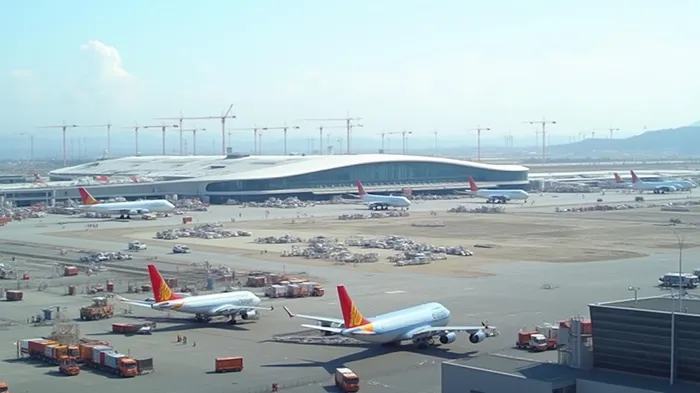
The Airport Effect: A Catalyst for Real Estate Growth
The Istanbul Grand Airport, fully operational since 2019, has become the linchpin of Istanbul’s real estate boomBOOM--. With capacity to handle 200 million passengers annually by 2028, it has transformed the surrounding area into a logistics and commercial hub. Property prices near the airport surged by 31.6% year-on-year in 2024 (nominal), driven by demand from logistics firms, airlines, and multinational corporations. The M11 metro line, slashing travel time to the city center, has further amplified the appeal of this once-peripheral region.
The airport’s strategic location also fuels cross-border investment. Foreign buyers—particularly from Russia, Iran, and the Gulf—now account for 45% of commercial real estate transactions in Istanbul, drawn by Turkey’s Citizenship-by-Investment Program and the airport’s role as a gateway to Europe and Asia.
Free Trade Zones: The Engine of Cross-Border Capital
Turkey’s Free Trade Zones (FTZs), including the Istanbul Airport FTZ, are no longer just logistics parks—they’re magnets for global capital. These zones offer tax exemptions, streamlined customs, and direct access to the airport’s cargo facilities. The Medium-Term Program (2024–2026) has further incentivized investments in FTZ-linked infrastructure, with tax breaks for projects exceeding TRY 50 million.
The synergy between FTZs and the airport creates a “trade-to-warehouse-to-export” ecosystem, attracting manufacturers, tech firms, and logistics providers. For example, a 2023 study by Turkey’s Investment Office revealed that FTZ-linked projects in Istanbul now account for 18% of the country’s total FDI inflows, up from 12% in 2020.
Borrowing Costs and Undervalued Assets: The Perfect Storm for Returns
While Turkey’s central bank benchmark rate remains elevated at 46% as of April 2025, projections suggest a gradual decline to 12% by 2026. This creates a unique window for investors: high nominal returns on short-term deposits today, paired with long-term opportunities as borrowing costs normalize.
Meanwhile, commercial properties in Istanbul remain undervalued in real terms. Despite nominal price gains, inflation-adjusted values have fallen by 25% since 2022, making properties like prime office spaces in Levent and Maslak a bargain. A $3,000–$6,000 per square meter price range offers a stark contrast to European hubs like Frankfurt or Paris, where comparable spaces cost $15,000–$30,000 per square meter.
Geopolitical Edge: Stability in a Volatile Region
While Turkey faces geopolitical headwinds—from sanctions risks to regional conflicts—it also benefits from its Eurasian corridor advantage. As energy and trade routes between Europe, the Middle East, and Asia shift, Istanbul’s FTZs and airport position it as a neutral, low-cost logistics nexus.
Foreign investors are already capitalizing: Russian and Iranian buyers, seeking alternatives to sanctioned markets, now account for 35% of foreign real estate purchases. Meanwhile, Turkey’s ties to the EU—despite stalled accession talks—provide access to a 500 million-strong market, while its military partnerships with Gulf states secure energy supplies.
Why Act Now?
The convergence of infrastructure, policy support, and undervalued assets has created a sweet spot for asymmetric returns. Key opportunities include:
1. Airport-linked logistics hubs: Warehouse and cargo facilities near the Grand Airport offer 15–20% annual rental yields.
2. Free Trade Zone industrial parks: Projects in emerging areas like Kağıthane offer 8–12% capital appreciation potential as infrastructure improves.
3. Sustainable office spaces: Buildings with green certifications in central districts command premium rents (+10%) and align with Turkey’s net-zero by 2053 targets.
Risks and Mitigation
While risks like inflation and geopolitical instability persist, they are offset by structural tailwinds. The Citizenship-by-Investment Program ensures liquidity, while the Istanbul Arbitration Center (ISTAC) provides reliable dispute resolution. Investors should prioritize locations with direct infrastructure links (e.g., M11 corridor) and diversified tenant bases.
Conclusion: Istanbul’s Time is Now
Istanbul’s real estate market is at an inflection point—infrastructure is complete, policies are investor-friendly, and valuations are compelling. With cross-border capital flooding in and geopolitical risks pricing in, this is the moment to act. Whether targeting logistics assets, FTZ-linked warehouses, or prime offices, Istanbul offers a rare blend of growth, stability, and asymmetric upside.
The clock is ticking. The question is not whether Istanbul’s real estate boom is real—it’s whether you’ll be part of it.

Stay ahead of the market.
Get curated U.S. market news, insights and key dates delivered to your inbox.


AInvest
PRO
AInvest
PRO



Comments
No comments yet