
Istanbul's Energy Crossroads: Navigating Grid Challenges for Real Estate and Renewable Growth
The bustling metropolis of Istanbul sits at the heart of Europe and Asia, yet its energy infrastructure faces a critical juncture. Rapid urbanization, reliance on fossil fuels, and the transition to renewables have created both risks and opportunities for investors in real estate and energy sectors. Power outages—whether from grid instability or geopolitical tensions—threaten to disrupt Istanbul's economic engine. This article explores how electricity infrastructure challenges could reshape the city's real estate landscape and why renewable energy investments are increasingly vital to its future.
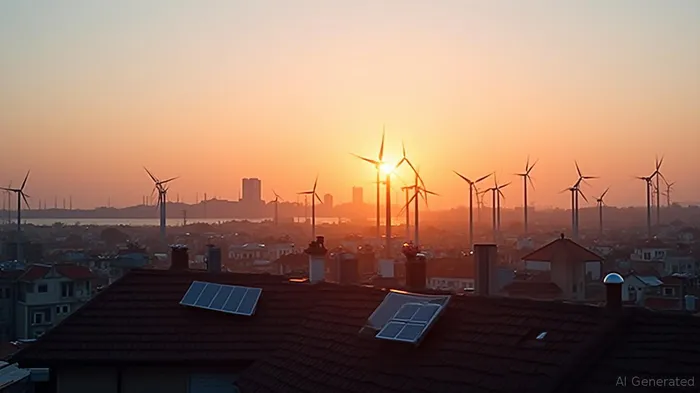
The Grid's Fragile Balance
Turkey's electricity grid, including Istanbul's, remains a patchwork of aging infrastructure and ambitious renewable targets. While renewables like solar and wind now account for 25% of Turkey's energy mix, the system still relies heavily on gas (40%) and coal (35%). This dependency creates vulnerabilities:
- Interconnection Limits: Unlike Europe's interconnected grids, Turkey's cross-border links are underdeveloped. A reveals Istanbul's isolation could amplify local outages.
- Storage Deficits: With only ~1.2% of Turkey's energy storage capacity from batteries, sudden generation drops—like the 2025 Iberian blackout—could trigger cascading failures.
- Inertia Issues: Renewable-heavy grids lack the stabilizing “inertia” of conventional plants. A would likely show increasing volatility as renewables expand.
Real Estate at Risk
Istanbul's real estate sector—contributing ~8% to Turkey's GDP—faces dual pressures: seismic risks and energy instability.
- Outages as a Hidden Cost:
- High-rises with elevators, HVAC systems, and data centers are particularly vulnerable. A prolonged outage could render properties unusable, depressing values.
The tourism sector, which accounts for $28 billion annually, relies on reliable power for hotels, airports, and transit. A would highlight correlations between outages and visitor declines.
Retrofitting's Double-Edged Sword:
- Post-2023 earthquake reforms mandate retrofitting for seismic safety, but this also demands energy resilience upgrades. Costs average $20,000 per building, creating barriers for low-income residents.
- Yet, properties meeting Net Zero 2053 standards (e.g., solar panels, smart grids) may command premiums, as seen in New York's green building market.
Renewables: The Path to Stability
The risks of outages underscore the need for a grid-first strategy, with three key opportunities for investors:
- Energy Storage Boom:
- Turkey's battery energy storage system (BESS) market is nascent but poised for growth. Firms like Northvolt (partnering with Turkish manufacturers) or local players like Aselsan could benefit from government subsidies for grid stabilization.
A highlights Istanbul's untapped potential.
Grid-Forming Tech:
Inverter manufacturers enabling grid stability—such as SolarEdge or Wärtsilä—are critical. These firms help renewables mimic traditional power plants' inertia, preventing cascading failures.
Interconnection Plays:
- Expanding links to Balkan or Middle Eastern grids could reduce Istanbul's isolation. Investors might look to Trans Adriatic Pipeline (TAP)-style infrastructure funds or equity in TAV Energy, Turkey's leading grid operator.
Investment Picks
- SEKER Holding: Supplies earthquake-resistant materials and is expanding into green cement for resilient buildings.
- TAV Energy: Operates Turkey's grid; poised to profit from grid upgrades and storage projects.
- Global Players in Turkey: Tesla's Powerwall or Vestas Wind (if entering the Turkish market) could gain traction with government incentives.
Conclusion: Ride the Grid's Surge
Istanbul's energy challenges are a call to action. While outages pose risks to real estate, they also catalyze demand for grid resilience and renewable innovation. Investors should prioritize firms enabling energy storage, grid stabilization, or seismic-green hybrids. The city's strategic location and policy tailwinds—like Net Zero 2053—make it a frontier for 21st-century infrastructure investing.
The clock is ticking: Turkey's grid reliability (currently 96.8%) may slip further without action. For those ready to bet on stability, Istanbul's energy crossroads could be the next gold mine.

Delivering real-time insights and analysis on emerging financial trends and market movements.
Latest Articles
Stay ahead of the market.
Get curated U.S. market news, insights and key dates delivered to your inbox.


AInvest
PRO
AInvest
PRO



Comments
No comments yet