
ISRO's GSLV-F15 Rocket Integration Complete, Ready for Launch on January 29
ByAinvest
Sunday, Jan 26, 2025 9:14 am ET1min read
ANSC--
The GSLV-F15 mission will be the 17th flight of India's Geosynchronous Satellite Launch Vehicle (GSLV Mk-II) and the 8th operational flight using the indigenously developed Cryogenic stage [1]. The primary payload for this mission is the NVS-02 satellite, a critical component of India's Navigation Satellite System (NavIC), which aims to enhance precision military activities, strategic applications, and terrestrial navigation [1].
ISRO's Chairman, S. Somanath, confirmed that the successful deployment of NVS-02 will significantly contribute to the Indian navigation satellite constellation, which already includes the Indian Regional Navigation Satellite System (IRNSS), or NavIC [1]. NavIC, India's answer to global positioning systems (GPS) such as the US' GPS, Russia's GLONASS, and China's BeiDou, provides positioning, navigation, and timing services for various applications [2].
The NVS-02 satellite, part of the second generation of NavIC satellites, will be the ninth satellite in the constellation [1]. It will carry two types of payloads: navigation payload and ranging [1]. The navigation payload will provide accurate positioning, navigation, and timing services, while the ranging payload will enable the measurement of the distance between the satellite and ground stations, allowing for precise orbit determination [2].
The objectives of the GSLV-F15 mission under the NavIC system are wide-ranging and include precision military activity, strategic applications, navigation for land, air, and sea, precision agriculture, geodetic surveying, emergency services, fleet management, location-based services on mobile devices, satellite orbit determination, marine fisheries, timing services for financial institutions and power grids, and IoT-based applications [1][2].
As ISRO prepares for this landmark mission, the organization continues to demonstrate its growing capabilities in space exploration and its commitment to enhancing India's regional navigation capabilities.
References:
[1] NewsX. (2024, December 31). ISRO prepares for landmark 100th mission in 2025 with GSLV-F15/NVS-02 launch. https://www.newsx.com/india/isro-prepares-for-landmark-100th-mission-in-2025-with-gslv-f15-nvs-02-launch/
[2] ISRO. (n.d.). Navigation with Indian Constellation (NavIC). https://www.isro.gov.in/doers/isac/navic.aspx
GLV--
RCKT--
SE--
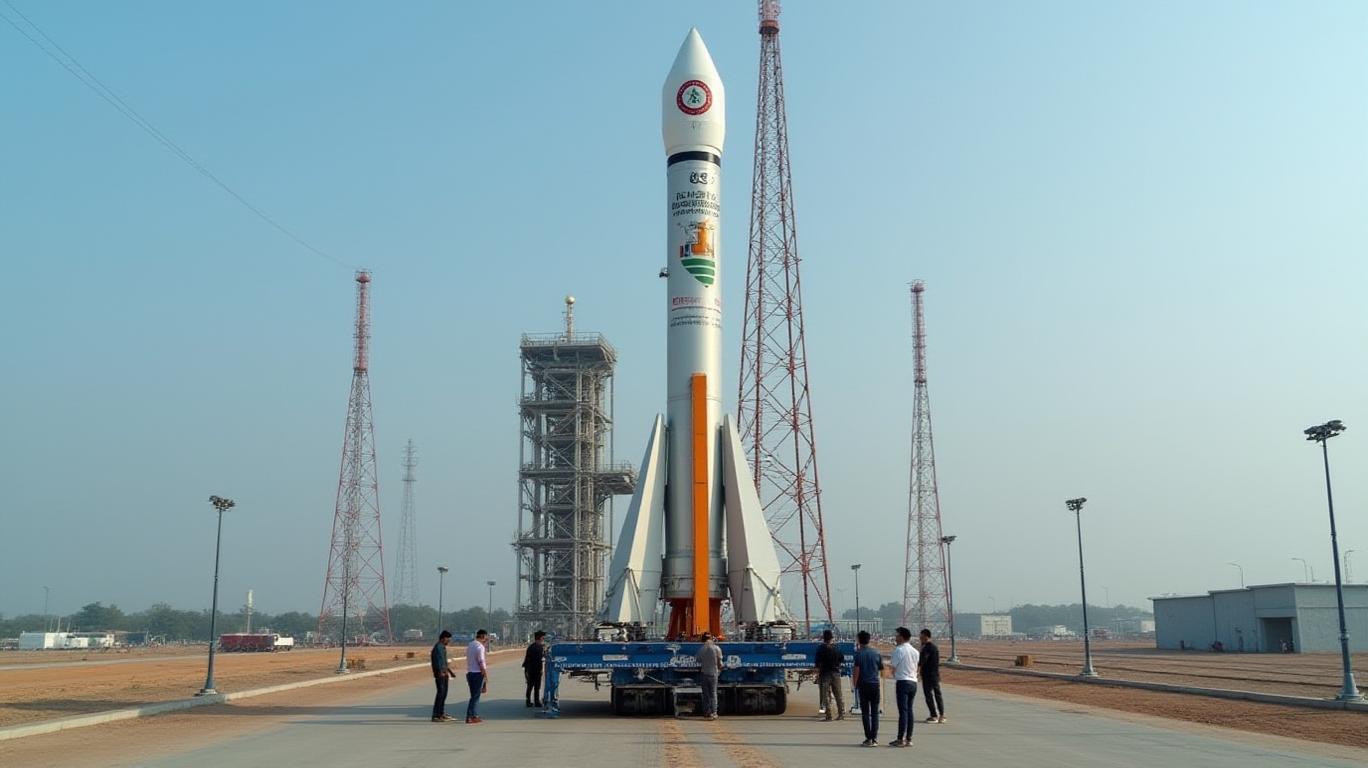
ISRO has completed the integration of GSLV-F15 rocket with satellite NVS-02, ready for launch on January 29. This will be the 100th mission from Satish Dhawan Space Centre. The NVS-02 satellite is the second in the Navigation with Indian Constellation series, enhancing India's regional navigation capabilities. GSLV-F15 is the 17th flight of India's Geosynchronous Satellite Launch Vehicle and the 11th flight with an indigenous Cryogenic stage.
ISRO's 100th mission, the highly anticipated GSLV-F15/NVS-02 launch, is set to take place on January 29, 2025. This mission marks a significant milestone in India's space exploration journey and underscores the organization's commitment to enhancing its satellite navigation system [1]. With the successful launch of the PSLV-C60 in December 2024, carrying two experimental missions, SpaDex and POEM-4 [1], ISRO has been gearing up for this much-anticipated event.The GSLV-F15 mission will be the 17th flight of India's Geosynchronous Satellite Launch Vehicle (GSLV Mk-II) and the 8th operational flight using the indigenously developed Cryogenic stage [1]. The primary payload for this mission is the NVS-02 satellite, a critical component of India's Navigation Satellite System (NavIC), which aims to enhance precision military activities, strategic applications, and terrestrial navigation [1].
ISRO's Chairman, S. Somanath, confirmed that the successful deployment of NVS-02 will significantly contribute to the Indian navigation satellite constellation, which already includes the Indian Regional Navigation Satellite System (IRNSS), or NavIC [1]. NavIC, India's answer to global positioning systems (GPS) such as the US' GPS, Russia's GLONASS, and China's BeiDou, provides positioning, navigation, and timing services for various applications [2].
The NVS-02 satellite, part of the second generation of NavIC satellites, will be the ninth satellite in the constellation [1]. It will carry two types of payloads: navigation payload and ranging [1]. The navigation payload will provide accurate positioning, navigation, and timing services, while the ranging payload will enable the measurement of the distance between the satellite and ground stations, allowing for precise orbit determination [2].
The objectives of the GSLV-F15 mission under the NavIC system are wide-ranging and include precision military activity, strategic applications, navigation for land, air, and sea, precision agriculture, geodetic surveying, emergency services, fleet management, location-based services on mobile devices, satellite orbit determination, marine fisheries, timing services for financial institutions and power grids, and IoT-based applications [1][2].
As ISRO prepares for this landmark mission, the organization continues to demonstrate its growing capabilities in space exploration and its commitment to enhancing India's regional navigation capabilities.
References:
[1] NewsX. (2024, December 31). ISRO prepares for landmark 100th mission in 2025 with GSLV-F15/NVS-02 launch. https://www.newsx.com/india/isro-prepares-for-landmark-100th-mission-in-2025-with-gslv-f15-nvs-02-launch/
[2] ISRO. (n.d.). Navigation with Indian Constellation (NavIC). https://www.isro.gov.in/doers/isac/navic.aspx
Stay ahead of the market.
Get curated U.S. market news, insights and key dates delivered to your inbox.
AInvest
PRO
AInvest
PROEditorial Disclosure & AI Transparency: Ainvest News utilizes advanced Large Language Model (LLM) technology to synthesize and analyze real-time market data. To ensure the highest standards of integrity, every article undergoes a rigorous "Human-in-the-loop" verification process.
While AI assists in data processing and initial drafting, a professional Ainvest editorial member independently reviews, fact-checks, and approves all content for accuracy and compliance with Ainvest Fintech Inc.’s editorial standards. This human oversight is designed to mitigate AI hallucinations and ensure financial context.
Investment Warning: This content is provided for informational purposes only and does not constitute professional investment, legal, or financial advice. Markets involve inherent risks. Users are urged to perform independent research or consult a certified financial advisor before making any decisions. Ainvest Fintech Inc. disclaims all liability for actions taken based on this information. Found an error?Report an Issue




Comments
No comments yet