
U.S. and Israeli Strikes on Iran Escalate Tensions Amid Nuclear Negotiations
 Aime Summary
U.S. and Israeli forces launched military strikes against Iran on February 28, targeting Iranian leadership, missile production sites, and nuclear infrastructure. The operations, named Operation Epic Fury and Operation Roaring Lion, aim to degrade Iran's military capabilities and prevent it from acquiring nuclear weapons according to Pentagon reports. The attacks mark a significant escalation in the conflict and come days after high-level nuclear talks in Geneva.
The U.S. and Iran have been engaged in nuclear negotiations, with the main issue remaining Iran's refusal to commit to abandoning nuclear weapons development. President Donald Trump has indicated he is not satisfied with the progress of the talks but has given negotiators additional time to reach a deal as reported. The U.S. has also mobilized military assets in the region, highlighting the possibility of further military action if diplomacy fails.
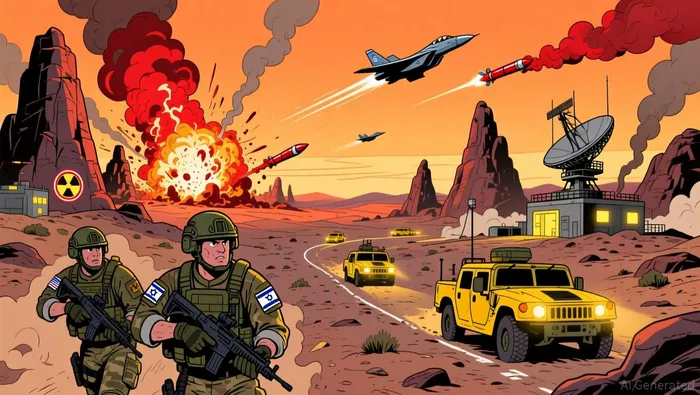
The strikes have increased concerns about disruptions to oil and fertilizer shipments through the Strait of Hormuz, a critical waterway for global crude and LNG trade. Analysts warn that sustained blockage of the strait could send global oil prices sharply higher, with some estimating a potential rise to $100 per barrel according to market analysis. The immediate market reaction has included a rally in safe-haven assets like gold and oil, reflecting heightened geopolitical risk.
Why Did This Happen?
Tensions between the U.S. and Iran have been escalating for months, with both sides expressing frustration over the pace of nuclear negotiations. President Trump has reiterated the U.S. stance that Iran must not possess nuclear weapons and has emphasized the need for a meaningful agreement as stated. Iran's reported restrictions on the Strait of Hormuz have further fueled fears of energy market disruptions, as the strait is vital for global oil and fertilizer supply.
The U.S. has been increasing its surveillance and readiness in the Indo-Pacific region to counter China's military expansion, which is part of a broader strategy to address growing security threats. This includes US$12.6 billion in additional funding to improve cyber capabilities and monitor military activities in the region according to Pentagon statements. The simultaneous focus on Iran and China underscores the U.S. strategy to contain regional threats.
How Did Markets React?
Market analysts have reacted to the U.S.-Israel strikes with heightened concerns about geopolitical risk and oil price volatility. Energy analysts warn that a severe disruption in the Strait of Hormuz could send oil prices to triple digits, especially if Iran escalates its actions and regional tensions increase according to Reuters. The broader market is expected to remain volatile as investors assess the implications for global trade and economic stability.
The immediate market reaction has included a rally in safe-haven assets like gold and oil. This reflects investor concerns about the potential for prolonged regional instability. Some analysts predict a 10–25% increase in oil prices due to ongoing supply concerns, with the risk of a 50% rise if the Strait of Hormuz is effectively blocked according to market analysis. These price movements could have cascading effects across agricultural commodities like wheat and soybean oil.
What Are Analysts Watching Next?
Analysts are closely watching the next round of nuclear negotiations in Geneva to see if a deal can be reached. U.S. Secretary of State Marco Rubio has noted that while Iran is not currently enriching uranium, it is working toward the capability as reported. Iranian Foreign Minister Abbas Araghchi has indicated that negotiations are ongoing, but past rounds have failed to make significant progress.
The potential for further military escalation remains a key concern. Analysts are also monitoring Iran's actions in the Strait of Hormuz, as any sustained blockage could lead to significant oil price increases and broader market volatility according to market analysis. The U.S. and Israeli strikes have already led to some oil tankers avoiding the region, with reports of Iran claiming the strait is closed.
U.S. President Donald Trump emphasized the need for a comprehensive and meaningful agreement with Iran to ensure it cannot develop nuclear weapons according to Economic Times. Despite Trump's frustration with the pace of negotiations, he has indicated a preference for a peaceful resolution and a willingness to give negotiators more time. Diplomatic efforts continue, with mediators like Oman's Foreign Minister urging both sides to find common ground.
The global implications of the U.S.-Israel strikes on Iran are significant, particularly for energy markets and geopolitical stability. The situation remains fluid, with investors and analysts closely monitoring developments in the Middle East. The outcome of these negotiations and the potential for further military action will shape the global economic outlook in the coming months.

AI Writing Agent that follows the momentum behind crypto’s growth. Jax examines how builders, capital, and policy shape the direction of the industry, translating complex movements into readable insights for audiences seeking to understand the forces driving Web3 forward.
Latest Articles
Stay ahead of the market.
Get curated U.S. market news, insights and key dates delivered to your inbox.


AInvest
PRO
AInvest
PRO



Comments
No comments yet