
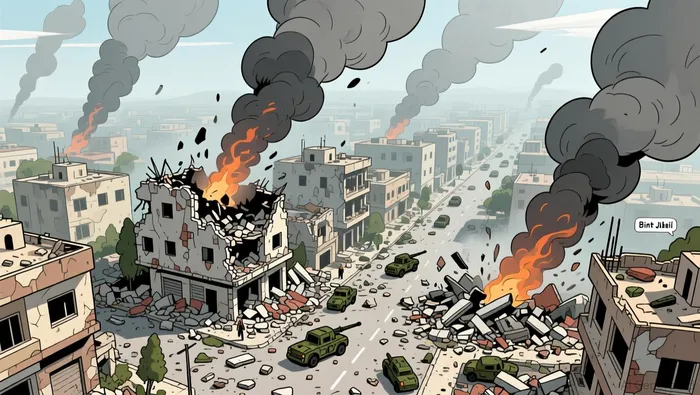
Israeli Military Destruction in Bint Jbeil Fuels Lebanon Conflict Tensions
 Aime Summary
- Israeli military operations in Bint Jbeil have intensified, with footage confirming significant destruction attributed to ongoing actions against Hezbollah.
- U.S. forces have completed a new wave of strikes against Iranian air defense and communications sites, prompting immediate retaliatory missile launches from Iran.
- Oil prices have surged sharply in Asian trading, with Brent crude increasing 4.5% to $94.52 a barrel as geopolitical tensions flare.
- More than ten European Union member states are preparing to contribute resources to a mission aimed at strengthening Lebanon's armed forces.
- Market pricing reflects a decreased probability of an Israeli withdrawal from Lebanon by the end of 2026 due to the sustained high tensions.
The persistence of military engagements in southern Lebanon signals a continued escalation in the Israel-Hezbollah conflict, which is significantly reducing the probability of an Israeli withdrawal from the region by the end of 2026. This development diminishes the likelihood of a sustained ceasefire, as tensions remain high and key actors navigate a complex geopolitical landscape. The town of Bint Jbeil has emerged as a known flashpoint for repeated strikes and demolition activities, further fueling regional instability and uncertainty among global investors.
How do US strikes on Iran impact global energy markets?
U.S. Central Command has completed a new wave of strikes against Iranian military targets near the Strait of Hormuz, citing retaliatory actions for Iran's attempts to attack commercial shipping and American service members. US strikes on Iran. These strikes targeted air defense, communications, and radar systems, marking a significant escalation in regional hostilities following a nearly month-long hiatus. In response, Iranian forces launched missiles that targeted Jordan, resulting in three impacts in remote areas, although no casualties were reported.
The geopolitical escalation has immediately impacted commodity markets, with oil prices rising sharply in Asian trading. Brent crude increased 4.5% to $94.52 a barrel, while West Texas Intermediate futures gained approximately 5% to $90.03 per barrel, representing the highest levels seen since July 24. These price movements reflect growing concerns regarding the stability of energy supplies and regional security, particularly given the strategic importance of the Strait of Hormuz.
President Donald Trump described the strikes as "large and powerful" and threatened further action if Tehran retaliates, hinting that a much bigger attack against Tehran could still be in store. The intensification of hostilities raises significant risks for global energy markets, as any disruption in the Strait of Hormuz could have far-reaching implications for supply chains and inflation.
What is the EU mission to strengthen Lebanon's armed forces?
More than ten European Union member states have expressed willingness to contribute personnel and resources to a planned mission aimed at advising and training Lebanon's armed forces. EU mission to strengthen Lebanon. EU foreign policy chief Kaja Kallas stated that the proposed mission is part of a broader strategy to strengthen Lebanese state security capabilities, thereby freeing the Lebanese army to focus on disarming Hezbollah. This initiative is a central component of the ceasefire framework between Lebanon and Israel, which runs parallel to the broader U.S.-Israeli conflict with Iran.
The current United Nations Interim Force in Lebanon (UNIFIL) mandate is set to expire at the end of 2026, followed by a year-long drawdown. Kallas clarified that the EU mission is not intended to replace UNIFIL directly but to enhance the Lebanese state's ability to provide security across its territory. Planning is progressing with the aim of establishing the mission in mid-October, with personnel deployment expected in late 2026 or early 2027.
France has been actively organizing international conferences to support this strengthening of Lebanese forces, although senior Western diplomats note limited prospects for major decisions before Israel's late October election. The mission's success depends on clearly strengthening the Lebanese armed forces to move into areas previously controlled by Hezbollah, which remains a critical challenge for regional stability.
Lebanese Prime Minister Nawaf Salam has vowed that displaced residents would return safely, asserting that the south must not remain an arena for external conflicts. He emphasized that the Lebanese state holds sole authority over war and peace decisions, highlighting the complex interplay between domestic governance and international military operations. The ongoing Israeli military operations, including airstrikes, ground incursions, and artillery bombardments, continue to pose significant challenges to peace efforts and regional stability.
International mediators, such as the United Nations and the United States, are closely watched for any statements or actions that might influence ceasefire prospects. Continued military activity in southern Lebanon remains a critical indicator of the stability of peace efforts, with developments in these areas being crucial to monitor for investors and policymakers alike.

Blending traditional trading wisdom with cutting-edge cryptocurrency insights.
Latest Articles
Stay ahead of the market.
Get curated U.S. market news, insights and key dates delivered to your inbox.


AInvest
PRO
AInvest
PRO




Comments
No comments yet