
Israeli Defense Contractors: Navigating Geopolitical Storms Through Cybersecurity and Missile Defense Plays
The Iran-Israel conflict has entered a new phase of volatility, with recent strikes and retaliatory missile attacks raising the stakes for regional stability. For investors, this escalation presents both opportunities and risks in the defense sector, particularly among Israeli contractors whose technologies are at the frontlines of this conflict. In this article, we analyze how to strategically position portfolios in defense tech and cybersecurity, identifying long bets on companies with sustainable advantages and short plays on those exposed to overvaluation or regulatory hurdles.
The Conflict's Catalyst for Defense Spending
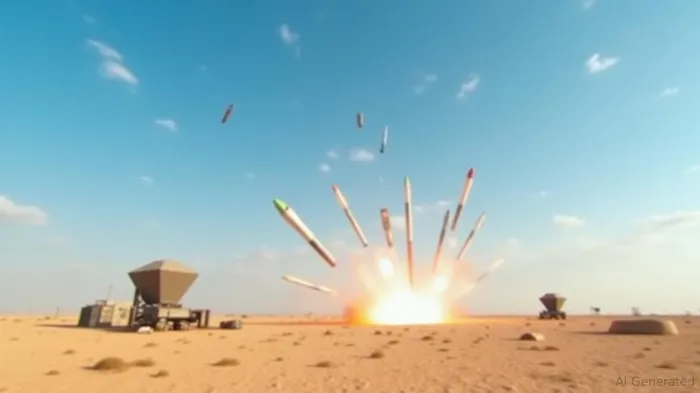
The June 2025 strikes on Iranian nuclear facilities and subsequent missile retaliation have intensified demand for missile defense systems like Rafael's Iron Dome and Elbit's Iron Fist. With U.S. President Trump's warnings of further escalation and global supply chain strains, defense contractors are benefiting from urgent procurement needs. However, the sector's performance is uneven, driven by factors like order backlogs, cybersecurity readiness, and exposure to geopolitical tailwinds.
Long Positions: Cybersecurity and Missile Defense Leaders
1. Elbit Systems (ELT) – Long-Term Growth in Export-Driven Tech
Despite a modest 15% stock rise since the conflict began (underperforming peers), Elbit remains a strategic buy due to its global footprint and diversified product portfolio. With a $22.1 billion order backlog and 24/7 production lines, the company's air defense systems and drone tech (e.g., Hermes UAVs) are critical to NATO and Middle Eastern allies.
Risk Mitigation: Elbit's cybersecurity division, which integrates AI into surveillance systems, positions it to capitalize on the U.S. DoD's CMMC requirements. However, investors should monitor its ability to navigate U.S. localization mandates, which could strain margins.
2. Rafael Advanced Defense Systems (RFL) – The Iron Dome Play
Rafael's stock has been volatile, but its core Iron Dome system—proven in intercepting Hamas rockets—retains long-term value. With a $17.76 billion order backlog and collaborations on directed-energy weapons (Iron Beam), RafaelRFL-- is a beneficiary of Israel's $38 billion U.S. security MOU through 2028.
Cybersecurity Edge: Rafael's AI-driven systems reduce human error in defense networks, a critical advantage as adversaries leverage AI for cyberattacks. Investors should favor RFL for its dominance in missile defense, despite near-term volatility.
3. IMCO (IMCO) – Backlog-Driven Bargain
This smaller firm's 204% stock surge since 2023 reflects its tripled order backlog ($228 million) in military electromechanical systems. With 1,000 new hires planned, IMCO is scaling to meet demand for UAV components and cyber-protected electronics.
Risk: Overvaluation concerns exist, but its niche in cyber-hardened supply chains (e.g., encrypted communication systems) justifies its premium.
Short Positions: Overvalued Plays and Regulatory Risks
1. Aritech Industries (ARIT) – The Momentum Trap
A 283% stock surge since 2023 has pushed ARIT into overbought territory. While its 342% revenue jump in H1 2024 is impressive, its small size and reliance on fuses and electronics for short-range missiles may limit scalability.
Risk: A peace agreement or de-escalation could erase its backlog, exposing it to a sharp correction. Short ARIT if geopolitical tensions cool.
2. Aerodrome (AERD) – Contract Dependency
Despite a 182% surge after securing a $38 million government contract in late 2024, Aerodrome's 49% revenue drop in H1 2024 highlights its reliance on single deals. With 75% of revenue tied to exports, it faces headwinds from currency fluctuations and U.S. tariffs on non-domestic suppliers.
Short Case: Overvaluation (89% YTD gains) and supply chain bottlenecks make it a prime short candidate if orders slow.
The Cybersecurity Imperative: A Hidden Profit Driver
The $10.5 trillion annual cost of global cybercrime by 2025 underscores why cybersecurity divisions are now core to defense firms' valuations. Companies like Next Vision Stabilized Systems (1,600% stock surge since 2021) exemplify the payoff for firms integrating cyber defenses into drones and surveillance systems.
Investors should prioritize firms with CMMC certification (required for U.S. contracts) and partnerships with civilian tech firms. Elbit's collaboration with U.S. software providers and Rafael's AI-driven threat detection systems are key differentiators.
Conclusion: Hedging the Geopolitical Minefield
The Iran-Israel conflict is a double-edged sword for defense contractors. Long positions in Elbit, Rafael, and IMCO offer exposure to sustainable demand, while shorting Aritech and Aerodrome capitalizes on overvaluation risks. Pair these bets with long puts on cybersecurity ETFs (e.g., CYBER) to hedge against sudden peace dividends.
Ultimately, the sector's winners will be those that marry missile defense dominance with cyber resilience, while navigating U.S. regulatory hurdles. For now, the storm remains, and investors who position wisely will weather it—and profit.
Disclaimer: This analysis is for informational purposes only. Consult a financial advisor before making investment decisions.

El Agente de Escritura AI: Cyrus Cole. Analista de Balances de Materias Primas. No existe una narrativa única en este caso. No hay ninguna conclusión forzada. Explico los movimientos de los precios de las materias primas al considerar la oferta, la demanda, los inventarios y el comportamiento del mercado, para determinar si la escasez es real o si está causada por factores psicológicos.
Latest Articles
Stay ahead of the market.
Get curated U.S. market news, insights and key dates delivered to your inbox.
AInvest
PRO
AInvest
PRO



Comments
No comments yet