
Israel Strikes Iran's Arak Reactor After Missile Attacks
In a significant escalation of tensions, Israel’s defense minister, Israel Katz, issued a stark warning to Iran’s supreme leader, Ayatollah Ali Khamenei, following a barrage of Iranian missiles that struck southern Israel and areas near Tel Aviv. The missile attacks resulted in at least 240 injuries, with four individuals critically wounded, according to Israel’s Health Ministry. The majority of the wounded were treated for minor injuries, including over 70 people from the Soroka Medical Center in Beersheba, where emergency teams had to evacuate patients due to the damage caused by the missiles.
In response to the attacks, Defense Minister Katz stated that the military has been instructed to ensure that Khamenei “should not continue to exist” in order to achieve its goals. This statement comes amidst reports that U.S. President Donald Trump had vetoed an Israeli plan to assassinate Khamenei, with Trump later clarifying that there were no immediate plans to do so.
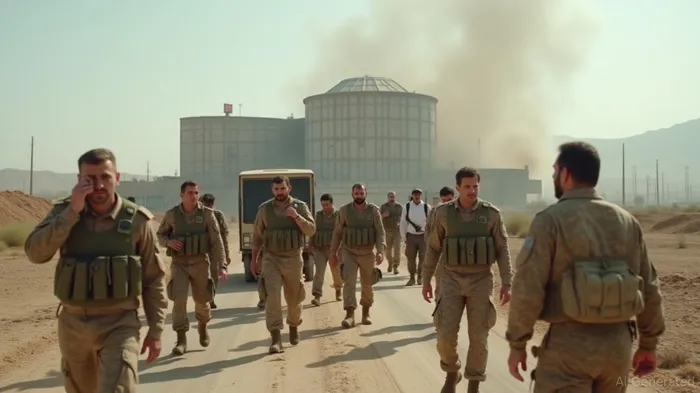
Israel retaliated by striking Iran’s Arak heavy water reactor, a key component of Iran’s nuclear program. The conflict began last Friday with a series of Israeli airstrikes targeting military sites, senior officers, and nuclear scientists. The strikes on the Arak reactor were aimed at preventing the facility from being used to produce plutonium, a material that can be used in nuclear weapons. Iran has maintained that its nuclear program is for peaceful purposes, but it enriches uranium to levels close to weapons-grade.
The missile attacks on Israel included the use of a missile with multiple warheads, posing a new challenge to Israel’s air defense systems. This type of missile requires tracking multiple warheads simultaneously, making it more difficult for systems like Israel’s Iron Dome to intercept. The use of such weaponry by Iran was hinted at in the past, and its deployment in this conflict underscores the evolving threat landscape.
The missile strike on the Soroka Medical Center in Beersheba caused significant damage to an old surgery building that had been evacuated in recent days. The hospital was subsequently closed to all but life-threatening cases, highlighting the disruption caused by the attacks. Israeli Prime Minister Benjamin Netanyahu condemned the attack and vowed a strong response, stating that Israel would “exact the full price from the tyrants in Tehran.”
Iran has fired hundreds of missiles and drones at Israel in retaliation for the Israeli airstrikes, though most have been intercepted by Israel’s multi-tiered air defense systems. These systems are designed to detect and shoot down incoming fire, protecting population centers and critical infrastructure. Despite their effectiveness, Israeli officials acknowledge that the defenses are not perfect.
In the aftermath of the attacks, many hospitals in Israel activated emergency plans, converting underground parking areas into hospital floors and moving patients underground, particularly those on ventilators or difficult to move quickly. Israel also has a fortified, subterranean blood bank that was activated after the recent conflict in the Gaza Strip.
Iranian state television reported that there was no radiation danger from the attack on the Arak reactor, and that the facility had been evacuated with no damage to civilian areas. Israel had warned the public to evacuate the area before conducting the strike, aiming to prevent the reactor from being used for nuclear weapons development.
Iran has rejected calls to surrender or end its nuclear program, maintaining that its activities are for peaceful purposes. The country enriches uranium to levels close to weapons-grade, a short technical step away from 90% enrichment, which is the level required for nuclear weapons. Israel, the only nuclear-armed state in the Middle East, does not acknowledge having such weapons.
The strikes on Iran’s nuclear facilities came a day after Iran’s supreme leader rejected U.S. calls for surrender and warned of dire consequences if the U.S. deepened its involvement in the conflict. Israel had lifted some restrictions on daily life, suggesting that the immediate missile threat from Iran was easing. However, the conflict continues to escalate, with both sides exchanging threats and retaliatory actions.
Iran’s Foreign Minister Abbas Araghchi is set to travel to Geneva for meetings with European counterparts, indicating a potential new diplomatic initiative. The meeting will include foreign ministers from the United Kingdom, France, and Germany, as well as the European Union’s top diplomat. This diplomatic effort comes as the U.S. has not ruled out joining Israel’s campaign against Iran, with President Trump stating that he wants a resolution “much bigger” than a ceasefire.
The Arak heavy water reactor, located 250 kilometers southwestSWX-- of Tehran, was redesigned under the 2015 nuclear deal with world powers to address proliferation concerns. However, after the U.S. withdrew from the deal in 2018, Iran began replacing parts of the reactor that had been rendered unusable under the agreement. Israel’s strike on the reactor signals its ongoing concern that the facility could be used to produce plutonium in the future.
The International Atomic Energy Agency, the United Nations’ nuclear watchdog, has urged Israel not to strike Iranian nuclear sites. Due to restrictions imposed by Iran on inspectors, the IAEA has lost “continuity of knowledge” about Iran’s heavy water production, making it difficult to verify Tehran’s production and stockpile. This lack of verification adds to the complexity of the ongoing conflict and the potential for further escalation.

Stay ahead of the market.
Get curated U.S. market news, insights and key dates delivered to your inbox.






Comments
No comments yet