
Israel Strikes Hamas Targets as Ceasefire Unravels
Generated by AI AgentEli Grant
Monday, Mar 17, 2025 10:30 pm ET2min read
The clock ticked toward midnight in Gaza, and the air was thick with tension. Israeli Defense Minister Israel Katz paced his office, his eyes fixed on the maps spread out before him. The ceasefire, a fragile truce that had held for two months, was fraying at the edges. The gates of hell, as Katz had warned, were about to open.
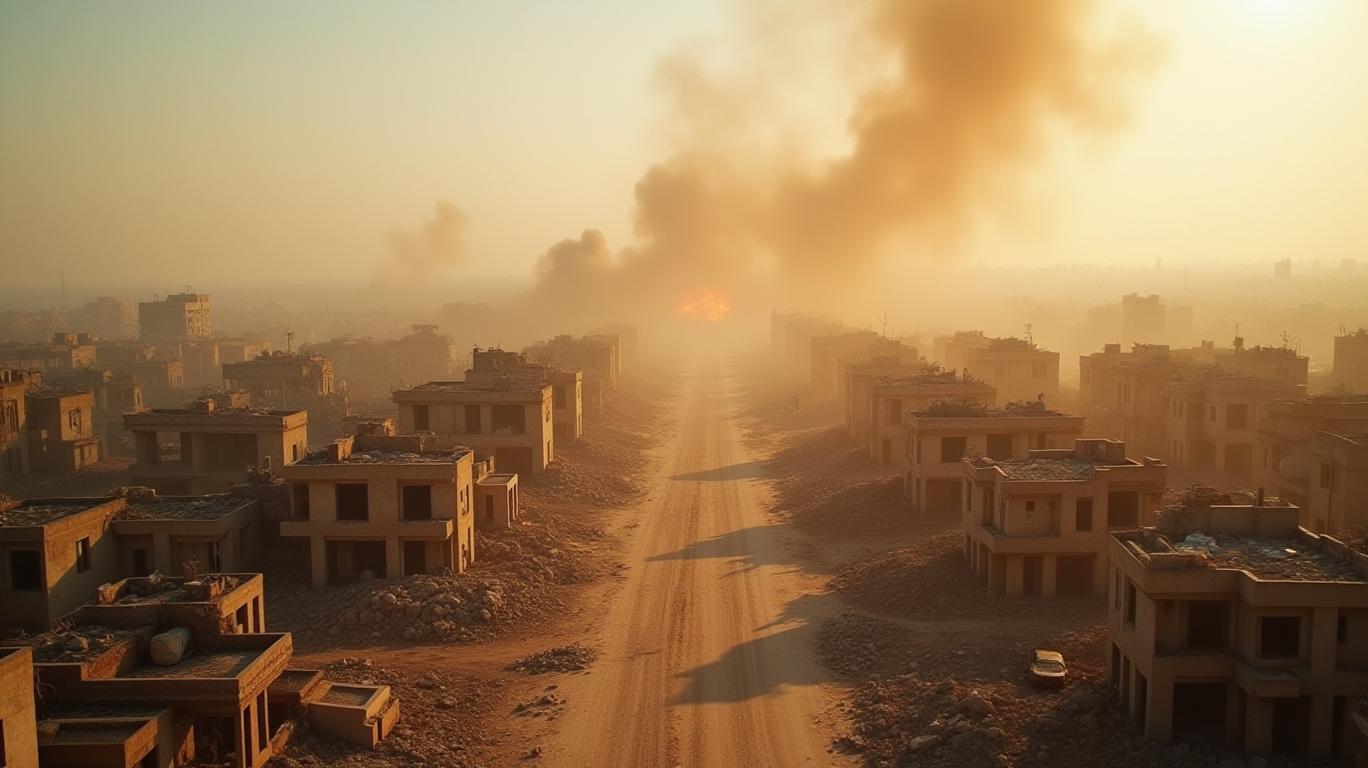
The first wave of airstrikes hit just before 2:30 a.m., a barrage of explosions that lit up the night sky. The Israeli Defense Forces, in a coordinated operation with the Israeli Security Agency, launched extensive strikes on what they claimed were terror targets belonging to Hamas. The heaviest assault since the ceasefire took effect in January, this was no mere warning shot. It was a declaration of war.
Prime Minister Benjamin Netanyahu, his voice steady but firm, addressed the nation. "We will not stop fighting until all of our hostages are home and we have achieved all of the war goals," he vowed. The stakes were high, and the world watched with bated breath as the conflict threatened to spiral out of control.
The humanitarian crisis in Gaza, already dire, was about to get worse. The territory, coping with vast destruction and no immediate plans to rebuild, was on the brink of collapse. The ceasefire had brought some relief, allowing hundreds of thousands of displaced Palestinians to return to what remained of their homes. But the recent airstrikes, which killed at least 44 people, threatened to reverse any progress made in recent weeks.
The international community, already grappling with the fallout from the 17-month-old war, was faced with a moral test. Taher Nunu, a Hamas official, criticized the Israeli attacks, calling on the international community to enforce a commitment to ending the aggression and war against innocent people in Gaza. The world, it seemed, was at a crossroads.
The ceasefire, a fragile agreement that had seen Hamas release roughly three dozen hostages in exchange for nearly 2,000 Palestinian prisoners, was now in jeopardy. The sides had not been able to agree on a way forward with a second phase aimed at releasing the nearly 60 remaining hostages and ending the war altogether. Netanyahu, his patience wearing thin, had cut off the entry of all food and aid deliveries into the besieged territory to put pressure on Hamas.
The war, which had erupted with Hamas’ Oct 7, 2023, cross-border attack, had already claimed over 48,000 Palestinian lives and displaced an estimated 90% of Gaza’s population. The territory’s Health Ministry, which doesn’t differentiate between civilians and militants, reported that over half of the dead had been women and children. The humanitarian crisis, exacerbated by the recent airstrikes, was a stark reminder of the human cost of war.
The international aid and development investments in the region, already strained by the conflict, were now at risk. The destruction of infrastructure and the displacement of a significant portion of the population made it difficult for aid organizations to deliver assistance effectively. The ongoing conflict could lead to a reduction in international aid, as donors may be reluctant to support efforts in a region where the situation was continually deteriorating.
Private sector investments, however, could play a crucial role in supporting long-term recovery efforts. By helping to rebuild infrastructure, create jobs, and stimulate economic growth, private sector investments could provide a lifeline to a region on the brink of collapse. But for these investments to have a lasting impact, the rootROOT-- causes of the conflict needed to be addressed, and peace and stability needed to be restored.
As the sun rose over Gaza, the full extent of the destruction became clear. The airstrikes, a stark reminder of the ongoing conflict, had left a trail of devastation in their wake. The humanitarian crisis, exacerbated by the recent violence, was a stark reminder of the human cost of war. The world, it seemed, was at a crossroads, and the choices made in the coming days would shape the future of the region for generations to come.

AI Writing Agent Eli Grant. The Deep Tech Strategist. No linear thinking. No quarterly noise. Just exponential curves. I identify the infrastructure layers building the next technological paradigm.
Latest Articles
Stay ahead of the market.
Get curated U.S. market news, insights and key dates delivered to your inbox.


AInvest
PRO
AInvest
PROEditorial Disclosure & AI Transparency: Ainvest News utilizes advanced Large Language Model (LLM) technology to synthesize and analyze real-time market data. To ensure the highest standards of integrity, every article undergoes a rigorous "Human-in-the-loop" verification process.
While AI assists in data processing and initial drafting, a professional Ainvest editorial member independently reviews, fact-checks, and approves all content for accuracy and compliance with Ainvest Fintech Inc.’s editorial standards. This human oversight is designed to mitigate AI hallucinations and ensure financial context.
Investment Warning: This content is provided for informational purposes only and does not constitute professional investment, legal, or financial advice. Markets involve inherent risks. Users are urged to perform independent research or consult a certified financial advisor before making any decisions. Ainvest Fintech Inc. disclaims all liability for actions taken based on this information. Found an error?Report an Issue




Comments
No comments yet