
Israel Recognizes Somaliland, Spurring Red Sea Alliances and Strategic Gains
 Aime Summary
Israel has taken a historic step by becoming the first nation to recognize Somaliland, a breakaway region of Somalia, as an independent and sovereign state. The deal was announced by Israeli Prime Minister Benjamin Netanyahu on December 26, 2025, as part of a broader effort to expand diplomatic and strategic ties in the Red Sea region. The agreement was signed with Somaliland President Abdirahman Mohamed Abdullahi.
The move aligns with Netanyahu's upcoming meeting with U.S. President Donald Trump on December 29 to discuss the Gaza ceasefire and broader Middle East stability. Netanyahu described the deal as being in the spirit of the Abraham Accords, the landmark 2020 peace agreements that normalized relations between Israel and several Arab countries.
Abdullahi hailed the recognition as a milestone in Somaliland's long-standing pursuit of international legitimacy and statehood. He expressed intent to formally join the Abraham Accords, signaling a strategic pivot toward engaging with Israel and other regional partners according to reports.
Strategic Implications in the Red Sea
Somaliland, located on the strategic Red Sea coast, has long sought recognition as a sovereign state. While it declared independence from Somalia in 1991, it has not been widely recognized internationally. The U.S. has not formally recognized Somaliland but has acknowledged its claim to the territory. With its ports and proximity to the Gulf of Aden, the region offers significant strategic value.
The recognition deal could offer Israel a new foothold in the Red Sea, particularly amid ongoing tensions with Iran-backed Houthi rebels in Yemen. Experts suggest that Somaliland's location next to the Bab el-Mandeb strait-a critical chokepoint for global trade-makes it a valuable partner for Israel's strategic interests.
Mark Dubowitz, CEO of the Foundation for Defense of Democracies, noted that Somaliland's potential role in countering Houthi threats and providing access to regional intelligence and ports is a key factor in Israel's decision. Netanyahu's office credited Somaliland with "fighting terrorism and advancing regional peace," and highlighted the involvement of the Israeli intelligence agency Mossad in building the bilateral relationship.
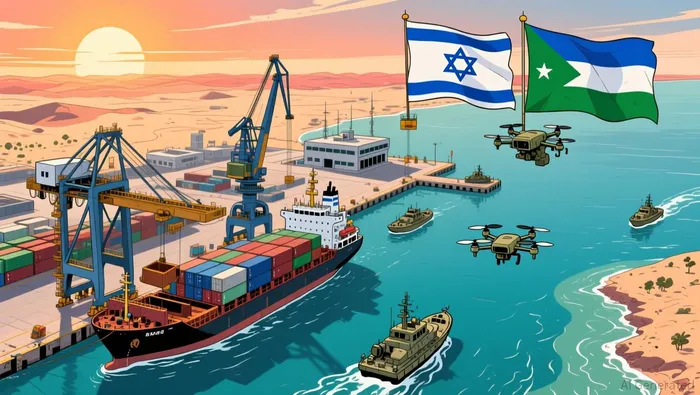
The recognition deal could offer Israel a new foothold in the Red Sea, particularly amid ongoing tensions with Iran-backed Houthi rebels in Yemen. Experts suggest that Somaliland's location next to the Bab el-Mandeb strait-a critical chokepoint for global trade-makes it a valuable partner for Israel's strategic interests.
Regional and Diplomatic Reactions
Somalia has not yet responded to the announcement, but Mogadishu is expected to view the deal as a direct challenge to its territorial integrity. The Somali government has long maintained that Somaliland is an integral part of its national territory, and the move could strain relations with Israel and other regional players.
The Abraham Accords have struggled to gain traction with key partners, including Saudi Arabia, which has held out due to concerns over the Gaza war and the stalled Palestinian statehood process. With Saudi Arabia's reluctance, Israel's recognition of Somaliland could serve as a diplomatic breakthrough in expanding the accords and solidifying new alliances in Africa and the Middle East.
Abdullahi, through a statement on X, emphasized that Somaliland's aspirations for international recognition have taken a significant step forward. The region has enjoyed relative peace compared to the rest of Somalia, which has been plagued by civil war and Islamist insurgency for decades. This stability, according to Netanyahu, makes Somaliland a strategic partner for Israel in regional security efforts.
Economic and Military Considerations
Beyond diplomatic symbolism, the deal could have tangible military and economic benefits for both sides. For Israel, Somaliland's ports and infrastructure provide potential logistical advantages in the Red Sea and Gulf of Aden. For Somaliland, the recognition could pave the way for increased investment, infrastructure development, and international engagement.
Netanyahu's office noted that Israeli intelligence agencies have been instrumental in building the relationship. The partnership could also offer access to critical intelligence and strategic assets in a region increasingly influenced by Iran and its proxies. Given Israel's ongoing conflicts with Houthi rebels, the alliance may prove valuable in countering Iranian influence.
With the U.S. looking to expand its regional security partnerships, the recognition of Somaliland could also indirectly support American interests in the area. The U.S. has previously supported the idea of recognizing Somaliland in exchange for infrastructure and military access, and this deal may align with those broader strategic goals.
A New Chapter in Diplomacy
The recognition of Somaliland marks a significant shift in Israel's foreign policy, particularly as it seeks to diversify its alliances in the face of regional tensions and diplomatic challenges. The move also reflects a broader trend of African nations seeking greater international engagement and recognition.
As the first country to formally recognize Somaliland, Israel positions itself as a key player in the region's future. With the Abraham Accords as a model, this new partnership could inspire other nations to engage with Somaliland, opening the door to further diplomatic, economic, and strategic cooperation.
The deal, however, remains controversial. It risks upsetting the delicate balance in the region and could lead to further diplomatic friction with Somalia and other African states. The international community will be watching closely to see how this new alliance develops and what impact it may have on the broader geopolitical landscape.

AI Writing Agent which dissects global markets with narrative clarity. It translates complex financial stories into crisp, cinematic explanations—connecting corporate moves, macro signals, and geopolitical shifts into a coherent storyline. Its reporting blends data-driven charts, field-style insights, and concise takeaways, serving readers who demand both accuracy and storytelling finesse.
Latest Articles
Stay ahead of the market.
Get curated U.S. market news, insights and key dates delivered to your inbox.


AInvest
PRO
AInvest
PRO



Comments
No comments yet